Thai Agricultural & Processed Products “The Food Innovation Era – Starting in Thailand, Reaching the World: From Orchards to Global Supermarkets, Fresh, Delicious, and Safe with Thai Standards, Exporting Future Food Innovation” Article by SO OK TRADIN
Last updated: 24 Mar 2026
2464 Views
hailand as the “Food Innovation Hub” ✨
Thai food, fruits, and agri‑processed products are reaching global markets with standards and quality that guarantee freshness and flavor, trusted worldwide.
Article by SO OK TRADING – March 23, 2026
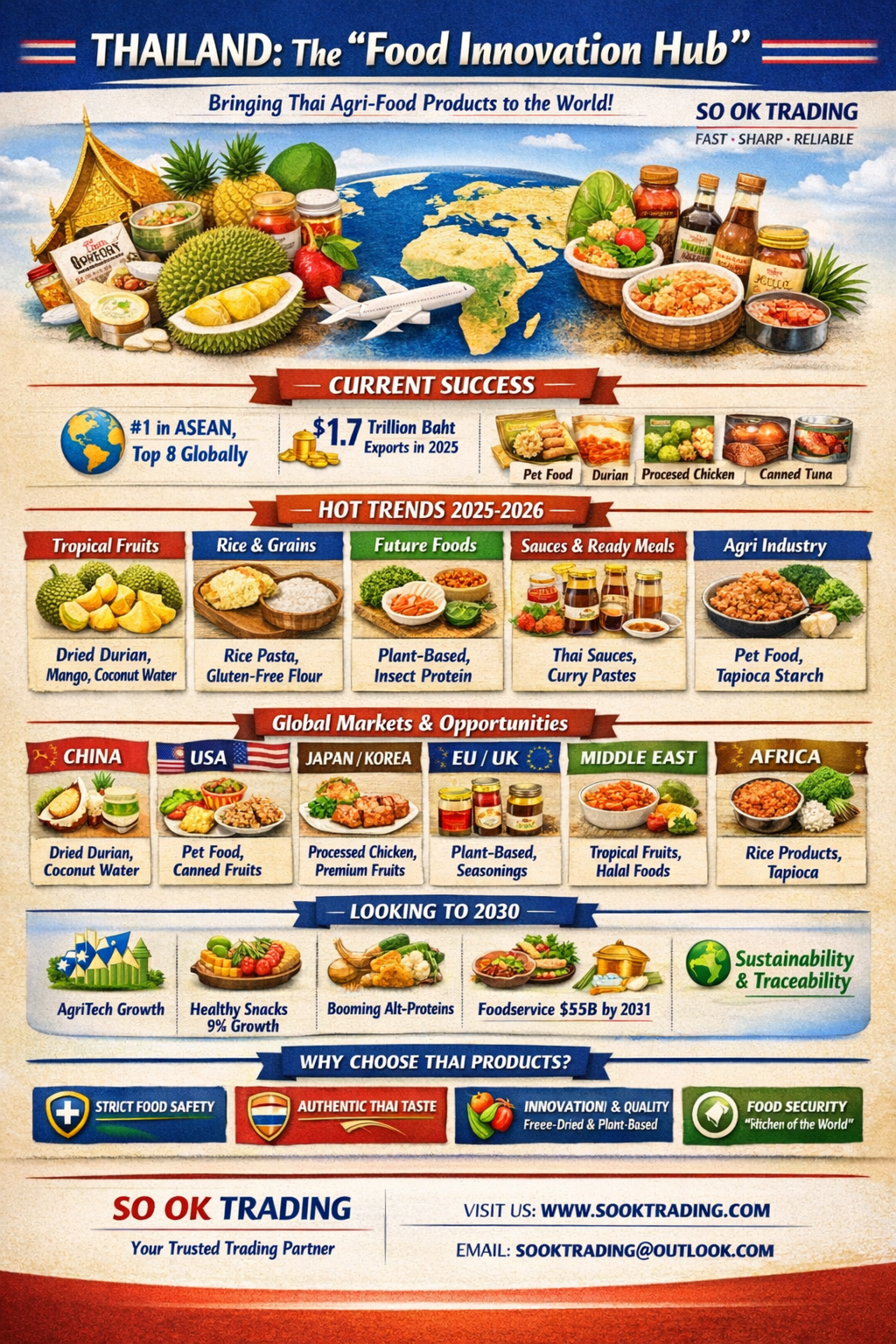
Thailand’s Current Status and Achievements
Global Ranking: #1 exporter in ASEAN, Top 8 worldwide
Export Value: In 2025, exports surpassed 1.7 trillion baht
Star Products:
Pet Food – booming in the USA, Japan, and Europe
Processed/Frozen Durian – dominating the Chinese market
Processed Chicken – major exports to Japan and Europe
Canned Tuna – consistently leading the global market
Rising Stars 2025–2026
Tropical Fruits – freeze‑dried durian, mango, pineapple, mangosteen, coconut water, ready‑to‑use coconut milk
Rice & Grains – riceberry pasta, gluten‑free flour, ready‑to‑eat jasmine rice
Future Food – plant‑based meat, insect protein, functional foods (turmeric, moringa)
Seasonings & Ready Meals – curry pastes, fish sauce, chili sauce
Agri‑Industry Products – pet food, modified tapioca starch, bioplastics
Key Markets & Export Opportunities
China: freeze‑dried durian, coconut products, tapioca, Thai seasonings
USA: pet food, canned fruits, ready‑to‑eat meals
Japan/Korea: processed chicken, premium fruits, premium rice
EU/UK: alternative proteins, seasonings, processed chicken
Middle East: tropical fruits, halal products
Africa: processed rice, tapioca for energy
Australia: seafood products, frozen shrimp
Outlook Towards 2030
AgriTech & Precision Farming: farmer income rising from 187,000 → 312,000 baht per household
Niche Markets: health‑focused fruit processing, CAGR 9% annually
Alternative Proteins: global market projected to reach USD 2.79 billion
Foodservice: Thai market expanding to USD 55 billion by 2031
Sustainability Standards: traceability and climate action as key competitive drivers
Success Factors of Thai Agri‑Products
Food Safety: trusted global standards
Authentic Thai Flavor: unique taste and culture
Innovation: freeze‑dried, plant‑based, functional foods
Food Security: Thailand as the “Kitchen of the World” with a strong supply chain
Thailand is transforming from the “traditional kitchen of the world” into the “Food Innovation Hub,” exporting not just food, but value, health, and sustainability to consumers worldwide.
SO OK TRADING – Your Trusted Business Partner
SO OK TRADING – FAST • SHARP • RELIABLE
Visit: WWW.SOOKTRADING.COM
Email: SOOKTRADING@OUTLOOK.COM
Thai food, fruits, and agri‑processed products are reaching global markets with standards and quality that guarantee freshness and flavor, trusted worldwide.
Article by SO OK TRADING – March 23, 2026
Thailand’s Current Status and Achievements
Global Ranking: #1 exporter in ASEAN, Top 8 worldwide
Export Value: In 2025, exports surpassed 1.7 trillion baht
Star Products:
Pet Food – booming in the USA, Japan, and Europe
Processed/Frozen Durian – dominating the Chinese market
Processed Chicken – major exports to Japan and Europe
Canned Tuna – consistently leading the global market
Rising Stars 2025–2026
Tropical Fruits – freeze‑dried durian, mango, pineapple, mangosteen, coconut water, ready‑to‑use coconut milk
Rice & Grains – riceberry pasta, gluten‑free flour, ready‑to‑eat jasmine rice
Future Food – plant‑based meat, insect protein, functional foods (turmeric, moringa)
Seasonings & Ready Meals – curry pastes, fish sauce, chili sauce
Agri‑Industry Products – pet food, modified tapioca starch, bioplastics
Key Markets & Export Opportunities
China: freeze‑dried durian, coconut products, tapioca, Thai seasonings
USA: pet food, canned fruits, ready‑to‑eat meals
Japan/Korea: processed chicken, premium fruits, premium rice
EU/UK: alternative proteins, seasonings, processed chicken
Middle East: tropical fruits, halal products
Africa: processed rice, tapioca for energy
Australia: seafood products, frozen shrimp
Outlook Towards 2030
AgriTech & Precision Farming: farmer income rising from 187,000 → 312,000 baht per household
Niche Markets: health‑focused fruit processing, CAGR 9% annually
Alternative Proteins: global market projected to reach USD 2.79 billion
Foodservice: Thai market expanding to USD 55 billion by 2031
Sustainability Standards: traceability and climate action as key competitive drivers
Success Factors of Thai Agri‑Products
Food Safety: trusted global standards
Authentic Thai Flavor: unique taste and culture
Innovation: freeze‑dried, plant‑based, functional foods
Food Security: Thailand as the “Kitchen of the World” with a strong supply chain
Thailand is transforming from the “traditional kitchen of the world” into the “Food Innovation Hub,” exporting not just food, but value, health, and sustainability to consumers worldwide.
SO OK TRADING – Your Trusted Business Partner
SO OK TRADING – FAST • SHARP • RELIABLE
Visit: WWW.SOOKTRADING.COM
Email: SOOKTRADING@OUTLOOK.COM


Related Content


Zinc Price Surges Beyond $4,000 – The Perfect Storm Shakes the Global Metals Market
SO OK TRADING | September 9, 2026
September 2026 marks a turning point in the global metals market as zinc prices break through the $4,000 per metric ton threshold, reaching a new four-year high of $4,156 on the London Metal Exchange (LME). This dramatic surge reflects severe supply-side disruptions, which analysts worldwide have dubbed a “Perfect Storm” — a combination of China’s power curbs, smelter production cuts, and critically low zinc inventories that have pushed the market into acute shortage.
This rapid price escalation not only highlights strong buying pressure in the global market but also directly impacts downstream industries in Thailand. Key sectors such as galvanized steel, automotive, and electronics manufacturing are now facing significantly higher production costs in line with global market dynamics.
As a trusted partner in the non-ferrous metals business, SO OK TRADING provides in-depth analysis of this situation, offering insights and strategies to help Thai enterprises plan procurement and manage risks effectively.
FAST • SHARP • RELIABLE
SO OK TRADING – The Non-Ferrous Metals Specialist from Thailand
9 Sept 2026
SO OK TRADING | 25 AUG 2026
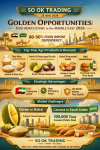
“Golden Opportunities: Thai Agriculture Expanding into the Middle East 2026”
The year 2026 marks a pivotal moment for Thai agricultural products confidently stepping onto the global stage
25 Aug 2026
