“RDF/SRF: From Waste to Clean Energy — The Path to Net Zero, Circular Economy, and Business Value Creation” Article by SO OK TRADING : March 22, 2026
“Waste-to-Energy: The Key to a Cleaner World, Circular Economy, and Future Investment Opportunities”
Article by SO OK TRADING : March 22, 2026
Global Clean Energy Trends
The world is facing major challenges—energy crises, climate change, and overflowing waste. All of these stem from excessive reliance on fossil fuels. Yet within every crisis lies opportunity, and that opportunity is renewable energy and waste-derived fuels (RDF/SRF), which are reshaping the global economy.
Solar as the star: By 2024–2025, solar power is expected to meet nearly half of new global electricity demand.
Electrification leads the transition: EVs and industrial electrification are driving energy demand.
Battery Energy Storage Systems (BESS): Massive investments are underway to balance the intermittency of wind and solar.
Trends in Thailand
Ambitious targets: Increase clean energy share to 51% by 2037 and 74% by 2050, aiming for Net Zero.
Solar is the cheapest: Costs have dropped, making solar the most competitive power source.
Liberalized electricity market: Private companies can trade electricity directly, boosting rooftop solar adoption.
New innovations: Floating solar in reservoirs and pumped-storage hydropower.
EV boom: More than 800 charging stations nationwide.
⚡ RDF/SRF: From Waste to Power
Instead of landfilling waste, we can transform it into energy!
Waste-to-Energy plants: RDF is combusted to produce steam, drive turbines, and generate electricity—simultaneously managing waste and producing power.
Combined Heat and Power (CHP): In Europe and South Korea, RDF/SRF is used to supply both electricity and district heating.
Thailand’s potential: Targeting ~500 MW of total capacity by 2036.
Market Size and Growth (CAGR)
The waste fuel market is shifting from “disposal” to “value creation.”
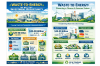
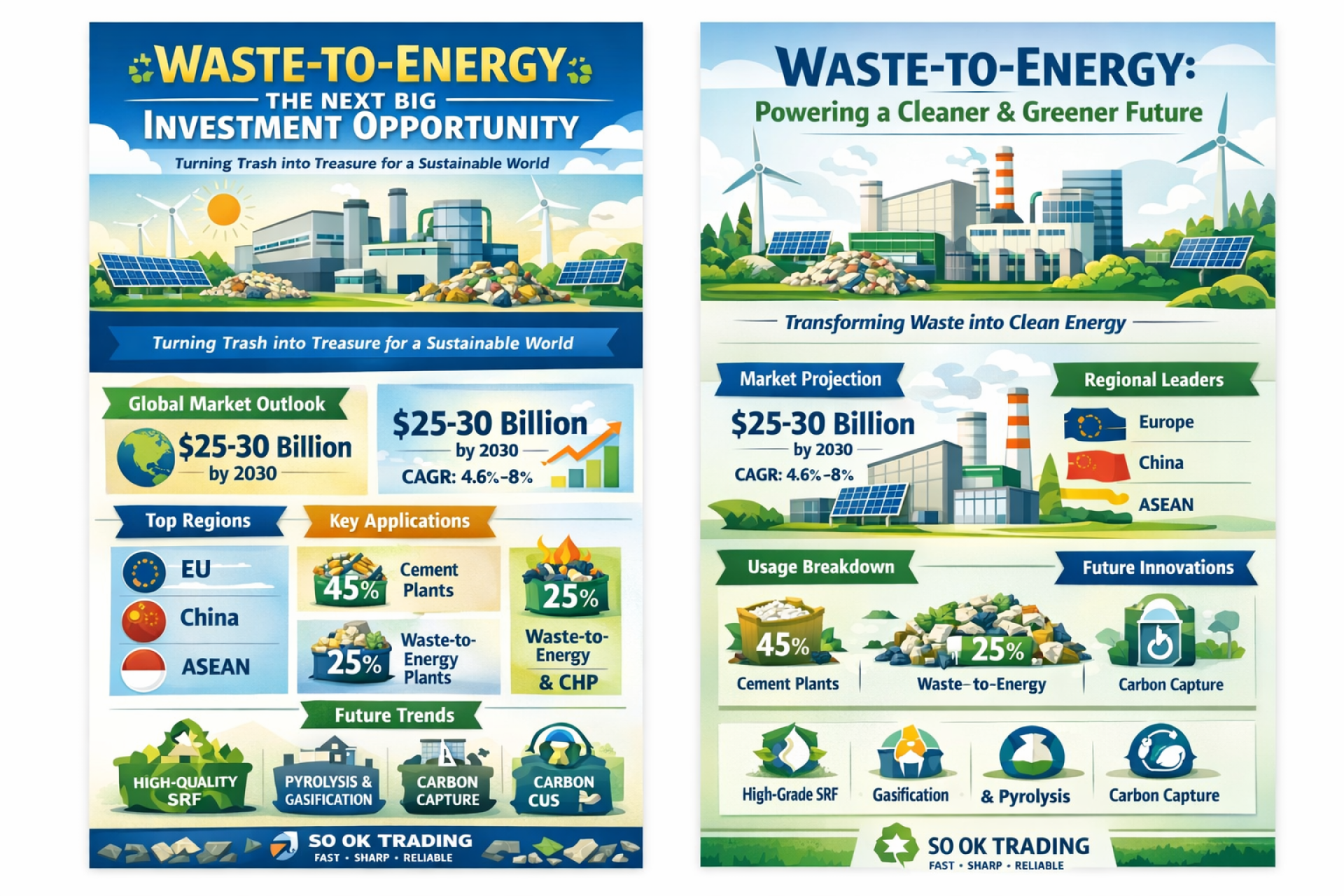
Global market: Projected to reach USD 25–30 billion by 2030.
Global CAGR: ~4.6%–8% (2024–2030).
Europe (EU): ~35% market share, driven by Zero Waste policies and high-quality SRF (CAGR ~4–5%).
China: Largest market, valued at ~USD 7.01 billion, growing at ~8.94%.
ASEAN: Fastest-growing region, valued at ~USD 3.68–4.22 billion, CAGR ~12.79%.
Thailand: Average growth ~5–6% per year, with ~0.4 million tons of RDF used annually in cement plants.
Key Application Sectors
Cement plants: Largest users (~45% globally), high-temperature kilns ensure complete combustion and immediate CO₂ reduction.
Waste-to-Energy plants: ~25%, focusing on municipal waste disposal and electricity generation.
CHP systems: ~15%, popular in Europe and South Korea.
Other industries: ~15%, including paper mills, lime plants, and industrial boilers.
Future Directions
From RDF to SRF: High-quality waste fuels with stable calorific value, ideal for heavy industries.
New technologies: Gasification and Pyrolysis to convert waste into clean gas and oil.
Carbon Capture (CCUS): Next-generation waste-to-energy plants are beginning to capture CO₂, making waste energy “carbon negative.”
Conclusion
RDF and SRF are not just about waste disposal—they are about creating energy, creating value, and creating a sustainable future. They meet the demands of Carbon Credits, Clean Energy, and CBAM, while reducing reliance on coal and fossil fuels.
Thailand and ASEAN are at a critical turning point—those who act first will gain advantages in economics, environment, and brand reputation.
Circular Economy and Net Zero begin with waste recycling and the industrial application of RDF/SRF.
SO OK TRADING : FAST • SHARP • RELIABLE
SO OK TRADING : Your Business Partner
VISIT US AT : WWW.SOOKTRADING.COM
If you are interested in green fuels and biofuels such as Wood Pellet, Wood Chip, Saw Dust, PKS Charcoal, Coconut Shell Charcoal, please contact us via the Give Inquiry section on our website or email us directly at sooktrading@outlook.com.
Thank you very much!