Share

“Double Crisis: Oil, Fertilizer, Plastics and the Future of the Global Economy — Strait of Hormuz, When the World’s Lifeline Trembles as Islamabad Peace Talks Collapse”
Last updated: 13 Apr 2026
2010 Views

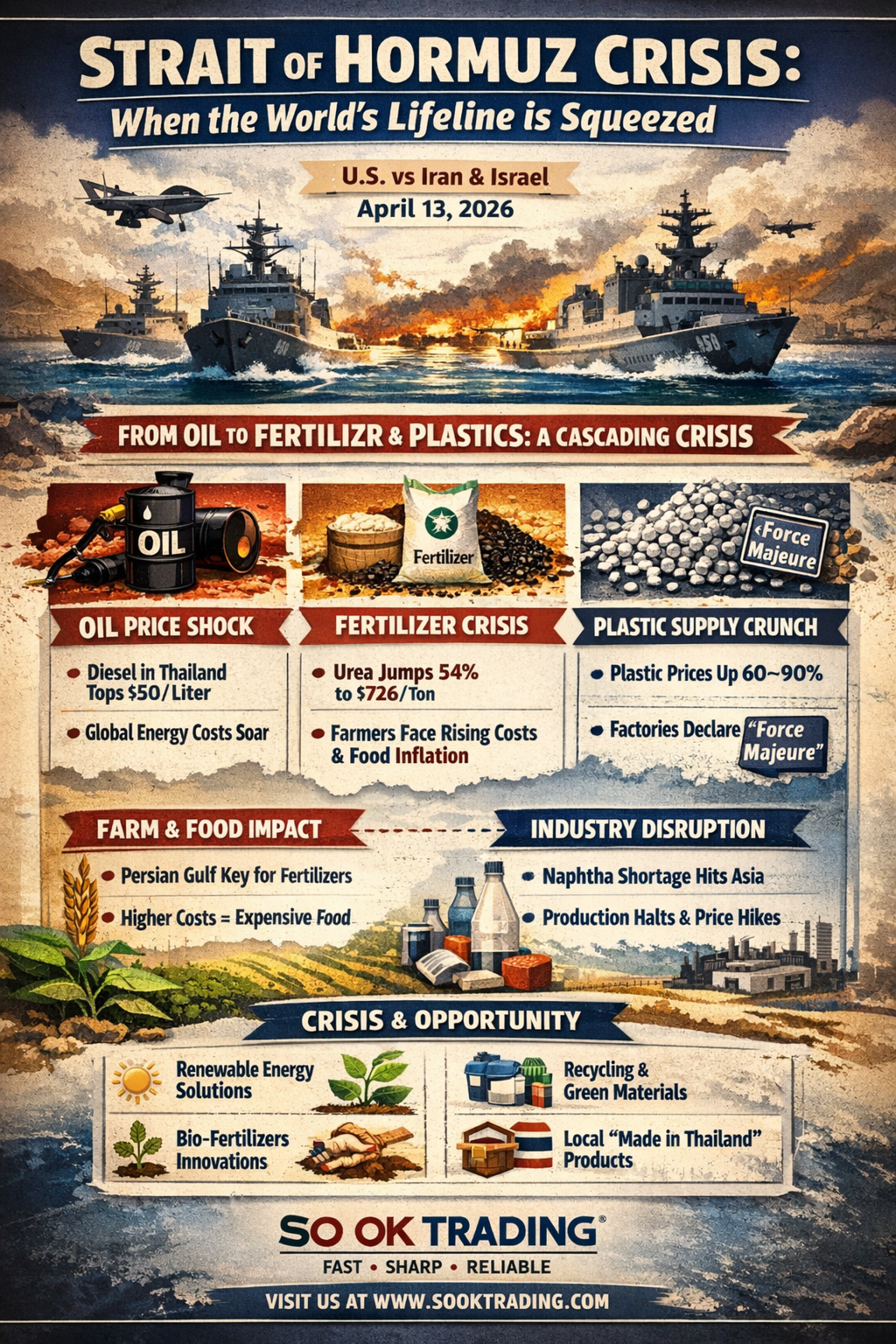
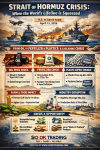
April 13, 2026: Strait of Hormuz — When the World’s Lifeline is Squeezed
The conflict between the United States, Israel, and Iran remains unresolved, and the peace talks in Islamabad have collapsed.

 
Latest Developments (April 13, 2026)
U.S. Full Naval Blockade: CENTCOM deploys warships and drones to control all vessels entering or leaving Iran.
Iran’s Strong Warning: IRGC declares that any intruding warship will be attacked immediately.
800+ Oil Tankers Stranded: Global trade grinds to a halt.
Brent Crude Surges: Prices jump to $100–$120 per barrel in a single day.
Underwater Mines Detected: Heightened risk of direct military confrontation.
The Strait of Hormuz is not just an oil passage — it is the “artery of global industry.” When squeezed, the entire world trembles.

 
Ripple Effects Across the Globe
⛽ Oil Shock
Diesel prices in Thailand are expected to surpass 50 THB/L.
Electricity costs rise as imported energy becomes more expensive.
Fertilizer Crisis
Urea prices surge 54% to $726/ton.
Thailand imports nearly all of its fertilizer → farmers face soaring costs, reduced yields, and food inflation.
Naphtha Crisis
Naphtha is the key feedstock for plastics.
PE/PP prices in Thailand spike 60–90% within two weeks.
Multiple factories across Asia declare Force Majeure due to raw material shortages.
 
Impact on Thailand
Diesel prices near 50 THB/L.
Electricity bills rise.
Farmers struggle with fertilizer costs, industries face raw material shortages, and consumers bear higher living expenses.
 
Marketing Perspective: Crisis as Opportunity
Energy Sector: Investment in renewables such as solar and biomass.
Agriculture: Bio-fertilizers and sustainable farming practices gain traction.
Plastics Industry: Recycling and alternative materials become new selling points.
Consumer Market: Rising costs create space for “Made in Thailand” products using local resources.
 
✨ Conclusion
The Strait of Hormuz crisis is not just about “expensive oil” — it is the disruption of global supply chains, from energy to fertilizer to plastics. Every business must adapt quickly, and within every challenge lies an opportunity for those ready to innovate.

 
SO OK TRADING Your trusted business partner in every global challenge FAST • SHARP • RELIABLE VISIT US AT WWW.SOOKTRADING.COM

Related Content
Wood Pallet: เชื้อเพลิงชีวมวลอัดเม็ด ลดโลกร้อน : พลังงานแห่งอนาคต
เชื้อเพลิงชีวมวลอัดเม็ด (Wood Pellets) ของเราทำจากขี้เลื่อยไม้ นำมาผ่านกระบวนการย่อยและลดความชื้นแล้วนำมาอัดเป็นแท่งจากนั้นจึงนำไปลดอุณหภูมิ ก่อนจัดเก็บใส่ถุงจัมโบ้ เพื่อรอการจัดส่ง โดยค่าความชื้น (Total Moisture Content) ที่ได้จะไม่เกิน 10% ได้ค่าความร้อนสูง (High-Heating Value) เหมาะกับการนำไปใช้งานเป็นเชื้อเพลิงในบอยเลอร์หรือเครื่องกำเนิดไอน้ำ (Boiler) หรือใช้ในเตาเผา (Stove) สำหรับอุตสาหกรรมต่างๆ
10 Nov 2025
“SO OK TRADING – FAST • SHARP • RELIABLE Strategic Partner in Aluminum Packaging, Connecting Global Aluminum to ASEAN and Transforming Thailand’s Packaging Industry”
ALUMINUM PACKAGING – Strategic Supply Partner SO OK TRADING — FAST • SHARP • RELIABLE In an era where the aluminum packaging industry is rapidly expanding, SO OK TRADING stands as a strategic partner, directly connecting global aluminum producers with the packaging markets in Thailand and ASEAN. We are more than just a “distributor” — we act as a Service Agent and Strategic Partner of leading producers such as ALCOA (Australia, USA), ALCOA MA’ADEN (Saudi Arabia), and ARCONIC (China – Bohai Plant), delivering high-quality raw materials that meet international standards to Thai manufacturers. ⚙️ Strengths of SO OK TRADING Guaranteed supply of over 20,000 MT/year of 3104 Aluminum Coil Smooth transition from ALCOA to ARCONIC Comprehensive coverage for Beverage & Food Packaging (3104, 3004, 5182, 5052) Strong support for New Product Development and After-Sales Service
13 Aug 2026
Thai Refined Rice: Premium Quality Delivering a Unique Experience
Thai Refined Rice: Premium Quality for Global Markets Thai rice is globally recognized for its consistent quality and distinctive flavor. It is not only a staple food but also a premium product that appeals to high-end markets. “Refined Rice” emphasizes excellence in variety, cultivation, milling, sorting, and storytelling—making it more than just food, but a cultural experience. Major Types of Thai Refined Rice - Thai Hom Mali Rice (Jasmine Rice) - Long-grain, soft texture, naturally fragrant - World-renowned reputation - Main production area: Northeastern Thailand (Thung Kula Ronghai) - White Rice - Affordable, widely consumed - Exported in large volumes - Parboiled Rice - Firm grains, resistant to breakage - Popular in Africa and the Middle East - Brown Rice / Riceberry - Health-focused varieties - Targeted at premium and health-conscious markets - Glutinous Rice (Sticky Rice) - Staple food in Northeastern and Northern Thailand - Used in desserts and traditional dishes Strengths of Thai Rice - Consistent quality and taste - Strong global image and reputation - GI (Geographical Indication) certification, e.g., Jasmine Rice from Thung Kula Ronghai - Suitable for premium and health-oriented markets Key Export Markets - China - United States - Africa (South Africa, Benin, Nigeria) - Middle East - ASEAN
5 Jan 2026
This website uses cookies for best user experience, to find out more you can go to our Privacy Policy and Cookies Policy
Powered By MakeWebEasy Logo MakeWebEasy