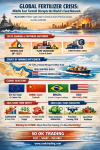
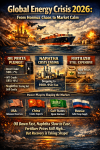
“Fertilizer Shortage War: Strait of Hormuz Shakes the World — From Fertilizer to the Dining Table, a Crisis Undermining Global Food Security” — Article by SO OK TRADING
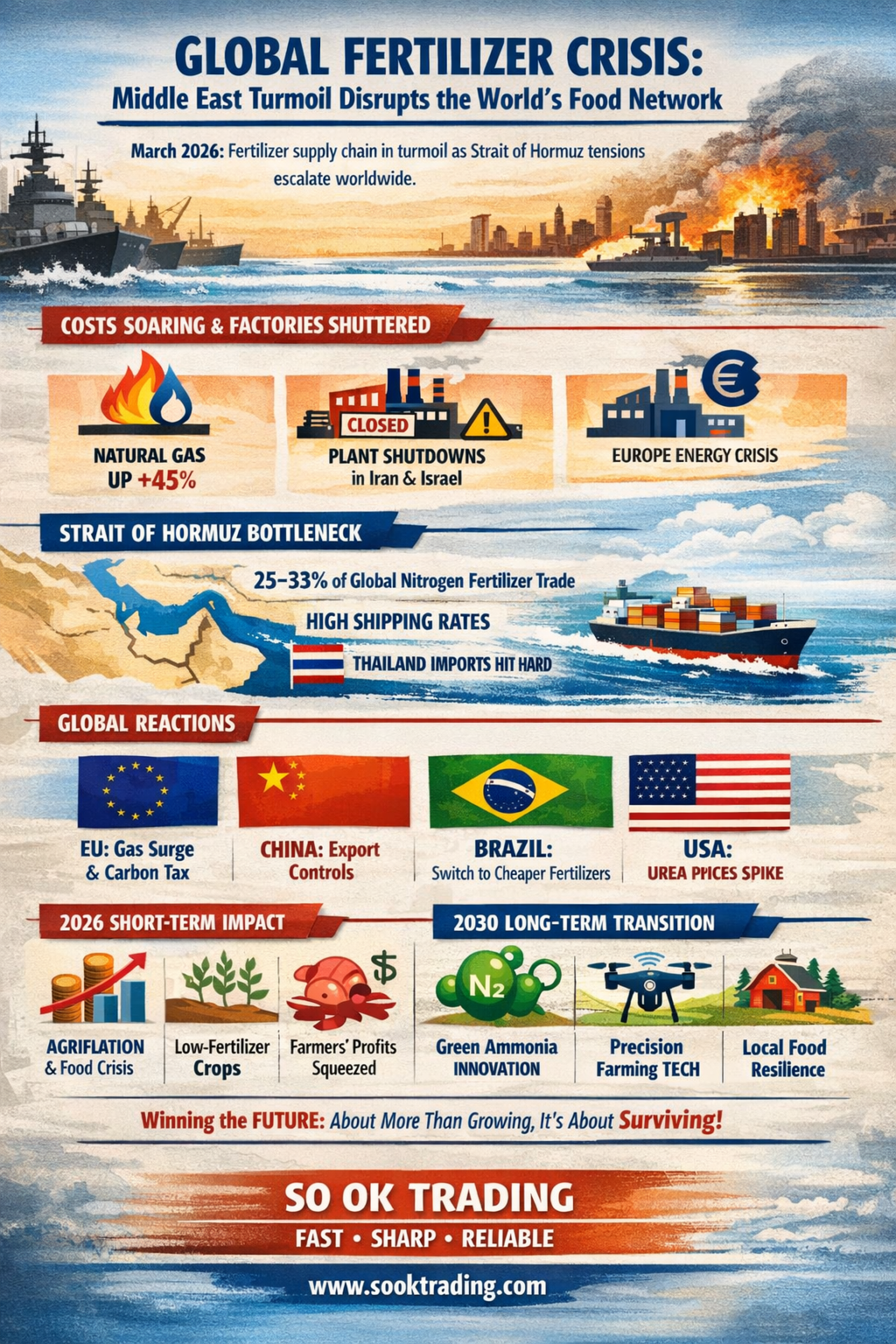
Global Fertilizer Crisis: Middle East Conflict Shakes the World’s Food Chain
In March 2026, the world is facing the largest fertilizer crisis in decades. Rising tensions in the Middle East, especially around the Strait of Hormuz, have sent shockwaves through the global fertilizer and food supply chain.
Rising Costs – Factories Disrupted
Natural gas prices up 45%: Gas is the key feedstock for ammonia and urea. The surge has put immense pressure on fertilizer producers worldwide.
Factory shutdowns: Plants in Iran and Israel have reduced output or halted operations, causing immediate shortages in global markets.
Energy crunch in Europe: Facilities that previously shut down during the Russia–Ukraine gas crisis may face closures again due to soaring costs.
Logistics Bottleneck – Strait of Hormuz
Critical chokepoint: 25–33% of global nitrogen fertilizer trade passes through this strait. Any disruption impacts Asia and Europe directly.
Shipping costs surge: Vessels rerouting around the Cape of Good Hope face weeks of delays and skyrocketing insurance premiums.
Impact on Thailand: As a net fertilizer importer, Thailand bears the brunt of higher transport costs and inflated prices.
Global Impact
Europe: Double shock from gas prices and the new Carbon Border Adjustment Mechanism (CBAM).
China: Restricts phosphate exports to stabilize domestic prices.
Brazil: Farmers shift to ammonium sulfate as a cheaper alternative to urea.
India: Faces heightened food security risks due to disrupted imports.
United States: Urea prices at New Orleans port jumped over 10% in just one week.
Short-Term Outlook (2026)
Agriflation: Fertilizer, energy, and logistics costs rise simultaneously.
Crop adjustments: Farmers turn to “low-fertilizer” crops such as beans and local varieties.
Fertilizer affordability crisis: Developing nations risk losing access to chemical fertilizers.
Profit squeeze: Higher selling prices fail to offset surging input costs.
Long-Term Outlook (2030)
Green Ammonia: Accelerated investment in clean fertilizer alternatives.
Precision Agriculture: AI, drones, and soil sensors become standard practice.
Genetic Innovation: Development of nitrogen-fixing crops reduces reliance on chemical fertilizers.
Regionalization: Food systems shift toward greater self-reliance at the regional level.
The Middle East conflict is not only an energy crisis but also a catalyst pushing the world into a new era of permanent food inflation (Agflation). Nations and farmers will no longer compete on cultivation skills alone, but on cost efficiency and access to critical inputs.
SO OK TRADING: Your Trusted Business Partner
SO OK TRADING — FAST • SHARP • RELIABLE
www.sooktrading.com