Share

Nickel: The Strategic Metal of the Clean Energy Future — An Article by SO OK TRADING
Last updated: 26 Feb 2026
873 Views

Nickel: The Strategic Metal of the Clean Energy Future ⚡

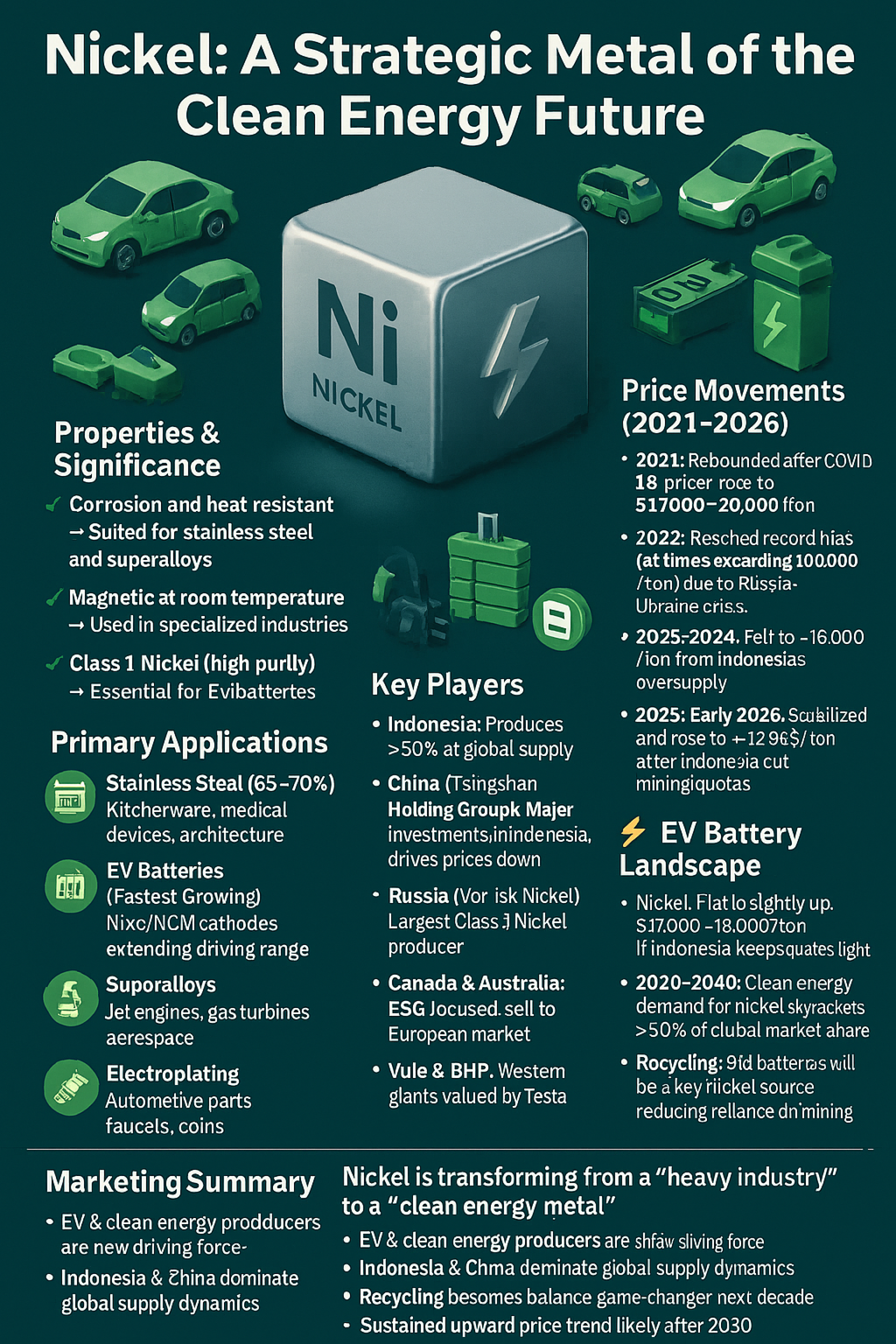
Nickel (Ni) is shifting its role from a traditional heavy industry metal to the core of the clean energy transition. Especially in electric vehicles (EVs) and energy storage systems (ESS), nickel will shape the global economy over the next 10–20 years.


Properties & Significance

Corrosion and heat resistant → Ideal for stainless steel and superalloys
Magnetic at room temperature → Used in specialized industries
Class 1 Nickel (high purity) → Essential raw material for EV batteries
 

Price Movements (2021–2026)

2021: Post-COVID recovery, prices rose to $17,000–20,000/ton
2022: Historic spike (at times exceeding $100,000/ton) due to Russia–Ukraine crisis
2023–2024: Fell to ~$16,000/ton from Indonesia’s oversupply
2025–Early 2026: Stabilized and rebounded to ~$17,963/ton after Indonesia cut mining quotas
 

Primary Applications

Stainless Steel (65–70%): Kitchenware, medical devices, architectural structures
EV Batteries (fastest-growing): NMC/NCM cathodes, extending driving range
Superalloys: Jet engines, gas turbines, aerospace industry
Electroplating: Automotive parts, faucets, coins
Chemical Industry: Catalysts in oil refining and chemical processes
 

Major Players

Indonesia: Produces >50% of global supply
China (Tsingshan Holding Group): Massive investments in Indonesia, driving prices down
Russia (Norilsk Nickel): Largest Class 1 Nickel producer
Canada & Australia: ESG-focused, supplying European markets
Vale & BHP: Western giants valued by Tesla
 

⚡ EV Battery Battlefield

Nickel-based (NCM/NCA): Range >500 km, suited for luxury and high-performance vehicles
LFP (Lithium Iron Phosphate): Cheaper, safer, ideal for city cars and ESS
Recycling: Old batteries will become a key nickel source in the future
 

Price & Market Outlook

2026: Stable to slightly upward ($17,000–19,000/ton) if Indonesia maintains strict quotas
2030–2040: Clean energy demand expected to exceed 50% of global nickel consumption
Battery Recycling: Emerging as a new supply source, reducing reliance on mining
 

Marketing Summary

Nickel is evolving from a “heavy industry metal” to a “clean energy metal”.

EV and clean energy producers are the new driving force
Indonesia and China dominate global supply dynamics
Recycling will rebalance the market in the next decade
Sustained upward price trend expected after 2030
 

About SO OK TRADING

In this strategic metal battleground, SO OK TRADING is committed to bridging premium Thai non-ferrous metal producers with global markets. With expertise in non-ferrous metals and clean energy, we are your trusted business partner.

For Nickel inquiries:
Visit www.sooktrading.com → Click “Give Inquiry”
Or contact us directly via email: sooktrading@outlook.com


Related Content
เกร็ดความรู้ พลวง และ พลวงแท่ง by SO OK
พลวง (Antimony, Sb) คือธาตุกึ่งโลหะสีเทาเงิน มีคุณสมบัติแข็งแต่เปราะ ทนความร้อนและสารเคมีได้ดี นิยมใช้ผสมโลหะอื่น (เช่น ตะกั่ว) เพิ่มความแข็งในแบตเตอรี่, โลหะตัวพิมพ์ และแบริ่ง รวมถึงใช้ทำสารหน่วงไฟ, พลาสติก, สารกึ่งตัวนํา และดอกไม้ไฟ โดยแหล่งแร่พลวงสำคัญพบได้ในหลายจังหวัดของไทย เช่น แม่ฮ่องสอน, เชียงใหม่, ตาก. เกร็ดน่ารู้เกี่ยวกับพลวง ชื่อ: พลวง หรือ แอนทิโมนี (Antimony) มีสัญลักษณ์ทางเคมีคือ Sb มาจากภาษาลาตินว่า Stibium. ลักษณะ: เป็นผลึกแข็งสีขาวคล้ายเงิน มีความเงา แต่เปราะมาก และเป็นตัวนำไฟฟ้าความร้อนที่ไม่ดี. คุณสมบัติเด่น: ผสมกับโลหะอื่น: เมื่อผสมกับโลหะอ่อน เช่น ตะกั่ว จะเพิ่มความแข็งแรงได้อย่างมาก. ทนทาน: ทนความร้อนและปฏิกิริยาเคมีได้ดี. การนำไปใช้ประโยชน์: อุตสาหกรรม: ผสมในโลหะทำแบตเตอรี่ (ตะกั่ว-พลวง), โลหะตัวพิมพ์, ลูกปืน, แบริ่งรถยนต์, บัดกรี, ท่อปลอกสายเคเบิล. สารหน่วงไฟ: ใช้ในพลาสติก, ใยสังเคราะห์, เสื้อผ้าเด็ก, ของเล่น เพื่อชะลอการติดไฟ. อิเล็กทรอนิกส์: ทำสารกึ่งตัวนำ, ทรานซิสเตอร์, ไดโอด (Diode). อื่นๆ: ทำสีทนไฟ, เครื่องสำอาง (หลอดยาสีฟัน), ดอกไม้ไฟ, เชื้อปะทุ. แหล่งที่พบในไทย: พบได้ในหลายจังหวัด เช่น แม่ฮ่องสอน, เชียงใหม่, ตาก, ระยอง, สุราษฎร์ธานี. แร่สำคัญ: แร่พลวงซัลไฟด์ (Stibnite) หรือ พลวงเงิน, พลวงออกไซด์.
10 Dec 2025
Copper Usage and Trend of it use and price
Copper's excellent electrical/thermal conductivity, corrosion resistance, and antimicrobial properties make it vital for electrical wiring, plumbing (pipes, fittings), and electronics; it's also crucial in construction (roofing, gutters), transportation (EVs, radiators), machinery (motors, pumps), and has uses in medicine (hospital surfaces), art, and agriculture (fungicides). Its role is growing with the energy transition (solar, wind, EV infrastructure). Key Applications by Industry Electrical & Electronics: Wires, cables, circuit boards, motors, transformers, switches, connectors (essential for data centers, AI, EVs). Construction: Plumbing (pipes), roofing, gutters, downspouts, architectural details, door handles (due to antimicrobial nature). Transportation: Vehicle wiring, motors, radiators, braking systems, marine hardware (anti-fouling). Industrial Machinery: Heat exchangers, pumps, valves, bearings, industrial piping. Medical: Hospital surfaces, doorknobs, equipment (reduces bacteria). Consumer Goods: Cookware, jewelry, musical instruments, tools, decorative items. Agriculture: Copper sulfate used as fungicide and algaecide. Why Copper is Used High Conductivity: Best for transferring electricity and heat efficiently. Corrosion Resistance: Resists weathering and soil corrosion, ideal for water/plumbing. Malleability & Ductility: Easy to shape and draw into wires. Antimicrobial: Kills microbes, reducing infection spread. Durability & Recyclability: Long-lasting and highly sustainable
21 Dec 2025
This website uses cookies for best user experience, to find out more you can go to our Privacy Policy and Cookies Policy
Powered By MakeWebEasy Logo MakeWebEasy