Thai Agri-Exports 2026: Rising Strong, Going Global: Durian to Cassava: Thailand’s Export Powerhouse
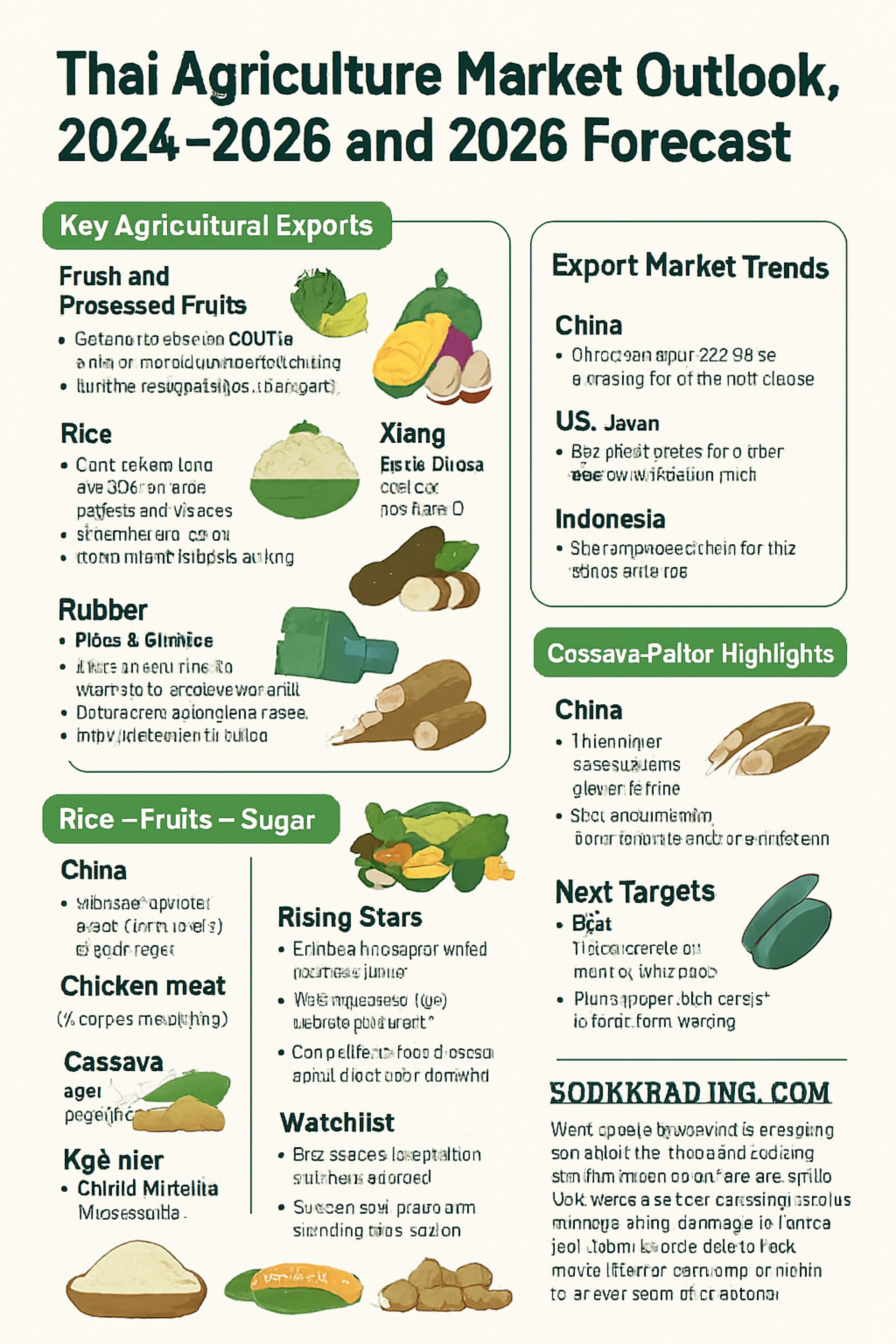
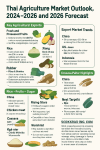
Thai Agriculture Market Overview 2024–2026 and 2026 Outlook
Thailand’s agricultural exports remain a vital “engine of growth” for the economy, with staple products generating steady revenue and rising stars expanding into new global markets.
Key Agricultural Exports
Fresh and Processed Fruits
Export value: USD 6.51 billion
Durian dominates as the top fruit export, with China absorbing over 70% of production
Other key fruits: longan, mangosteen, mango
Rice
2024 exports: 9.95 million tons, the highest in six years
Main markets: Indonesia, Africa, Iraq
2025 target: 7.5 million tons, but facing competition from India and baht appreciation pressures
Rubber
Export value: USD 4.99 billion
Thailand remains the world’s top exporter
Key markets:
Block rubber → China
Smoked sheets → Japan, USA
Concentrated latex → Malaysia
Compound rubber → India
Chicken Meat
Export value: USD 4.31 billion
Driven by strong global protein demand
Cassava and Products
Export value: USD 3.13 billion
China is the primary market, for animal feed and energy
Export Market Trends
China: Largest share (23.68%), especially for durian and cassava
USA & Japan: Key for rubber and chicken
Indonesia: Major buyer of rice and sugar
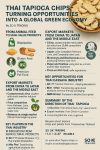
Cassava Pellet Highlights
China
Demand surging, used as corn substitute in feed and ethanol production
2025 advance purchase: 1.68 million tons, worth THB 5.3 billion
Strict standards: cleanliness and starch content ≥ 67%
Middle East
Late 2025: First shipment of 20,000 tons to Saudi Arabia
Major client: ARASCO, the region’s largest feed producer
Strengths: Non-GMO, high quality, durable, suitable for long-distance transport
Next targets: UAE and halal food industry
Rice – Fruits – Sugar
Rice: Record high in 2024, but 2025 faces competition and currency pressure
Fruits: Durian, longan, mangosteen, mango dominate China; 2025 production expected to rise 15%, possibly pressuring domestic prices
Sugar: Thailand remains #2 globally; sugarcane output up 20% supports revenue despite lower export prices
2026 Outlook – “Strong Recovery”
Agricultural GDP: Expected growth 2–3%, total value THB 720–730 billion
Rising Stars
Durian – sustained demand from China
Chicken – strong global protein demand
Cassava – favorable prices due to lower production
Palm oil – supported by energy and biodiesel demand
Watchlist
Rice – increased competition, baht appreciation
Rubber – global slowdown may reduce demand
✨ Conclusion
Thai agriculture is entering an “upswing,” with fruits and cassava leading the charge into new markets. Rice and rubber require strategic adjustments to stay competitive globally. The successful opening of the Middle East market marks a milestone, reducing reliance on China and assuring farmers of diversified demand.
For inquiries on Thai agricultural products — rice, sugar, fruits, cassava chips/pellets, corn — please visit WWW.SOOKTRADING.COM or email sooktrading@outlook.com.