「再生可能エネルギー革命 ― バイオマスと太陽光で世界のエネルギーを刷新する:世界が選ぶグリーンな選択肢」
Last updated: 17 Apr 2026
2540 Views
代替エネルギー ― バイオ燃料:化石燃料や石炭に代わり、世界を変えるゲームチェンジャー
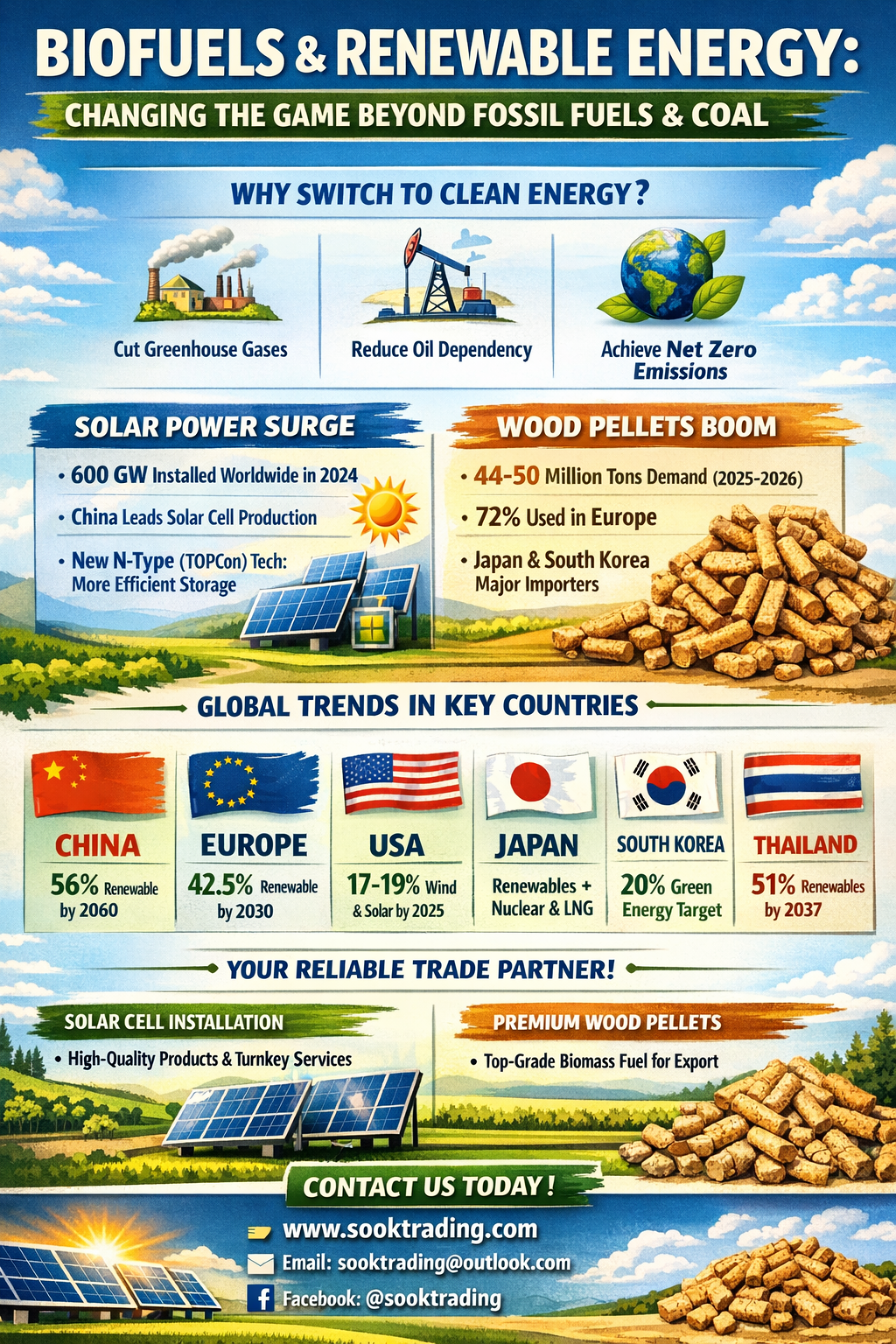
世界は今、かつてないスピードで「安価で成長の早いクリーンエネルギー時代」へと突入しています。これは単なる技術革新ではなく、経済とエネルギー安全保障の新しい基盤を築く転換点です。
代替エネルギーの種類
再生可能エネルギー (Renewable Energy) 太陽光、風力、水力、バイオマス、地熱
非再生型代替エネルギー (Non-renewable Alternatives) 天然ガス、石炭、原子力 → 石炭は「ゼロエミッション」の観点から課題あり
代替エネルギーを導入すべき理由
温室効果ガス排出削減 → 地球温暖化の抑制
原油依存度の低減 → エネルギー安全保障の強化
Net Zero Emissions 目標への対応
ソーラーパネル:急成長する太陽光エネルギー
2024年、世界で新規設置容量は約600GW
中国が技術・生産の両面で世界をリード
新技術 N型 (TOPCon) が旧世代を置き換えつつあり → 高効率の蓄電池と太陽光パネルでエネルギー収集力が向上
ウッドペレット:バイオマスの新星
世界需要(2025–2026年):年間44–50百万トン
欧州が最大消費地(世界の72%)
日本・韓国は石炭代替として大量輸入 → 主に発電所で使用
ベトナムは世界第2位の輸出国へ躍進
2026年初頭の平均価格:204–221ドル/トン(タイでは約3,100–4,950バーツ/トン)
主要国の代替エネルギー動向
中国:年間360GW超の再生可能エネルギーを新規導入。総発電容量の56%を占め、2060年までにカーボンニュートラルを目指す。
EU:電力の約50%を再生可能エネルギーで供給。2030年までに42.5%へ拡大する「REPowerEU」計画を推進。
米国:風力・太陽光が総発電の17–19%(2025年)。成長中だが税制・土地政策に制約あり。
日本:再生可能エネルギーを増やしつつ、原子力・LNGも併用しエネルギー安定を確保。
韓国:再生可能エネルギー比率20%を目標に、日本と協力してクリーンエネルギーを調達。
タイ:PDP 2024計画で2037年までに再生可能エネルギー比率を51%へ。太陽光・風力・バイオマスを重点に、外国投資を呼び込むDirect PPAを導入。
ASEAN:2025年までに一次エネルギーの23%を再生可能に。未達ながら2030年には化石燃料を逆転する見込み。
市場概要
ウッドペレット:需給逼迫、需要旺盛
ソーラーパネル:新技術競争が激化
世界は「安価で急成長するクリーンエネルギー時代」へ。各国は Net Zero 達成に向けて加速しています。
サービスのご案内
ご家庭や工場でソーラーパネル設置をご検討の方は、ぜひ弊社へご相談ください。高品質製品の提供から許認可取得、施工までワンストップで対応いたします。
また、高品質なタイ産ウッドペレットの輸入・利用をご希望の方もお気軽にお問い合わせください。輸出対応可能な良質商品をご用意しております。
お問い合わせ: sooktrading@outlook.com (outlook.com in Bing) Webサイト: www.sooktrading.com
SO OK TRADING
あなたのビジネスパートナー
FAST • SHARP • RELIABLE
Facebook: SOOKTRADING
世界は今、かつてないスピードで「安価で成長の早いクリーンエネルギー時代」へと突入しています。これは単なる技術革新ではなく、経済とエネルギー安全保障の新しい基盤を築く転換点です。
代替エネルギーの種類
再生可能エネルギー (Renewable Energy) 太陽光、風力、水力、バイオマス、地熱
非再生型代替エネルギー (Non-renewable Alternatives) 天然ガス、石炭、原子力 → 石炭は「ゼロエミッション」の観点から課題あり
代替エネルギーを導入すべき理由
温室効果ガス排出削減 → 地球温暖化の抑制
原油依存度の低減 → エネルギー安全保障の強化
Net Zero Emissions 目標への対応
ソーラーパネル:急成長する太陽光エネルギー
2024年、世界で新規設置容量は約600GW
中国が技術・生産の両面で世界をリード
新技術 N型 (TOPCon) が旧世代を置き換えつつあり → 高効率の蓄電池と太陽光パネルでエネルギー収集力が向上
ウッドペレット:バイオマスの新星
世界需要(2025–2026年):年間44–50百万トン
欧州が最大消費地(世界の72%)
日本・韓国は石炭代替として大量輸入 → 主に発電所で使用
ベトナムは世界第2位の輸出国へ躍進
2026年初頭の平均価格:204–221ドル/トン(タイでは約3,100–4,950バーツ/トン)
主要国の代替エネルギー動向
中国:年間360GW超の再生可能エネルギーを新規導入。総発電容量の56%を占め、2060年までにカーボンニュートラルを目指す。
EU:電力の約50%を再生可能エネルギーで供給。2030年までに42.5%へ拡大する「REPowerEU」計画を推進。
米国:風力・太陽光が総発電の17–19%(2025年)。成長中だが税制・土地政策に制約あり。
日本:再生可能エネルギーを増やしつつ、原子力・LNGも併用しエネルギー安定を確保。
韓国:再生可能エネルギー比率20%を目標に、日本と協力してクリーンエネルギーを調達。
タイ:PDP 2024計画で2037年までに再生可能エネルギー比率を51%へ。太陽光・風力・バイオマスを重点に、外国投資を呼び込むDirect PPAを導入。
ASEAN:2025年までに一次エネルギーの23%を再生可能に。未達ながら2030年には化石燃料を逆転する見込み。
市場概要
ウッドペレット:需給逼迫、需要旺盛
ソーラーパネル:新技術競争が激化
世界は「安価で急成長するクリーンエネルギー時代」へ。各国は Net Zero 達成に向けて加速しています。
サービスのご案内
ご家庭や工場でソーラーパネル設置をご検討の方は、ぜひ弊社へご相談ください。高品質製品の提供から許認可取得、施工までワンストップで対応いたします。
また、高品質なタイ産ウッドペレットの輸入・利用をご希望の方もお気軽にお問い合わせください。輸出対応可能な良質商品をご用意しております。
お問い合わせ: sooktrading@outlook.com (outlook.com in Bing) Webサイト: www.sooktrading.com
SO OK TRADING
あなたのビジネスパートナー
FAST • SHARP • RELIABLE
Facebook: SOOKTRADING


関連コンテンツ
世界砂糖産業 2024/25:甘味から未来エネルギーへ
24 Mar 2026