“Renewable Revolution – Transforming Global Energy with Biomass and Solar Power: The Green Choice the World Embraces”
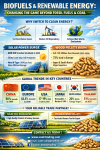
Alternative Energy – Biofuels: The Game-Changer Set to Replace Fossil Fuels and Coal
The world is accelerating into an era of clean energy that is cheaper and growing faster than ever before. This transition is not just about technology—it is about laying a new foundation for global economic development and energy security.
Types of Alternative Energy
Renewable Energy: Solar, wind, hydro, biomass, geothermal
Non-renewable Alternatives: Natural gas, coal, nuclear → Coal may not meet the ZERO EMISSION target
Why Alternative Energy Matters
Reduce greenhouse gas emissions → Slow down global warming
Reduce dependence on crude oil → Strengthen energy security
Align with Net Zero Emissions goals
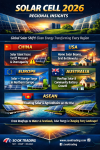
Solar Cells: The Rising Star of Solar Power
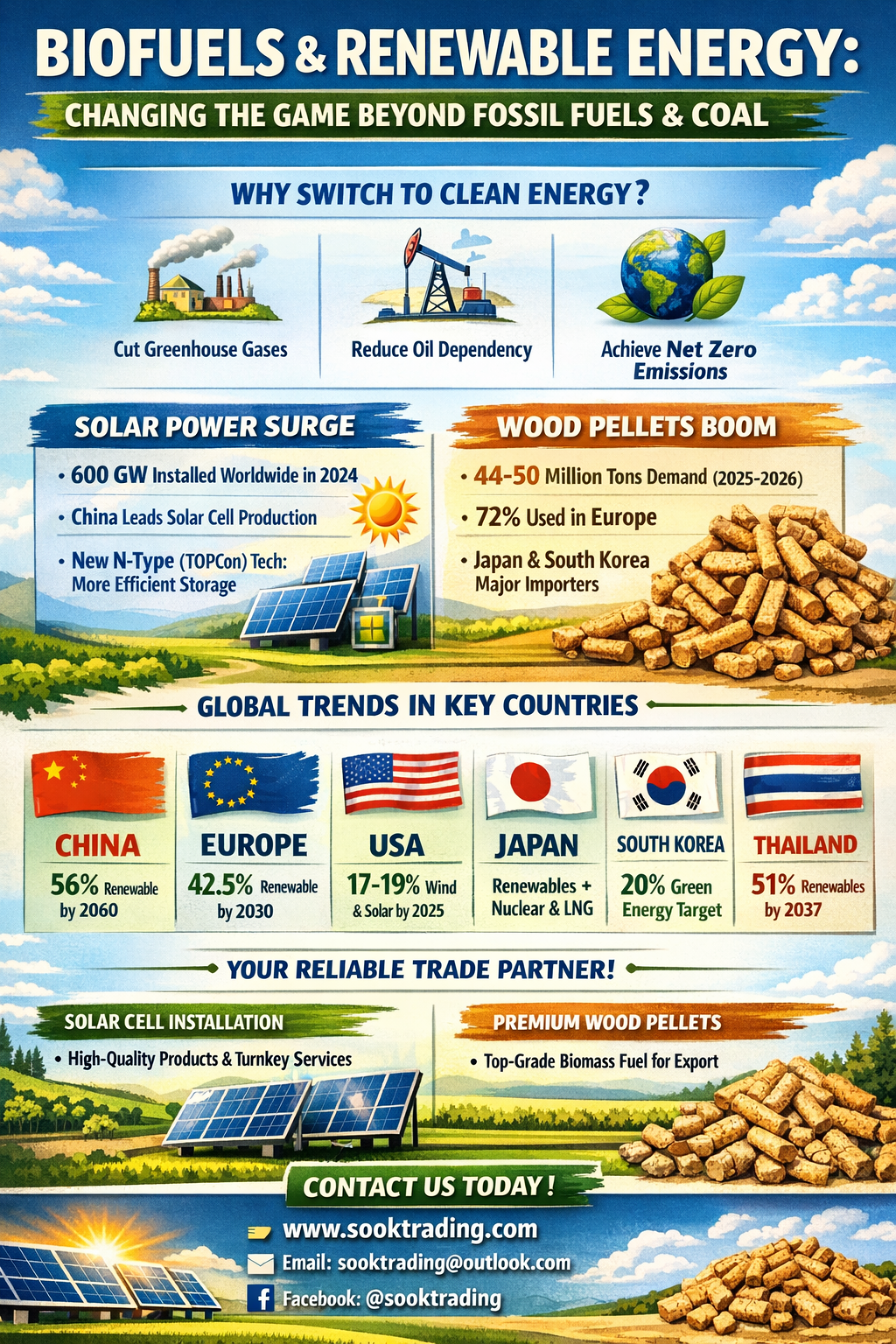
In 2024, nearly 600 GW of new installations worldwide
China leads both in technology and production of solar cells used globally
New N-type (TOPCon) technology is replacing older models → Next-generation batteries store more energy, and solar panels capture sunlight more efficiently
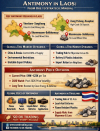
Wood Pellets: Biomass on the Rise
Global demand (2025–2026): 44–50 million tons per year
Europe consumes the most (72% of global demand)
Japan and South Korea import massive volumes to replace coal → Mainly for power plants
Vietnam has risen to become the world’s second-largest exporter
Average price early 2026: $204–221 per ton (approx. 3,100–4,950 THB/ton in Thailand)
Alternative Energy Trends in Key Countries
China: Installed over 360 GW of new renewable energy in one year, accounting for 56% of total electricity capacity. Targeting carbon neutrality by 2060.
European Union (EU): Nearly 50% of electricity from renewables. Aiming for 42.5% by 2030 under the REPowerEU plan.
United States: Wind and solar expected to generate 17–19% of electricity in 2025. Growth continues but faces policy and land-use constraints.
Japan: Expanding renewables alongside nuclear and LNG to ensure energy stability.
South Korea: Targeting 20% renewable energy share, cooperating with Japan to secure clean energy.
Thailand: Under PDP 2024, aiming for 51% renewable energy share by 2037. Focus on solar, wind, and biomass, with Direct PPA projects to attract foreign investors.
ASEAN: Targeting 23% of primary energy from renewables by 2025. While short of target, renewables are expected to surpass fossil fuels by 2030.
Market Overview
Wood Pellets: Tight market, strong demand
Solar Cells: Competition driven by new technology
The world is entering an era of clean, affordable, and fast-growing energy. Every nation is accelerating its transition to achieve Net Zero.
Our Services
If you are interested in installing solar cells at your home or factory, we provide high-quality products with full-service support—from licensing to installation.
If you require or wish to import high-quality wood pellets from Thailand, we also supply premium products ready for export.
Email: sooktrading@outlook.com Website: www.sooktrading.com
SO OK TRADING
Your Trusted Business Partner
FAST • SHARP • RELIABLE
Facebook: SOOKTRADING