「停戦後の世界 2026:金は急騰、原油は急落、株は急伸 ― 48時間で世界市場を揺るがす」 — SO OK TRADING による記事:2026年4月8日
Last updated: 8 Apr 2026
2534 Views

停戦後の世界情勢アップデート(2026年4月8日)
金・株式・為替・原油への影響まとめ — SO OK TRADING
重要な転換点
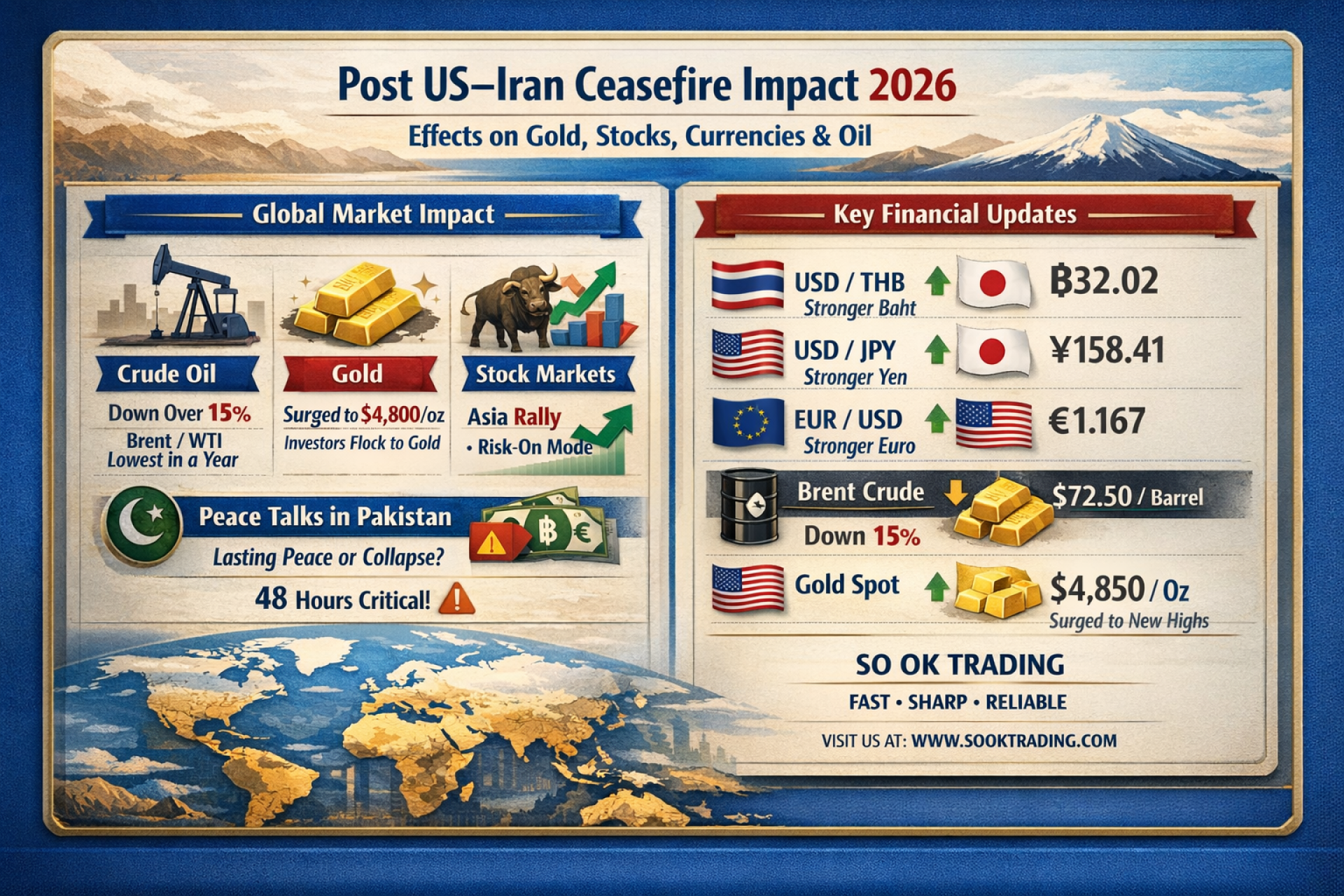
米国とイランの間で 2週間の一時停戦 が開始されました。これにより、今週金曜日にパキスタンで和平交渉が行われる道が開かれます。 主要条件:イランは即座にホルムズ海峡を安全に開放すること。 大きな賭け:交渉が成功すれば、恒久的な平和 と一部制裁の解除が現実となる可能性があります。
世界の大国の動き
中国:最大のイラン原油輸入国 → 生産コストが即座に低下
ロシア:原油価格の急落で収益減少、立場が不利に
米国:トランプ政権の「大きな成果」だが、野党は厳しく監視
欧州:エネルギー危機の緩和に安堵 → ユーロ高、投資家が株式市場へ回帰
世界市場の衝撃
原油:15%以上急落 → インフレ圧力緩和。ただし交渉失敗なら急反発のリスク
金:停戦にもかかわらず1オンス4,800ドル超 → 投資家は依然として不安視
為替:ドル安 → アジア通貨(バーツ、円、ルピー、シンガポールドル)が上昇
株式市場:特にアジアで急騰 → 投資家心理は「リスクオン」へ
️ 原油価格(Brent / WTI)
停戦報道後、15%以上急落
短期的には下値レンジで推移(Sideway Down)
交渉失敗なら在庫不足から急反発の可能性
金・株式・為替・原油への影響まとめ — SO OK TRADING
重要な転換点
米国とイランの間で 2週間の一時停戦 が開始されました。これにより、今週金曜日にパキスタンで和平交渉が行われる道が開かれます。 主要条件:イランは即座にホルムズ海峡を安全に開放すること。 大きな賭け:交渉が成功すれば、恒久的な平和 と一部制裁の解除が現実となる可能性があります。
世界の大国の動き
中国:最大のイラン原油輸入国 → 生産コストが即座に低下
ロシア:原油価格の急落で収益減少、立場が不利に
米国:トランプ政権の「大きな成果」だが、野党は厳しく監視
欧州:エネルギー危機の緩和に安堵 → ユーロ高、投資家が株式市場へ回帰
世界市場の衝撃
原油:15%以上急落 → インフレ圧力緩和。ただし交渉失敗なら急反発のリスク
金:停戦にもかかわらず1オンス4,800ドル超 → 投資家は依然として不安視
為替:ドル安 → アジア通貨(バーツ、円、ルピー、シンガポールドル)が上昇
株式市場:特にアジアで急騰 → 投資家心理は「リスクオン」へ
️ 原油価格(Brent / WTI)
停戦報道後、15%以上急落
短期的には下値レンジで推移(Sideway Down)
交渉失敗なら在庫不足から急反発の可能性
関連コンテンツ
**「タイの新年 2026年4月13日
この火の馬の年のソンクランは、“生き残るための適応”の年です。
世界が気候と政治の両面で熱く揺れ動く中、冷静さと勇気を持つ人は、危機をチャンスに変えることができるでしょう。
すべてのビジネスと人生が、新しい年を希望と安定の力とともに歩み出せますように。
SO OK TRADING
FAST • SHARP • RELIABLE
13 Apr 2026
クリーンエネルギーのマイルストーン:タイ産業にとって「選択」から「生存」へ
タイは大きなエネルギー転換に向けて歩みを進めています。明確な目標は 2050年までにカーボンニュートラル、そして 2065年までにネットゼロ を達成することです。これは単なる温室効果ガス削減ではなく、世界市場で新たな競争力を築く挑戦でもあります。
現在、「クリーン燃料」である RDF-3 や 木材チップ(Wood Chip) が転換の中心となっています。セメント工場での石炭代替、日本や韓国への輸出、さらには カーボンクレジット による新たな収益源として注目されています。
燃料転換は単なるエネルギー問題ではなく、次のような戦略的価値を持ちます:
- BOIによる税制優遇
- 欧州CBAM(炭素国境調整メカニズム)の回避
- カーボンクレジットによる新たな収益創出
- ESGと持続可能性のブランド強化
20 Feb 2026
he Thai baht in Q1 2026 is expected to strengthen against the US dollar, driven primarily by a weaker dollar globally, a seasonal tourism boost, and expectations of US Federal Reserve rate cuts. This strength is occurring despite a weak domestic economic outlook and the Bank of Thailand's (BoT) likely continued easing of its policy rate.
Exchange Rate Drivers and Forecast
External Factors: The primary driver for the strengthening baht is external, mainly the broad weakness of the US dollar as global markets price in expected Fed rate cuts. The baht is also correlated with global gold prices, which have been climbing.
Tourism High Season: The period extending into Q1 2026 is the high season for tourism, which typically brings in foreign currency and supports the baht's value.
Policy Divergence: The BoT is expected to continue its easing cycle, potentially cutting the policy rate further to 1.00% by Q1 2026 to stimulate the sluggish domestic economy. This divergence from a potentially less aggressive US Fed in Q1 could support the baht in the short term, though some analysts warn the currency could weaken later in 2026.
Forecasts: Projections for 2026 generally place the baht in a range of 30.80–33.00 per US dollar. Some models estimate it could trade around 31.06 by the end of Q1. A persistently strong baht below 31 per US$ is seen as a significant risk to the Thai export and tourism sectors.
Key Economic Context
Weak Growth: Thailand's economy is expected to slow down to a 5-year low growth rate of around 1.6-1.8% in 2026, pressured by US tariffs, global trade tensions, and high household debt. The central bank chief expects an improvement in Q1 2026 after a weak second half of 2025.
Political Uncertainty: A general election expected in February 2026 could also introduce volatility, though some historical trends suggest the baht may strengthen following the formation of a new government.
Low Inflation: Headline inflation is projected to remain subdued or even negative, providing the central bank with justification for further rate cuts to stimulate demand.
In summary, Q1 2026 is characterized by a strong and volatile baht driven by external factors, contrasting sharply with a weak domestic economy and accommodative monetary policy.
1 Jan 2026