「金は一時的に調整中、しかし力は尽きていない ― 新たな最高値への黄金の道」 : SO OK TRADING による記事 : 2026年4月4日
最終更新: 4 4月 2026
2943 閲覧数
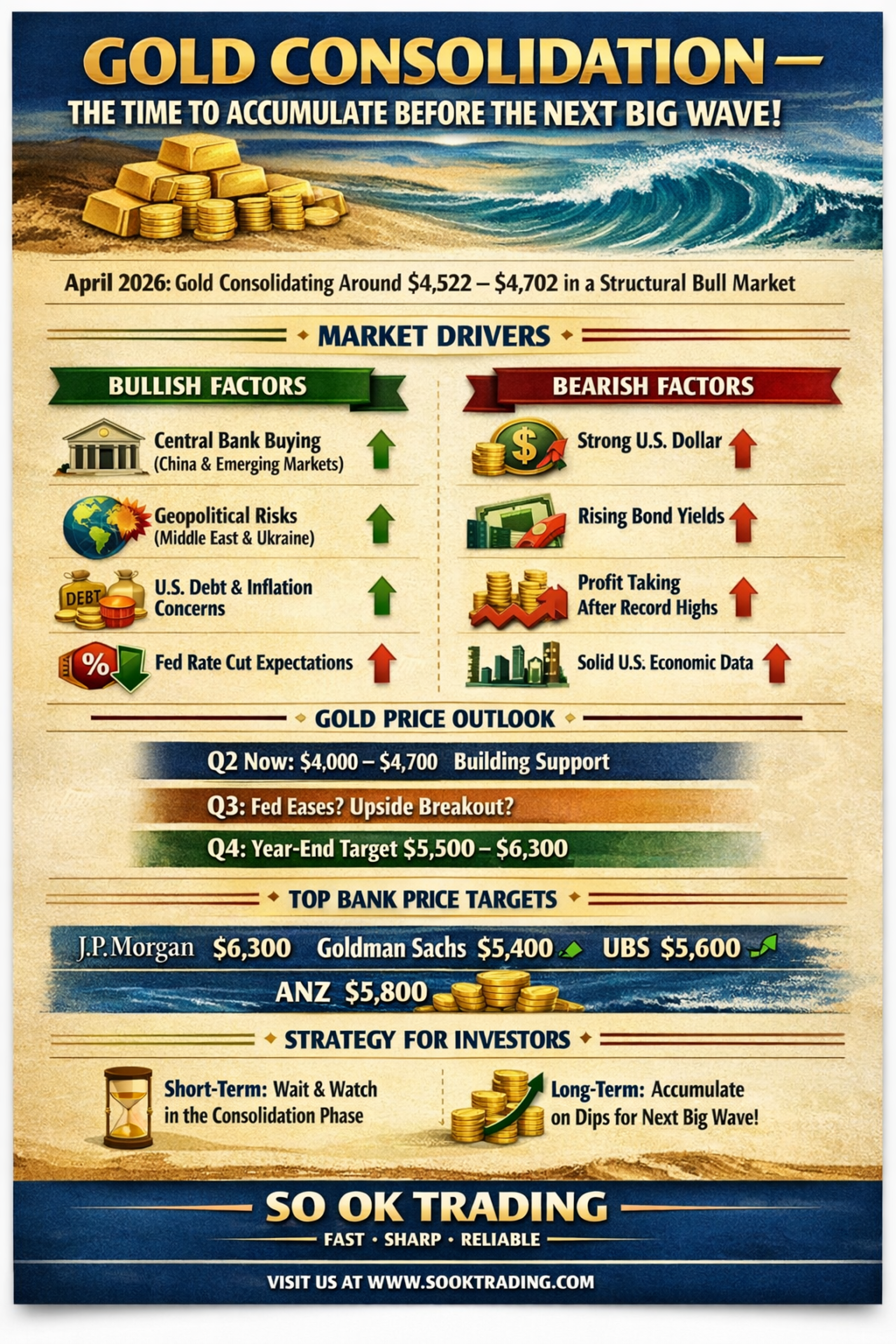
「金は一時的に調整中 ― 次の大波に備える絶好の買い場!」
世界の金市場(2026年4月)
世界の金市場は現在「高位での調整局面」にあります。年初に史上最高値 5,594ドル/オンス を記録した後、現在は 4,522~4,702ドル/オンス(タイ国内では約 72,200バーツ/バーツ金条)で推移しています。価格は高値から下落しましたが、依然として 構造的な強気相場(Structural Bull Market) にあり、安全資産としての金の強さを示しています。
市場を動かす要因
強気要因(Bullish Drivers) → 金価格を押し上げる要素
世界各国の中央銀行による積極的な金購入(特に中国や新興市場)
中東やウクライナを中心とした地政学的リスク
米国の公的債務増加による通貨への不安
年後半に予想される米連邦準備制度(Fed)の利下げ期待
弱気要因(Bearish Pressures) → 金価格を押し下げる要素
米ドル高により他通貨保有者にとって金が割高になる
米国債利回り上昇による資金シフト
史上最高値後の利益確定売り
米国経済指標の予想以上の強さによる高金利維持懸念
四半期ごとの見通し
第2四半期(現在): 「新たな基盤形成」段階、価格レンジは $4,000~$4,700
第3四半期: Fedの利下げや米国中間選挙の影響で価格上昇の可能性
第4四半期: 中央銀行の買い支えにより $5,000~$5,400 を目標とする見通し
世界的金融機関の見解
J.P. Morgan: 年末目標 $6,300
Goldman Sachs: 年末目標 $5,400
UBS: 年末目標 $5,600
ANZ: 上昇継続で $5,800 を予測
Citi: 地政学的リスクが緩和すれば $2,700 まで下落の可能性(やや悲観的)
投資戦略のまとめ
短期投資家: 現在は「様子見」の局面
長期投資家: 4月は「少しずつ積み立てる好機」、ドル依存低下(De-dollarization)と中央銀行の買い支えが長期的な上昇を後押し
SO OK TRADING あなたのビジネスパートナー FAST • SHARP • RELIABLE www.sooktrading.com
世界の金市場(2026年4月)
世界の金市場は現在「高位での調整局面」にあります。年初に史上最高値 5,594ドル/オンス を記録した後、現在は 4,522~4,702ドル/オンス(タイ国内では約 72,200バーツ/バーツ金条)で推移しています。価格は高値から下落しましたが、依然として 構造的な強気相場(Structural Bull Market) にあり、安全資産としての金の強さを示しています。
市場を動かす要因
強気要因(Bullish Drivers) → 金価格を押し上げる要素
世界各国の中央銀行による積極的な金購入(特に中国や新興市場)
中東やウクライナを中心とした地政学的リスク
米国の公的債務増加による通貨への不安
年後半に予想される米連邦準備制度(Fed)の利下げ期待
弱気要因(Bearish Pressures) → 金価格を押し下げる要素
米ドル高により他通貨保有者にとって金が割高になる
米国債利回り上昇による資金シフト
史上最高値後の利益確定売り
米国経済指標の予想以上の強さによる高金利維持懸念
四半期ごとの見通し
第2四半期(現在): 「新たな基盤形成」段階、価格レンジは $4,000~$4,700
第3四半期: Fedの利下げや米国中間選挙の影響で価格上昇の可能性
第4四半期: 中央銀行の買い支えにより $5,000~$5,400 を目標とする見通し
世界的金融機関の見解
J.P. Morgan: 年末目標 $6,300
Goldman Sachs: 年末目標 $5,400
UBS: 年末目標 $5,600
ANZ: 上昇継続で $5,800 を予測
Citi: 地政学的リスクが緩和すれば $2,700 まで下落の可能性(やや悲観的)
投資戦略のまとめ
短期投資家: 現在は「様子見」の局面
長期投資家: 4月は「少しずつ積み立てる好機」、ドル依存低下(De-dollarization)と中央銀行の買い支えが長期的な上昇を後押し
SO OK TRADING あなたのビジネスパートナー FAST • SHARP • RELIABLE www.sooktrading.com


関連コンテンツ
アルミニウム:新時代のパッケージングヒーロー
OUTLOOK 2027 | SO OK TRADING | 2026年8月12日
世界は「持続可能性」と「サーキュラーエコノミー(循環型経済)」の時代へと移行しています。
2027年、アルミニウム包装産業は単なる選択肢ではなく、世界の新しいスタンダードとなるでしょう。
アルミニウムは未来の素材へと進化しています。軽量で強靭、無限にリサイクル可能であり、CO₂排出量を85%以上削減。
従来の飲料缶から、環境とライフスタイルの両方に応えるスマートパッケージへと変貌しています。
SO OK TRADINGはこのチャンスをいち早く捉え、
非鉄金属市場の専門知識と強力なグローバルネットワークを活かし、持続可能な成長を支えるビジネスパートナーです。
12 8月 2026
タイ経済 2026–2032:非鉄金属とクリーンエネルギー・デジタル時代への転換
SO OK TRADING | FAST • SHARP • RELIABLE
31 8月 2026
アルミニウム P1020:世界的な供給危機から、EVとクリーンエネルギー時代におけるタイの新たなチャンス ⚡
5 6月 2026
