战争尚未结束 中东局势炽热 世界经济如履薄冰 —— 全球瞩目的第二轮伊斯兰堡会议结果即将揭晓 SO OK TRADING 撰文 2026年4月15日
Last updated: 15 Apr 2026
2072 Views
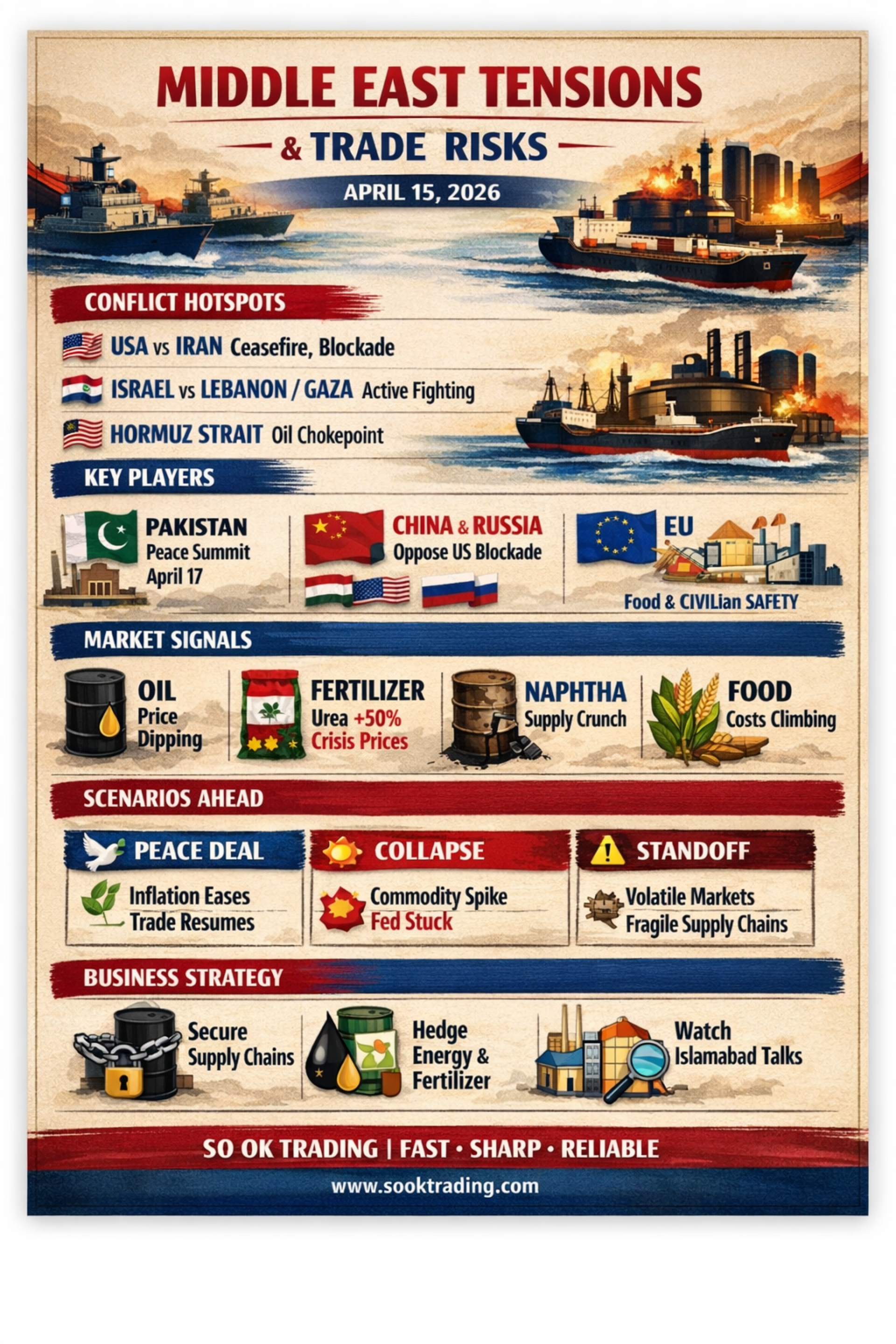
中东局势总结 : 战争 : 美国、以色列、伊朗与霍尔木兹海峡 : 2026年4月15日 BY SO OK TRADING
「脆弱的停火 • 世界经济如履薄冰」 本文将以轻松易懂但内容完整的方式,带您了解最新的中东局势,并呈现未来可能的发展趋势及全球关注的影响。
当前局势
美国–伊朗:在霍尔木兹海峡封锁与军事打击后,处于“临时停火”阶段
特朗普宣布胜利:强调美国“接近结束战争”,但仍未撤军
黎巴嫩–加沙:战斗持续,地区依旧炽热
新的谈判舞台:巴基斯坦将在两天后主办第二轮和平谈判
大国与中间国的角色
巴基斯坦:关键调解者,在伊斯兰堡召开停火会议,推动贸易航路恢复
中国:提出五点和平方案,敦促美国解除封锁
俄罗斯:全力支持伊朗,在联合国安理会行使否决权
欧盟:担忧能源与食品价格飙升,呼吁保护平民
全球市场概况(2026年4月14日)
原油:Brent $103–107,WTI低于$96 → 因停火消息略有下降
尿素肥料:飙升至$700–719/吨 → 中东占全球出口40%以上
石脑油:日本价格飙至$756/吨 → 供应极度紧张,需从美洲调货补充
农产品:小麦 $5.85–6.09,玉米 $4.42,大豆 $11.64 → 成本随能源与肥料上涨
伊斯兰堡第二轮会议展望(预计2026年4月17日)
谈判成功(约50%)
航路开放 → 原油与肥料价格下降
全球通胀迅速缓解 → 股市强劲反弹
美国形象强化,掌控局势
谈判失败(约40%)
能源与肥料价格创新高
美国与全球通胀加剧 → 美联储无法降息
全面战争风险再度升温
停火延长但不持久(约10%)
全球市场剧烈波动 → 投资者谨慎
地区依旧脆弱,随时可能再度爆发
对商业与市场的影响
能源・原材料・物流:成本居高不下 → 必须加强航线规划与保险(WAR CHARGE)
农产品・食品:价格仍有上涨风险 → 企业应提前锁定成本
投资:若谈判成功,股市或强劲回升;若失败,风险极高
世界正处于巴基斯坦谈判的关键时刻。
若成功 → 全球经济迅速复苏
若失败 → 通胀与全面战争将重现,甚至更为严重
SO OK TRADING : 您的商业伙伴
SO OK TRADING : FAST • SHARP • RELIABLE
VISIT US AT : WWW.SOOKTRADING.COM FACEBOOK : SOOKTRADING
「脆弱的停火 • 世界经济如履薄冰」 本文将以轻松易懂但内容完整的方式,带您了解最新的中东局势,并呈现未来可能的发展趋势及全球关注的影响。
当前局势
美国–伊朗:在霍尔木兹海峡封锁与军事打击后,处于“临时停火”阶段
特朗普宣布胜利:强调美国“接近结束战争”,但仍未撤军
黎巴嫩–加沙:战斗持续,地区依旧炽热
新的谈判舞台:巴基斯坦将在两天后主办第二轮和平谈判
大国与中间国的角色
巴基斯坦:关键调解者,在伊斯兰堡召开停火会议,推动贸易航路恢复
中国:提出五点和平方案,敦促美国解除封锁
俄罗斯:全力支持伊朗,在联合国安理会行使否决权
欧盟:担忧能源与食品价格飙升,呼吁保护平民
全球市场概况(2026年4月14日)
原油:Brent $103–107,WTI低于$96 → 因停火消息略有下降
尿素肥料:飙升至$700–719/吨 → 中东占全球出口40%以上
石脑油:日本价格飙至$756/吨 → 供应极度紧张,需从美洲调货补充
农产品:小麦 $5.85–6.09,玉米 $4.42,大豆 $11.64 → 成本随能源与肥料上涨
伊斯兰堡第二轮会议展望(预计2026年4月17日)
谈判成功(约50%)
航路开放 → 原油与肥料价格下降
全球通胀迅速缓解 → 股市强劲反弹
美国形象强化,掌控局势
谈判失败(约40%)
能源与肥料价格创新高
美国与全球通胀加剧 → 美联储无法降息
全面战争风险再度升温
停火延长但不持久(约10%)
全球市场剧烈波动 → 投资者谨慎
地区依旧脆弱,随时可能再度爆发
对商业与市场的影响
能源・原材料・物流:成本居高不下 → 必须加强航线规划与保险(WAR CHARGE)
农产品・食品:价格仍有上涨风险 → 企业应提前锁定成本
投资:若谈判成功,股市或强劲回升;若失败,风险极高
世界正处于巴基斯坦谈判的关键时刻。
若成功 → 全球经济迅速复苏
若失败 → 通胀与全面战争将重现,甚至更为严重
SO OK TRADING : 您的商业伙伴
SO OK TRADING : FAST • SHARP • RELIABLE
VISIT US AT : WWW.SOOKTRADING.COM FACEBOOK : SOOKTRADING


Related Content
公司简介: SO OK TRADING CO., LTD.
FAST • SHARP • RELIABLE
13 Aug 2026
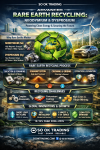
♻️ 稀土回收:钕与镝 —— 未来产业
SO OK TRADING | 2026年7月20日
在全球迈向清洁能源与电动技术的时代,钕 (Nd) 和 镝 (Dy) 已成为现代产业的核心。它们广泛应用于 电动汽车(EV)电机、风力发电机、硬盘驱动器、扬声器以及高性能耳机。
稀土回收不仅能减少矿山开采和电子废弃物,还能比新生产节省 60–80% 的能源,并在长期内保障全球供应链的稳定。
最新的回收技术包括 湿法冶金(Hydrometallurgy)、高温冶金(Pyrometallurgy)、HPMS(氢处理磁性废料),正在使资源管理更加清洁高效。预计在 2026–2035 年间,行业年均增长率将达到 10–15%。
泰国也正在积极投入这一领域。除了 泰国矿业局(DPIM)、素兰纳里理工大学、朱拉隆功大学 的研究外,还与日本民间企业合作开发 EV 电机磁体回收工厂,并推动 Chatree REE 矿山 的运营。该矿预计到 2026 年可供应全球需求的 约 5%。
稀土回收产业已不再只是“环保的选择”,而是 支撑经济与清洁能源安全的基础设施,将在未来十年塑造世界与泰国的格局。
SO OK TRADING
FAST • SHARP • RELIABLE
20 Jul 2026
