Share

Lead Ingot 101: The Small Raw Material Driving Big Industries: Lead Ingot Is the Answer: Essential for Energy, Electronics, and Logistic
Last updated: 5 Feb 2026
587 Views

Marketing Article: Lead Ingots – Applications and Market Trends

(Business Opportunities with SO OK TRADING)

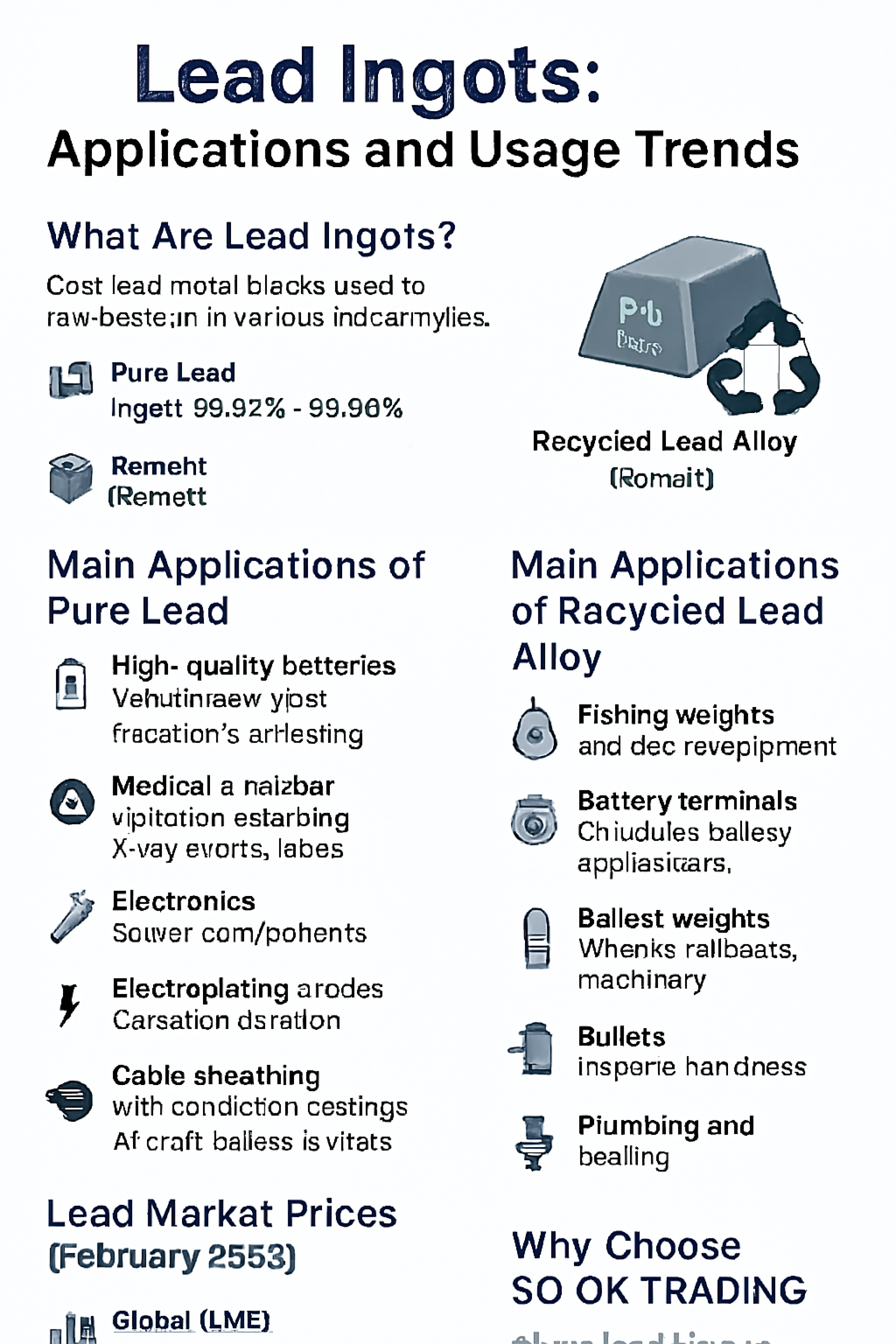
What Are Lead Ingots?

Lead ingots are cast blocks of lead metal, serving as upstream raw materials for various industries. They are generally divided into two main types:

Pure Lead Ingots (99.97% – 99.99%)
Remelted Lead / Lead Alloys (Recycled Lead Alloy)
Each type has distinct properties and applications depending on market needs.


Main Applications of Pure Lead

High-Quality Battery Industry: Used to produce plates in lead-acid batteries for vehicles and UPS systems, ensuring maximum efficiency and long service life.
Medical & Nuclear Radiation Shielding: Applied in X-ray rooms, CT scan facilities, and nuclear laboratories as protective barriers.
Electronics Industry: Used in solder production and precision electronic components.
Electroplating: Serves as anode material to prevent corrosion.
Cable Sheathing & Precision Casting: For underground/undersea cables, aircraft ballast, and high-precision bullets.
 

Main Applications of Remelted Lead / Alloys

Fishing & Sports: Used for sinkers, weights, and casting accessories.
Battery Structural Components: Terminals and busbars requiring mechanical strength.
Ballast Weights: Applied in car wheels, sailboats, and heavy machinery.
Bullet Manufacturing: Hard lead alloys maintain shape and reduce barrel fouling.
Plumbing & Sealing: Used in pipe joints and engine seals.
 

Pure Lead vs. Remelted Lead / Alloys

Purity
Pure Lead: 99.97% – 99.99%
Remelted Lead: Below 99% (contains other metals)
Hardness
Pure Lead: Very soft, can be scratched with a fingernail
Remelted Lead: Harder, maintains shape better
Melting Point
Pure Lead: ~327°C
Remelted Lead: Lower and variable (depends on composition)
Corrosion Resistance
Pure Lead: Very high
Remelted Lead: Moderate
Main Uses
Pure Lead: Batteries, radiation shielding, electronics
Remelted Lead: Fishing weights, ballast, battery terminals
Cost
Pure Lead: Higher (based on LME prices)
Remelted Lead: Lower (recycled material)
Malleability
Pure Lead: Excellent (ductile and highly workable)
Remelted Lead: Moderate to low (may be brittle)
 

Lead Market Prices (February 2026)

Global (LME)
Cash Settlement: ~1,925 USD/ton
3-Month Contract: ~1,962–1,967 USD/ton
Thailand
Pure Lead: ~69,000–75,000 THB/ton or ~110–150 THB/kg
Remelted Lead: ~80–130 THB/kg
Scrap Lead: Buying price ~49–53 THB/kg
 

Why Choose SO OK TRADING

SO OK TRADING is a trusted expert in sourcing and exporting high-quality pure and alloyed lead ingots. We provide end-to-end services — from raw material procurement and customization to global export.

Our Strengths

Expertise in marketing and content adaptation for multiple regions (Thai, Chinese, Japanese, English)
Transparent and up-to-date global market pricing
Clear, trustworthy product storytelling that builds confidence with clients and partners
Agile and efficient management structure
 

Conclusion

Both pure and remelted lead ingots play vital roles across industries — from batteries and medical shielding to fishing and sports. Choosing the right type depends on technical requirements and budget.

SO OK TRADING is ready to be your bridge to the global market, leveraging expertise in marketing, export, and regional adaptation to support your business growth.

Related Content
เกร็ดความรู้ Aluminum โดย SO OK TRADING
เกร็ดความรู้อลูมิเนี่ยม อลูมิเนียมเป็นโลหะน้ำหนักเบา แข็งแรง ทนทานต่อการกัดกร่อน (เกิดชั้นฟิล์มออกไซด์ปกป้องตัวเอง) นำความร้อนและไฟฟ้าได้ดีเยี่ยม เป็นมิตรต่อสิ่งแวดล้อมเพราะรีไซเคิลได้ 100% และปลอดภัยไม่เป็นพิษ ใช้กันแพร่หลายตั้งแต่ภาชนะอาหาร (หม้อ, กระทะ) ไปจนถึงโครงสร้างเครื่องบิน โดยมีการแบ่งเกรดตามธาตุผสมเพื่อให้คุณสมบัติเฉพาะทางมากขึ้น เช่น เกรด 7xxx ผสมสังกะสีเพื่อความแข็งแรงสูงสำหรับอวกาศ หรือ 2xxx ผสมทองแดงสำหรับล้อแม็ก. คุณสมบัติเด่น น้ำหนักเบา: เบากว่าเหล็ก 3 เท่า (ความหนาแน่น 2.7) ทำให้ขนส่งและติดตั้งง่าย. ทนทานการกัดกร่อน: สร้างชั้นฟิล์มอลูมิเนียมออกไซด์บางๆ เคลือบผิวเพื่อป้องกันการเกิดสนิมและกัดกร่อนได้ดี. นำความร้อน/ไฟฟ้าได้ดี: ดีกว่าสแตนเลสหลายเท่า จึงนิยมใช้ในงานไฟฟ้าและอุปกรณ์ระบายความร้อน. ขึ้นรูปง่าย: ดัด พับ หรือแปรรูปเป็นรูปทรงซับซ้อนได้โดยไม่แตกหัก. ปลอดภัย: ไม่เป็นพิษและไม่ทำปฏิกิริยากับอาหาร จึงนิยมใช้ทำภาชนะอาหารและบรรจุภัณฑ์. รีไซเคิลได้ 100%: เป็นมิตรต่อสิ่งแวดล้อมอย่างยิ่ง. เกร็ดน่ารู้เกี่ยวกับอลูมิเนียม มาจากไหน: พบในธรรมชาติในรูปแร่บอกไซต์ (Bauxite). จุดหลอมเหลว: อลูมิเนียมบริสุทธิ์หลอมที่ 660°C แต่เมื่อผสมกับโลหะอื่นจุดหลอมเหลวจะสูงขึ้น. การเกิดออกไซด์: ต่างจากสนิมเหล็กที่เป็นรูพรุน, ออกไซด์ของอลูมิเนียมจะเกาะแน่นเป็นชั้นฟิล์มป้องกันเนื้อโลหะ. เกรดอลูมิเนียม: มี 8 ซีรีส์ (เช่น 1xxx, 2xxx, 3xxx...) แต่ละซีรีส์มีธาตุผสมต่างกัน (เช่น ทองแดง, แมกนีเซียม, สังกะสี) เพื่อให้ได้คุณสมบัติเฉพาะ เช่น ซีรีส์ 7xxx (ผสมสังกะสี) แข็งแรงมาก เหมาะกับยานอวกาศ. การใช้งานหลัก โครงสร้าง: ประตู หน้าต่าง ราวกั้น (น้ำหนักเบา แต่แข็งแรง). ภาชนะ/บรรจุภัณฑ์: หม้อ กระทะ กระป๋องอลูมิเนียม ฟอยล์ (ทนการกัดกร่อน ไม่เป็นพิษ). อุตสาหกรรม: ชิ้นส่วนยานยนต์ เครื่องบิน (น้ำหนักเบา + แข็งแรง). อื่นๆ: อุปกรณ์ไฟฟ้า สายไฟ และอุปกรณ์ระบายความร้อ
6 Dec 2025
ทิศทางการใช้ อลูมิเนียมในอนาคต (ปี2026) , ทิศทางราคาอลูมิเนียม และ สถานะการณ์ Carbon Footprint
ทิศทางในอนาคตของอลูมิเนียมไทยมุ่งเน้น ความยั่งยืน (Sustainability) และ เทคโนโลยีขั้นสูง (Advanced Technology) โดยจะเน้น อลูมิเนียมคาร์บอนต่ำ และ อลูมิเนียมรีไซเคิล เพื่อตอบโจทย์อุตสาหกรรมยานยนต์ไฟฟ้า (EV) และการก่อสร้างที่เป็นมิตรต่อสิ่งแวดล้อม พร้อมพัฒนา การเคลือบผิวใหม่ๆ และระบบเศรษฐกิจหมุนเวียน (Circular Economy) เช่น โครงการ Aluminium Loop เพื่อลดต้นทุน เพิ่มมูลค่า และรักษาความสามารถในการแข่งขันในตลาดโลก. แนวโน้มสำคัญ: การเติบโตในอุตสาหกรรมยานยนต์ไฟฟ้า (EV): รถ EV ต้องการใช้อลูมิเนียมเพิ่มขึ้นมากเพื่อลดน้ำหนัก ช่วยประหยัดพลังงานและเพิ่มระยะทางวิ่ง. ความต้องการอลูมิเนียมคาร์บอนต่ำ (Low-Carbon Aluminium): ตอบสนองมาตรการสิ่งแวดล้อมทั่วโลก (เช่น EU CBAM) โดยเฉพาะการใช้อลูมิเนียมรีไซเคิลสูง ซึ่งลดการปล่อยคาร์บอนได้มาก. เศรษฐกิจหมุนเวียน (Circular Economy): โครงการอย่าง "Aluminium Loop" ขับเคลื่อนการรีไซเคิลบรรจุภัณฑ์อลูมิเนียมครบวงจร เพื่อลดขยะและสร้างมูลค่า. นวัตกรรมการเคลือบผิว (Coating Innovations): การเคลือบผิวแบบใหม่ๆ เพื่อเพิ่มฟังก์ชัน เช่น ป้องกันแบคทีเรีย (Anti-microbial) ทำความสะอาดง่าย (Easy-to-clean) สร้างผิวสัมผัสใหม่. การก่อสร้างแบบสำเร็จรูปและโมดูลาร์ (Modular Construction): ใช้อลูมิเนียมมากขึ้นในการผลิตชิ้นส่วนสำเร็จรูปนอกสถานที่ เพื่อความแม่นยำและลดของเสีย. การบูรณาการพลังงานหมุนเวียน (Renewable Energy): ใช้อลูมิเนียมในโครงสร้างรองรับแผงโซลาร์เซลล์ และระบบพลังงานสะอาดอื่นๆ. ความท้าทาย: ต้นทุนพลังงาน & ห่วงโซ่อุปทาน: ความผันผวนของราคาพลังงานและความท้าทายในห่วงโซ่อุปทาน. การแข่งขัน: ประเทศคู่แข่งเร่งพัฒนาเทคโนโลยีรีไซเคิล ทำให้ไทยต้องพัฒนาต่อเนื่องเพื่อรักษาผู้นำ. โอกาส: ไทยมีศักยภาพด้านแรงงานฝีมือ และอุตสาหกรรมต้นน้ำ-กลางน้ำ-ปลายน้ำที่ครบวงจร. การปรับตัวสู่การผลิตคาร์บอนต่ำสร้างโอกาสทางธุรกิจใหม่ๆ โดยเฉพาะการเป็นผู้นำด้านอลูมิเนียมรีไซเคิล. สรุป: อลูมิเนียมไทยจะก้าวสู่ยุคใหม่ที่เน้น "เขียว" (Green) และ "ฉลาด" (Smart) โดยการรีไซเคิลและเทคโนโลยีจะเป็นหัวใจสำคัญในการสร้างการเติบโตและความยั่งยืน.
16 Dec 2025
This website uses cookies for best user experience, to find out more you can go to our Privacy Policy and Cookies Policy
Compare product
0/4
Remove all
Compare
Powered By MakeWebEasy Logo MakeWebEasy