“Thai Rice 2026: Premium Quality for Global Markets” Article BY SO OK TRADING
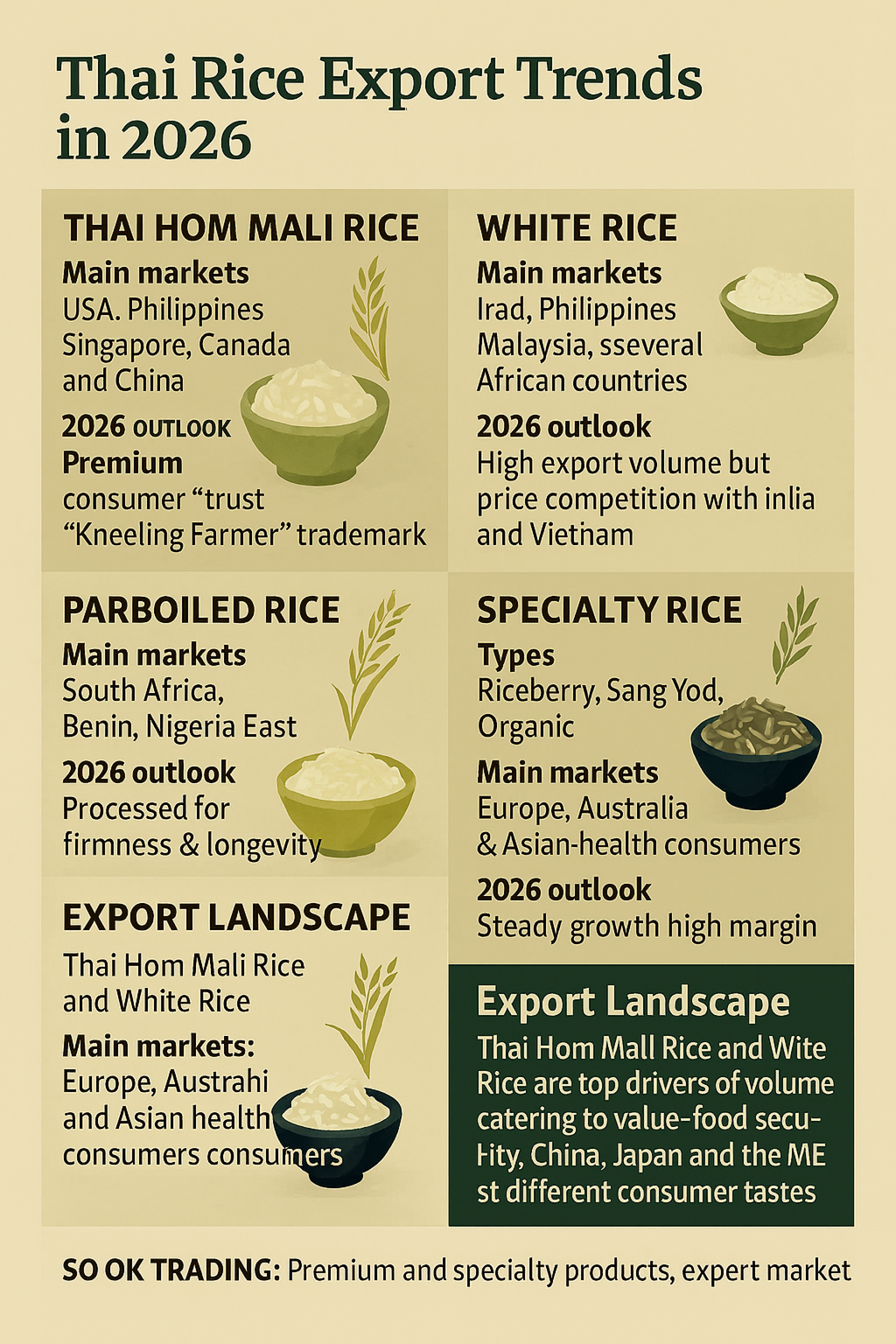
Thai Rice Export Outlook 2026 – Premium Quality, Global Reach
Export Overview
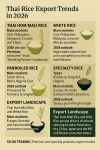
2026 Target: 7 million tons (down from 7.9 million tons in 2025, valued at 148,204 million THB)
2025 Performance: Target exceeded – White Rice 3.62 million tons (45.8%), Thai Hom Mali Rice 1.76 million tons, Parboiled Rice 1.51 million tons
Rice Prices (FOB, January 2026)
Thai Hom Mali Special: USD 1,158–1,201/ton
Jasmine Rice: USD 691–740/ton
White Rice 5%: USD 399–411/ton
White Rice 100% Grade B: USD 415–428/ton
Parboiled Rice 100%: USD 418–433/ton
Thai rice remains more expensive than Vietnam/India (~USD 350–360/ton), creating challenges in the white rice segment but maintaining strength in premium markets.
Key Export Markets
Iraq: #1 market, focusing on White Rice 5% for food security
South Africa/Senegal: Strong demand for Parboiled and White Rice
United States: Largest market for Thai Hom Mali Rice, high purchasing power, strict quality standards
China: Major partner via private trade and G2G contracts (target 500,000 tons), demand for Hom Mali and White Rice
Singapore/Hong Kong: Premium markets for Hom Mali Rice
Saudi Arabia: Emerging market, growing demand for both White and Jasmine Rice
Popular Rice Categories
Thai Hom Mali Rice: Premium, highest export value; key markets USA, China, Hong Kong, Singapore
White Rice: Largest export volume; faces intense price competition from India and Vietnam
Parboiled Rice: Strong in South Africa and Middle East markets
Thai Jasmine/Pathum Thani Rice: Mid-market fragrant rice, affordable alternative; key markets China, UAE, ASEAN
Specialty Rice: Riceberry, Sangyod, Organic – niche health markets in Europe, Australia, Asia
✨ SO OK TRADING – Premium Thai Rice for the World
In a highly competitive environment, SO OK TRADING stands out by:
Quality First: Selecting certified Hom Mali and Specialty Rice
Sustainability: Promoting safe, eco-friendly production
Market-Specific Strategy:
China → Premium Hom Mali Rice
Japan → Organic and health-focused rice
Middle East → High-volume White Rice 5% and Parboiled Rice
Value Creation: Transforming from “Thai rice exporter” to “global value creator”
Regional Strategies
China – Scale and Trust: Largest importer of Hom Mali Rice; strengthening food security through G2G contracts
Japan – Niche and Premium: Strict standards, limited volume but high willingness to pay for organic and health rice
Middle East – Volume and Food Security: Expanding demand in Iraq, UAE, Saudi Arabia; oil revenue recovery boosts purchasing power
✨ Why SO OK TRADING?
Quality First: Sourcing the best Thai rice from trusted origins
Sustainability: Communicating eco-friendly and safe production
Market Fit: Tailoring products to each market (Premium in China, Specialty in Japan, Volume in Middle East)
Global Positioning: From “Thai rice exporter” to “global value creator”
Conclusion
Thai rice is no longer just an agricultural product – it is a premium global commodity meeting demands for quality, food security, and health.
SO OK TRADING is the bridge connecting the value of Thai rice to consumers worldwide.