Thai Fruits: Deliciousness from Thailand, Nature’s Harvest, Reaching the World Discover Thai fruits and explore export & trade opportunities with SO OK TRADING
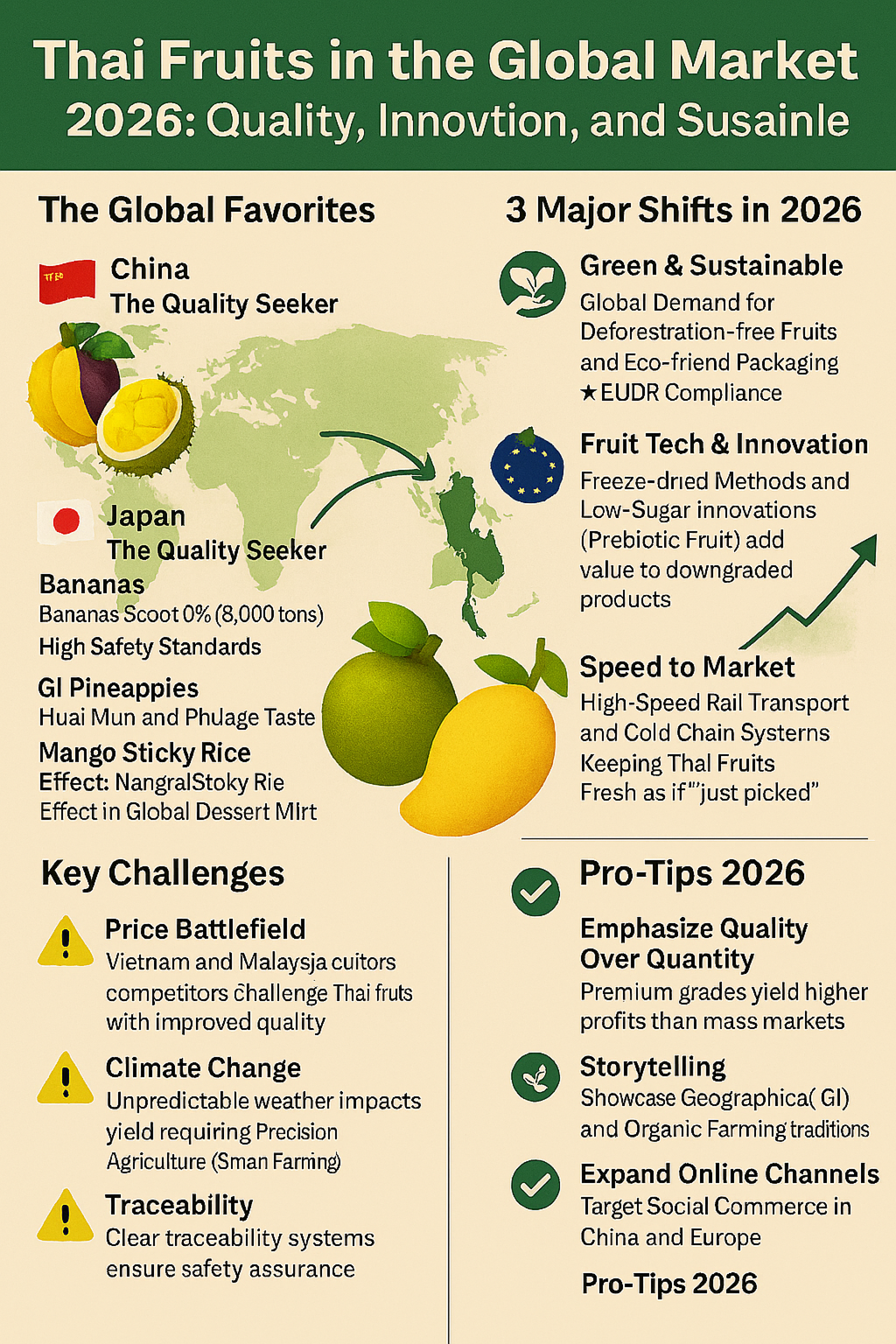
2026 Thai Fruits: Winning Hearts in Thailand and Global Markets
SO OK TRADING – Exporting Premium Thai Fruits to the World
Popular Fruits in Thailand
In 2026, Thai fruits continue to be loved by domestic consumers, with several standout stars:
Durian: The king of fruits. Still ranked No.1 both domestically and in exports. Despite competition from Vietnam and Malaysia, Thai durian remains the “main star,” generating massive revenue.
Mangosteen: The queen of fruits. Its sweet-and-sour flavor is adored by both Thai and international consumers. One of the key fruits supporting exports.
Coconut: A rising star in the health segment. Expanded into innovative products such as Coconut Matcha.
Guava: A daily fruit for Thai people. Low cost, high profit, and suitable for commercial investment.
✨ Thai Consumer Trends
Growing interest in superfoods such as papaya and pineapple, which aid digestion and beauty.
Low-sugar processed products to meet health-conscious demand.
Purchase factors: Taste (73.05%) → Price → Health value.
Japanese Market: Golden Opportunity for Thai Fruits
Japan remains a high-potential market, especially for fruits with uniqueness and high standards.
Bananas: Loved by Japanese consumers for their sweet aroma. Enjoy tariff-free quota up to 8,000 tons under JTEPA.
Mangoes: Nam Dok Mai and Mahachanok varieties. Market expansion through cooperation with Mie Prefecture.
Huai Mun Pineapple: The first Thai fruit to receive GI certification in Japan, building strong confidence in quality.
Pomelo: Thong Dee and Tubtim Siam varieties, with imports expanding.
Mangosteen: Premium taste highly appreciated by Japanese consumers.
✨ Factors Driving Popularity
Strict JAS standards.
Innovation in dessert processing.
Health trends aligned with superfruits.
Chinese Market: The Main Battlefield for Thai Fruits
China continues to be the No.1 importer of Thai fruits.
Durian: Monthong variety remains No.1, though competition from Vietnam and Malaysia is intensifying.
Mangosteen: Thailand dominates with over 91% export share.
Longan: Holds 99.3% of the Chinese market.
Young Coconut: Matches the health trend.
Nam Dok Mai Mango: Popular as a gift fruit.
✨ New Trends in China
GI fruits and new varieties such as fresh dates and salacca.
Processed products: freeze-dried durian, dried mango.
Logistics: Laos–China railway ensures freshness.
Western Markets (Europe, America, Australia)
Thai fruits are gaining popularity among health-conscious and exotic-seeking consumers.
Young Coconut: The No.1 superfood. Bottled coconut water is growing rapidly.
Mangosteen: A superfruit rich in antioxidants, with a balanced sweet-and-sour taste.
Nam Dok Mai Mango: Famous worldwide through Mango Sticky Rice.
Pineapple: Thailand ranks among the top exporters of processed pineapple.
Dragon Fruit: Popular in smoothie bowls.
✨ Western Trends
Sustainability (organic + biodegradable packaging).
Innovative dried fruits such as freeze-dried durian.
Strict safety standards (MRLs).
Directions and Outlook for 2026
Intensified Competition: Especially in China, where Thai durian faces pressure from Vietnam and Malaysia.
New Standards: Environmental regulations (EUDR) and carbon footprint requirements.
Health and Innovation: Superfoods and high-value processed fruits (freeze-dried, frozen).
Modern Logistics: Cold chain systems and Laos–China railway.
Risks: Climate whiplash and economic volatility.
Adaptation Strategies for Farmers
Quality over Quantity: Build differentiated premium fruit brands.
Smart Farming: Use AI and drones to reduce costs and increase efficiency.
Product Innovation: Dried fruits, bottled juices, superfood lines.
Marketing Strategy: Storytelling of Thai GI fruits and sustainable production.
Market Expansion Directions
Japan → Bananas and GI pineapples.
China → Durian and mangosteen.
Western Markets → Young coconuts and Nam Dok Mai mangoes.
✨ Conclusion
2026 is the year Thai fruits must elevate themselves to global markets through quality, innovation, and sustainability.
SO OK TRADING is ready to lead in exporting premium Thai fruits that meet modern consumer demands and build trust in international standards.