SO OK TRADING INSIGHT | Blue Wave 2026: Global Game-Changer, Shaking the Economy and Middle East Conflict, Towards a New World Balance
SO OK TRADING’S INSIGHT
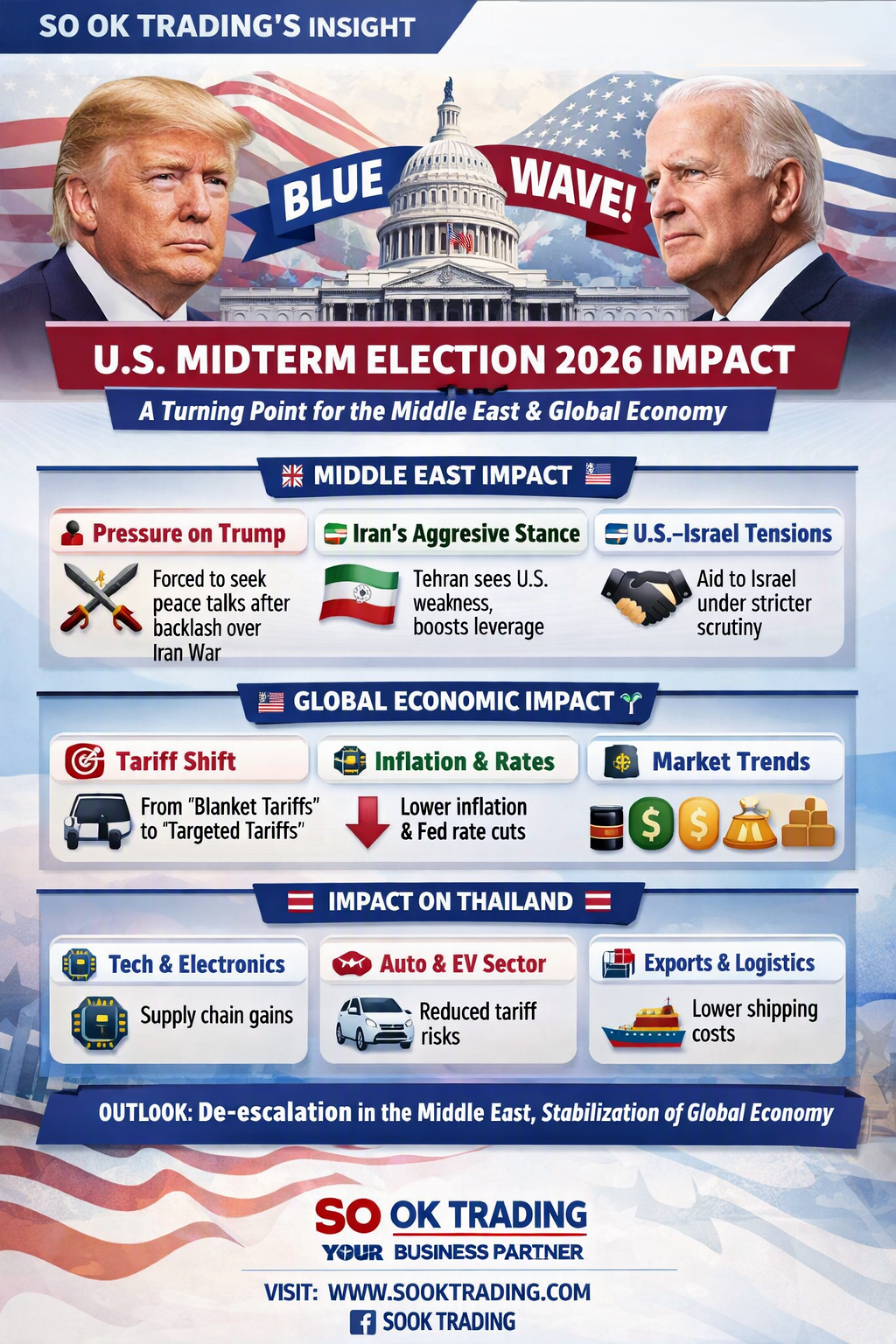
U.S. Midterm Election 2026: A Turning Point for the Middle East Conflict and Global Economy
The U.S. midterm election on November 3, 2026, sent shockwaves across the global political stage. The Democratic Party reclaimed the majority in both the House of Representatives and the Senate (the “Blue Wave”), dramatically shifting the balance of power in Congress. This transformation not only challenges President Donald Trump’s authority but may also mark the beginning of easing tensions in the Middle East and redirecting the global economy toward a new phase of stability.
1. Impact on the Middle East Conflict
Pressure on the Trump Administration The White House admitted that the “Iran War” was a major factor behind the Republican defeat. Rising living costs and surging oil prices fueled public discontent, forcing Trump to pivot from aggressive military policies toward peace negotiations to regain domestic support.
Iran’s Tougher Stance Tehran interprets the Democratic victory as a sign of U.S. weakness, strengthening its bargaining position. However, if Iran miscalculates and escalates military action, it risks triggering renewed conflict.
U.S.–Israel Rift With Democrats controlling Congress, military aid and arms sales to Israel face stricter scrutiny. Prime Minister Benjamin Netanyahu’s military operations are constrained, while Israel’s domestic political stability is shaken by the loss of bipartisan support from the U.S.
2. Impact on the Global Economy
Tariff Policy Curbed Trump’s plan for “blanket tariffs” (10–20% on all countries, 60% on China) is blocked by Democratic oversight. Future measures are expected to shift toward “targeted tariffs” on specific goods.
Inflation and Interest Rates With reduced inflation risks, the Federal Reserve (Fed) gains flexibility to cut interest rates, boosting liquidity in emerging markets.
Markets and Commodities
Weaker Dollar → Capital flows back to emerging markets
Oil Prices Down → Geopolitical risk premium reduced
Gold and Agricultural Commodities Steady → Lower shipping costs
3. Impact on Thailand’s Economy
Electronics & Computer Components: Benefit most from stable global supply chains
Automotive & Parts: Lower tariff risks, though U.S. EV policies remain a factor to watch
Rubber Products & Construction Materials: Gain competitiveness from reduced shipping costs
Additionally, the Thai baht is expected to strengthen in the short term, while lower oil and transport costs ease business expenses.
Conclusion and Outlook
The Democratic victory in 2026 marks a decisive constraint on Trump’s aggressive policies. The outlook points toward de-escalation in the Middle East conflict and more systematic economic policies.
For Thailand, this represents an opportunity to enhance export competitiveness and reduce business costs, as the global economy transitions into a phase of stabilization.
✨ FAST · SHARP · RELIABLE SO OK TRADING — Your Business Partner WWW.SOOKTRADING.COM Facebook: SOOK TRADING