SO OK TRADING’s INSIGHT: Two Global Metal Hubs — Singapore & Hong Kong Reshaping the Non-Ferrous Metals Market in the New LME Era
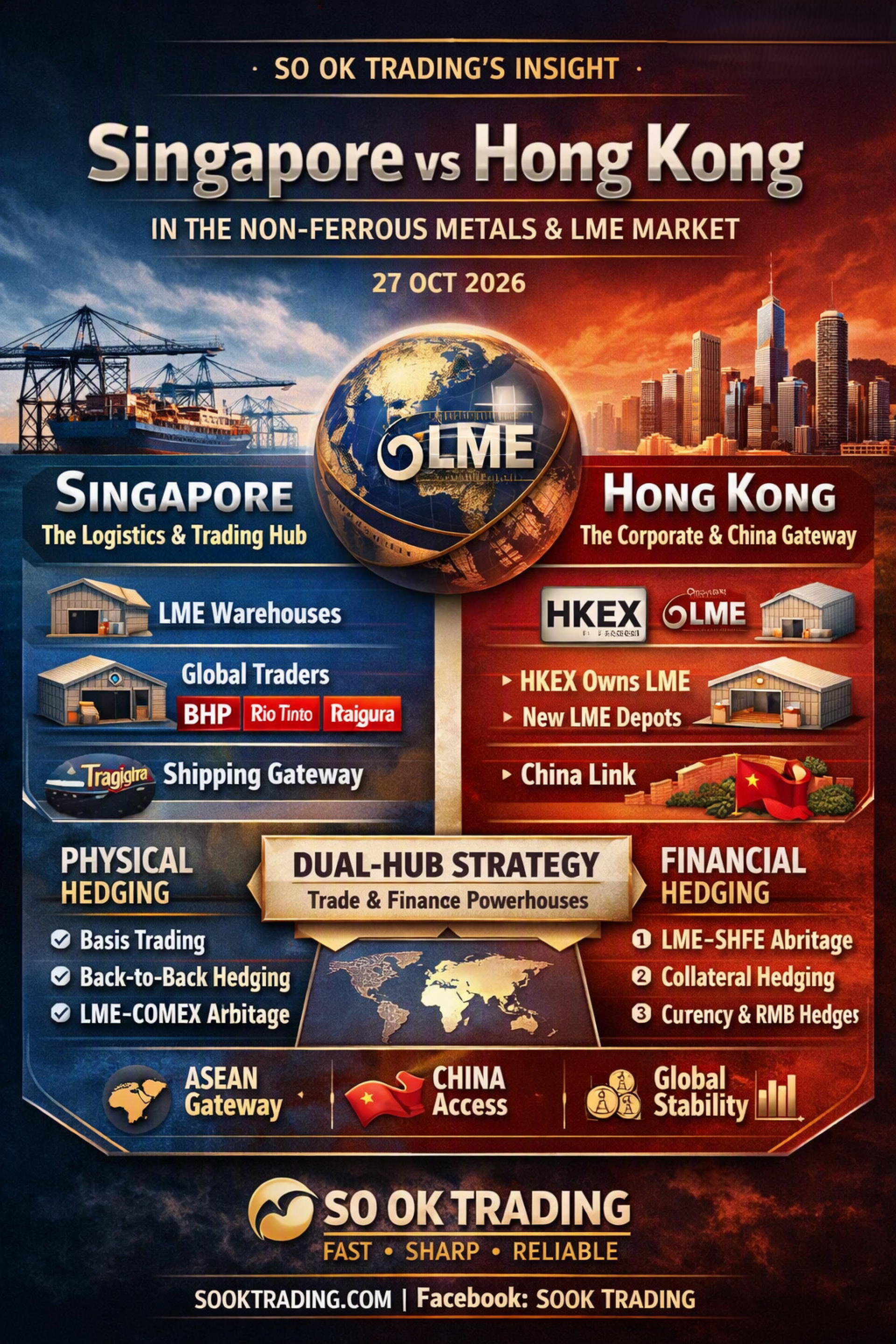
SO OK TRADING’s INSIGHT: The Role of Singapore and Hong Kong in the Non-Ferrous Metals Market and LME
October 27, 2026
Introduction
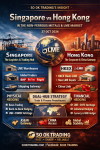
Singapore and Hong Kong are two major economic hubs playing pivotal roles in connecting Asia’s non-ferrous metals market to the global stage through the London Metal Exchange (LME) — the world’s most influential marketplace for industrial metals. While both serve as “bridges,” their approaches differ significantly: Singapore focuses on logistics and physical trading, while Hong Kong emphasizes finance and access to Mainland China.
1. Background and Importance of LME
The LME is the largest industrial metals exchange globally, covering aluminum, copper, zinc, nickel, and tin. It plays a critical role in global price discovery, risk management, and supply chain coordination, positioning Singapore and Hong Kong as key gateways linking Asia to the world.
2. Singapore: The Logistics & Trading Hub
LME-Approved Warehouses: The largest storage and delivery hub in Southeast Asia.
Global Commodity Headquarters: Companies like BHP, Rio Tinto, Trafigura, and Glencore use Singapore as a base for portfolio management and hedging.
Strategic Shipping Routes: Linking Indonesia and ASEAN metals to global markets.
Physical Hedging Strategies:
Basis Trading & Spread Hedging
Back-to-Back Hedging
LME–COMEX Arbitrage
3. Hong Kong: The Corporate & China Gateway
Direct Ownership of LME: HKEX acquired LME in 2012, giving Hong Kong structural influence.
New LME Warehouses: Approved since 2025, now exceeding 19 depots with over 36,000 tons capacity.
China Link: Facilitates capital and metals flow between Mainland China and global markets.
Financial Hedging Strategies:
LME–SHFE Arbitrage
Collateral Hedging (warehouse receipts as financial collateral)
Currency–Commodity Dual Hedging (RMB/USD risk management)
4. Strategic Comparison
Core Strengths: Singapore focuses on delivery and logistics; Hong Kong on finance and China connectivity.
Relationship with LME: Singapore serves as a warehouse and trading desk; Hong Kong as LME’s parent and clearing hub.
Target Clients: Singapore attracts producers, miners, and global traders; Hong Kong appeals to financial institutions, funds, and Chinese SOEs.
Hedging Approaches: Singapore emphasizes physical-linked hedging; Hong Kong prioritizes cross-border financial arbitrage.
5. Outlook and Future Trends
Singapore
Safe-Haven Capital: A low-risk hub for asset storage.
Green Energy Supply Engine: Meeting rising demand for EVs and data centers.
Growth Path: Expanding into OTC commodity trading platforms with AI and blockchain for carbon footprint verification.
Hong Kong
LME Delivery Hub & RMB Clearing Center: Transitioning from financial hub to full delivery center.
RMB Promotion: Reducing reliance on USD in metals trading.
Growth Path: Building a complete value chain despite land constraints.
6. Regional and Global Impact
Singapore: Continues as ASEAN and India’s logistics and trading hub.
Hong Kong: Becomes China’s strategic node for balancing oversupply or shortages.
Dual-Hub Strategy: From rivalry to complementarity, both cities now reinforce each other to enhance global market resilience.
✨ Conclusion Singapore and Hong Kong are reshaping Asia’s non-ferrous metals market. Singapore stands as the logistics and physical trading hub, while Hong Kong serves as the financial gateway to China. Together, they form a “Dual-Hub Strategy” — a parallel model that strengthens stability and flexibility in the global metals market for the new energy era.
⚙️ SO OK TRADING Your trusted partner in the Non-Ferrous Metals business from Thailand
FAST • SHARP • RELIABLE www.sooktrading.com Facebook: SOOK TRADING