“Clean Energy Transforming Thailand’s Economy Toward Net Zero — Igniting the Green Growth That Captures Global Attention: Solar Energy • RDF‑3 • Wood Pellets • SO OK INSIGHT (22 OCT 2026)”
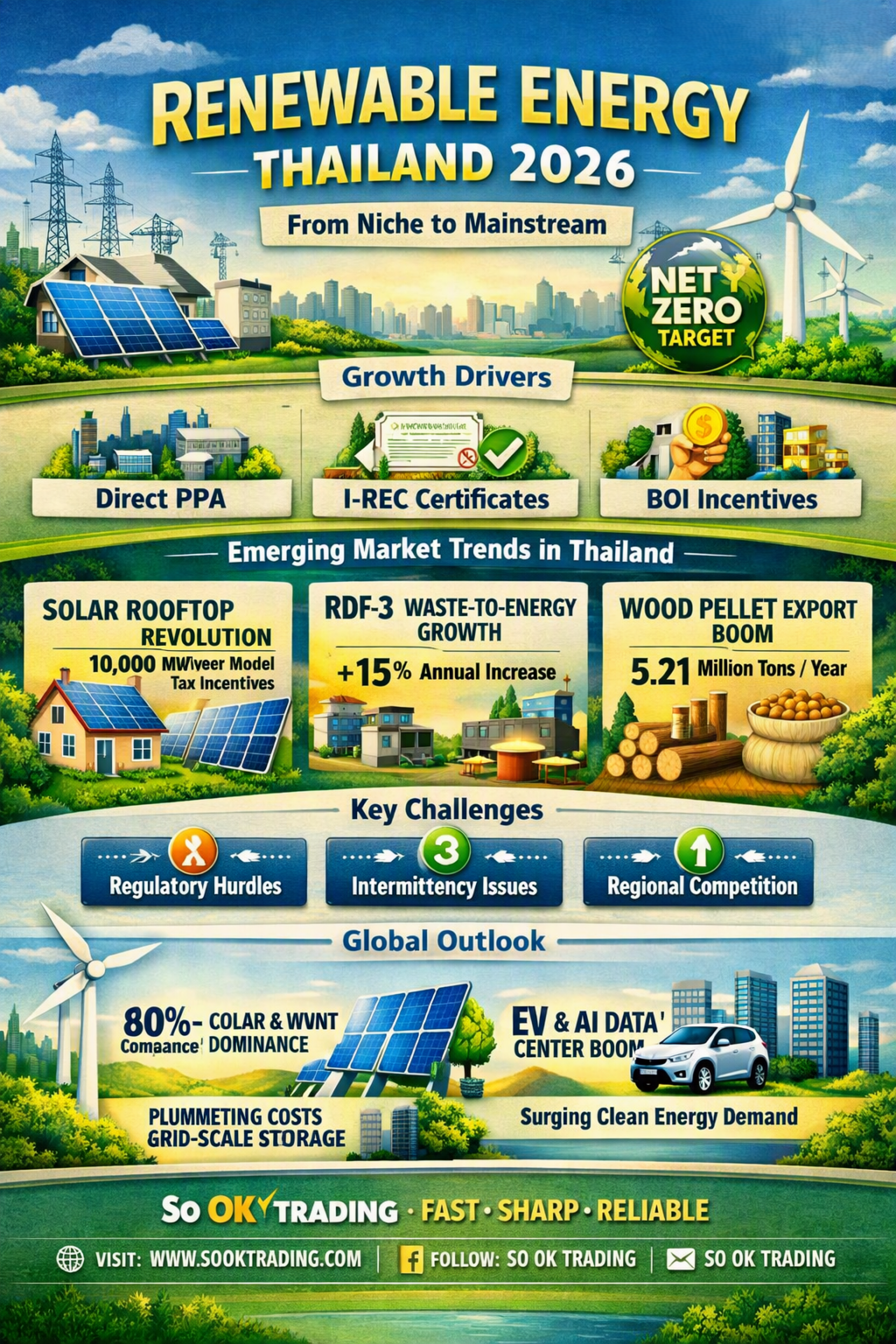
Renewable Energy in Thailand: From “Alternative” to “Mainstream”
SO OK TRADING | 22 October 2026
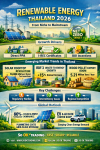
Renewable energy is rapidly becoming the cornerstone of Thailand’s economic and industrial development. Once regarded merely as an “alternative,” it has now risen to the status of a “mainstream” energy source, with both government and private sectors accelerating investments to achieve Net Zero and secure long-term energy stability.
Thailand is undergoing a pivotal energy transition — moving away from fossil fuel dependency toward sustainable clean energy. Solar Rooftop, RDF‑3 (Refuse-Derived Fuel), and Wood Pellets are emerging as key drivers of the nation’s green economy.
Growth and Key Drivers
Thailand’s renewable energy generation capacity has grown by an average of 4–5% annually, with solar and biomass as the primary contributors. Meanwhile, private sector demand for clean energy has surged by more than 15%, driven by compliance with RE100 and the EU’s CBAM regulations.
Key drivers include:
Direct PPA: Allowing industrial facilities to purchase clean electricity directly via the national grid
I‑REC Certificates: Certified by EGAT to validate clean energy usage
BOI Incentives: Tax benefits for solar rooftop installations and related services
Challenges
Despite strong growth, challenges remain: regulatory delays, grid infrastructure limitations, intermittency issues, and regional competition from neighboring countries that have advanced Direct PPA policies earlier.
Clean Energy Trends in Thailand
Solar Rooftop: Government support includes tax deductions up to THB 200,000 and THB 50 billion in funding to help one million households install systems under 5 kW. The PDP 2026 targets 10,000 MW of household solar rooftop capacity.
RDF‑3: A rising star in power generation and industry, offering lower costs and carbon emissions compared to coal. Market value has reached THB 14.5 billion, growing at over 15% annually.
Wood Pellets: Thailand is positioning itself as a regional hub, with production capacity exceeding 5.21 million tons per year. Key export markets include the Netherlands, South Korea, and Japan, though compliance with the EU’s EUDR standards is essential.
Industrial Trends
Prosumer Model: Factories and households adopting solar rooftop and floating solar with energy storage (BESS)
Direct PPA: Liberalization of third-party grid access for direct clean energy purchases
Thermal Transition: Industries shifting from fuel oil and coal to biomass, RDF, and biofuels
Green Finance: Access to low-interest loans and green bonds via Thailand Taxonomy
Outlook
Thailand: Continued growth in solar rooftop and floating solar, with RDF‑3 and wood pellets becoming key fuels for industry and exports. ASEAN: Vietnam, Indonesia, and Malaysia are accelerating renewable investments to attract foreign capital. Thailand, while slower, retains strengths in the BCG model leveraging agricultural and waste resources. Global: Solar and wind dominate new capacity (80–90%), with falling costs and grid-scale storage becoming standard. AI data centers and EV adoption are driving unprecedented demand for clean energy.
Strategic Insights: Opportunities and Risks
Opportunities
Solar Rooftop & Prosumer Economy
RDF‑3 & Circular Economy
Wood Pellet Exports
Green Finance & ESG Investment
Risks
Regulatory and grid delays
International environmental regulations (EUDR, CBAM)
Intermittency and storage costs
Strategic Conclusion
Thailand’s renewable energy market is entering a “golden opportunity” phase, yet challenges remain. Businesses and investors who adapt to environmental regulations, leverage green finance, and develop solutions for both domestic and export markets will secure long-term competitive advantage.
SO OK TRADING — FAST • SHARP • RELIABLE Your trusted partner in the new era of energy
Website: www.sooktrading.com Email: sooktrading@sooktrading.com Facebook: SO OK TRADING