Lead Bullion and Lead Ingot: From Upstream Raw Material to the Heart of the Energy Industry and Circular Economy | SO OK TRADING : 12 OCT 2026
Lead Bullion and Lead Ingot: From Upstream Raw Material to the Heart of the Energy Industry and Circular Economy | SO OK TRADING : 12 OCT 2026
Introduction
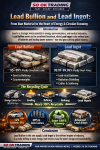
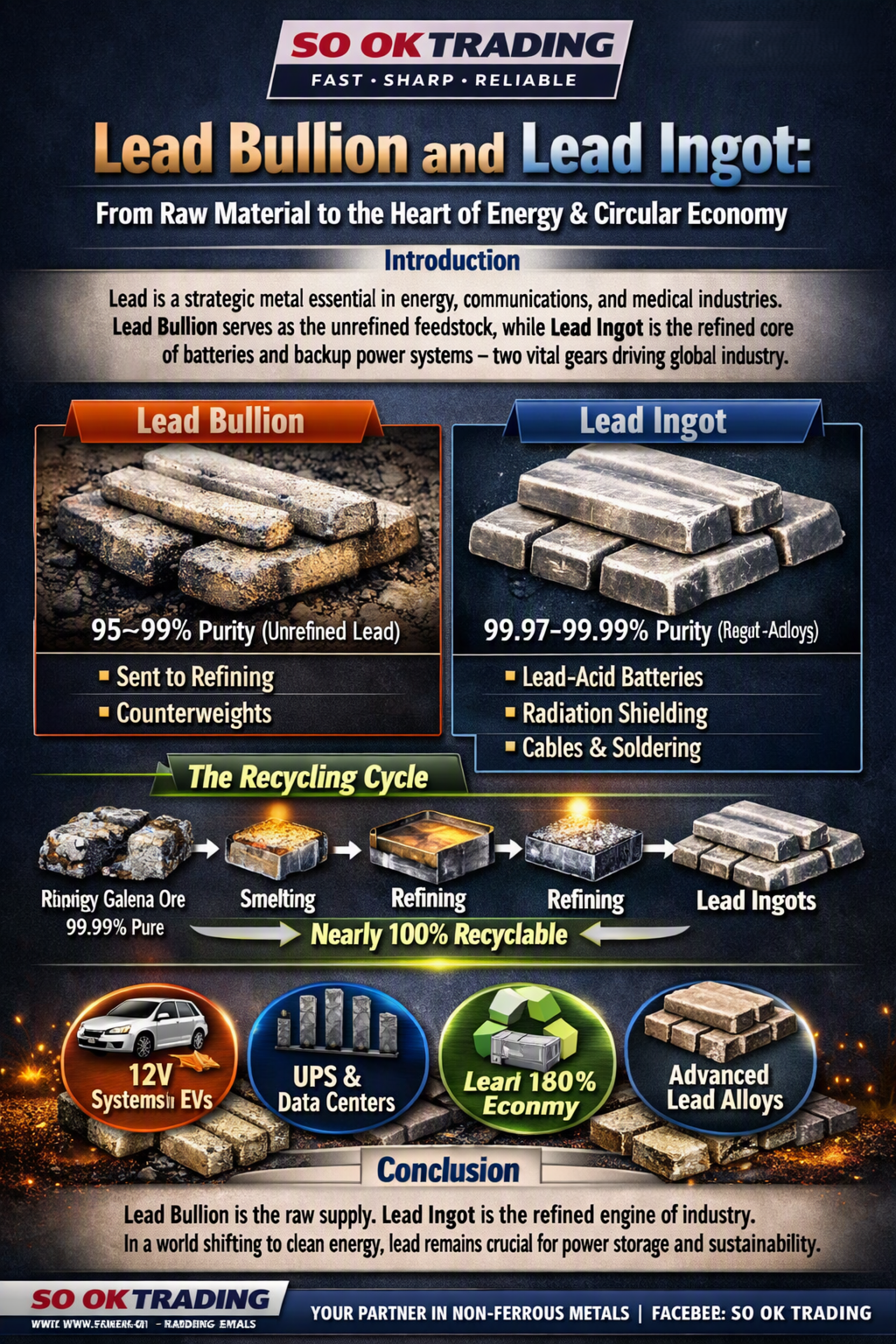
Lead is a strategic metal with vital importance in global industries, especially in energy, communications, and healthcare. While often considered a basic metal, in reality Lead Ingot is the backbone of the battery industry and backup power systems, whereas Lead Bullion serves as the indispensable upstream raw material in the production process. Together, they act as “two gears” that connect the metal industry supply chain and the circular economy.
Lead Bullion
Characteristics: Obtained from smelting ores or recycled lead scrap, with purity levels of 95–99%. Contains impurities such as silver, copper, and antimony.
Role: Serves as upstream feedstock that must undergo refining to produce pure lead or separate valuable metals.
Applications: Used directly in industries that do not require high purity, such as counterweights, or remelted and processed into Lead Ingots according to specifications.
Lead Ingot (Refined Lead/Alloys)
Characteristics: Refined to achieve 99.97–99.99% purity or alloyed to enhance mechanical properties.
Main Applications:
Lead-Acid Batteries: Over 80% of global lead production is used here.
Radiation Shielding: Lead sheets for hospitals and nuclear facilities.
Weights: Bullets, wheel balancing weights, diving equipment.
Cable Industry: Protective sheathing for underground and submarine cables.
Soldering & Electronics: Combined with tin for solder production.
⚙️ Grades of Lead Ingot in Battery Industry
Pure Lead Ingots: Used for lead oxide powder and premium battery plates.
Lead Alloys:
Antimonial Lead: 1.5–6% antimony added for strength, suitable for truck batteries.
Calcium Lead: Small amounts of calcium and tin added to reduce water loss, ideal for semi-sealed and sealed maintenance-free batteries (SMF).
♻️ Closed-Loop Recycling
Lead-acid batteries represent one of the most successful circular economy models worldwide.
Process: Battery dismantling ➡ Smelting ➡ Refining ➡ Casting into new Lead Ingots
Result: Nearly 100% recyclability, reducing mining activities and environmental impact.
Primary vs Secondary Lead
Primary Lead: Extracted from natural ores such as Galena, with purity up to 99.99%.
Secondary Lead: Recycled from used batteries, requiring only ~35% of the energy compared to new ore smelting, with purity of 99.97–99.98%.
Pricing: Both reference LME Lead (~USD 1,800–1,900/ton), but Primary Lead is typically more expensive due to mining and transportation costs.
Future Outlook
Electric Vehicles (EVs): While lithium-ion batteries dominate, 12V systems still rely on lead-acid batteries, ensuring continued demand for Lead Ingots.
UPS & Digital Infrastructure: Data centers and 5G/6G towers require stable, cost-effective lead-acid backup systems.
Circular Economy: Nearly 100% recyclability of used batteries reduces mining and environmental impact.
New Alloy Development: Innovations in Calcium-Lead and Antimonial Lead alloys will extend battery life and support heavy-duty applications.
✨ Conclusion
Although Lead Bullion and Lead Ingot may appear similar, their roles are distinctly different. Bullion is the upstream raw material destined for refining, while Ingots are the downstream refined products ready for industrial use. Lead-acid batteries remain the cornerstone of modern power systems, and even in the EV era, demand persists.
As the world transitions to clean energy, Lead Ingots continue to be a strategic metal, supporting energy, communications, and healthcare while reinforcing sustainable circular economy models. Lead Ingot is not just an ordinary metal — it is the lifeblood of the global energy industry.
SO OK TRADING
Your Trusted Business Partner FAST • SHARP • RELIABLE
www.sooktrading.com Facebook: SO OK TRADING