“SO OK TRADING Global Tin Market Outlook 2026: A Strategic Metal Driving the Digital Future, Green Energy, and AI–EV Industries”
Tin: The Strategic Metal of the Digital and Green Era
SO OK TRADING | October 2, 2026
Introduction
Tin (Sn) is a silver-white, soft, corrosion-resistant metal that does not easily rust. Although classified as a post-transition metal, in today’s digital era tin has become a strategic metal with a critical role in the global supply chain. It is indispensable in electronics, semiconductors, electric vehicles (EVs), and green energy industries.
⚙️ Applications and Industries
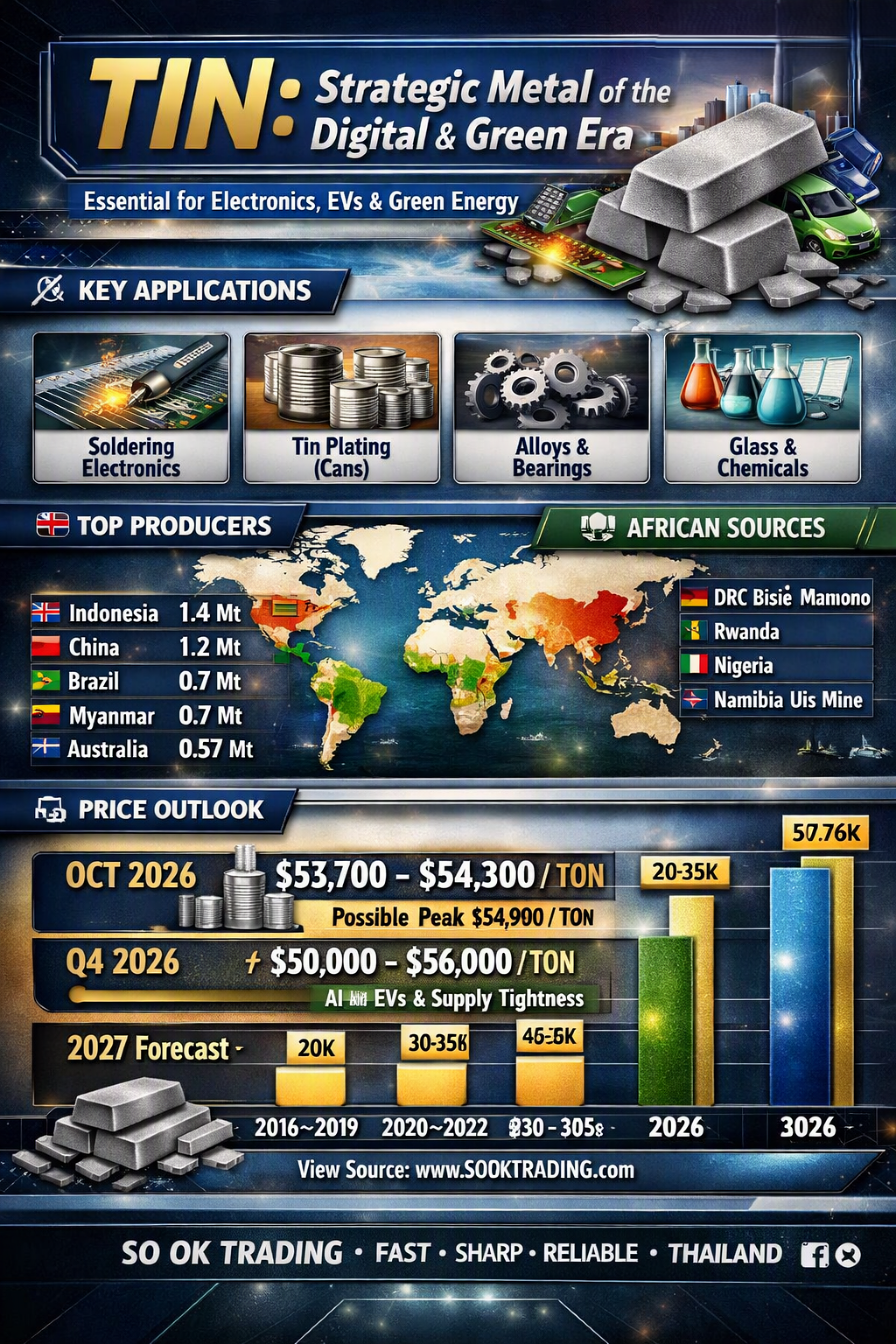
Electronic Soldering: Connecting circuits in smartphones, computers, and EVs
Tin-Plating: Coating steel sheets for food and beverage cans, ensuring rust protection and food safety
Alloys: Producing bronze, pewter, and alloys for machinery bearings
Glass Industry: Used in float glass manufacturing processes
Advanced Chemicals and Materials: Catalysts, plastic stabilizers, and ceramics
Major Producers and Regions
Indonesia: 1.4 million tons (Bangka-Belitung, offshore mines)
China: 1.2 million tons (Gejiu, Yunnan)
Brazil: 700,000 tons (Pitinga Mine, Amazon)
Myanmar: 700,000 tons (Man Maw, Wa State)
Australia: 570,000 tons (Renison Bell, Tasmania)
Over 75% of global reserves are concentrated in these five countries.
African Sources
DRC (Congo): Bisie Mine (highest grade globally, 4.5% Sn) and Manono (tin + lithium)
Rwanda: Regional hub for collection and export
Nigeria: Jos Plateau, tin plus rare metals (tantalum, niobium)
Namibia: Uis Mine (AfriTin Mining), revived and producing steadily
Others: Uganda, Zimbabwe, Burundi
Central and West Africa are emerging as “new treasure troves” of high-grade tin, though subject to strict Conflict Minerals regulations and traceability systems (iTSCI).
Outlook and Price Trends
October 2026
LME Price: USD 53,700–54,300 per ton (~1.78 million THB/ton)
Short-term outlook: Possible peak at USD 54,900 due to inventory shortages
Q4 2026 (Nov–Dec)
Expected range: USD 50,000–56,000 per ton
Drivers: Demand from AI, data centers, EVs
Pressure: Strong US dollar
2027
Prices likely to remain elevated due to structural supply deficit
If Indonesia and Myanmar maintain export restrictions, prices may stay above USD 50,000 per ton throughout the year
LME Tin Price History (2016–2026)
2016–2019: Average USD 20,000–22,000 per ton
2020–2022: Rose to USD 30,000–35,000 per ton driven by EV and semiconductor demand
2023–2025: Surged to USD 40,000–50,000 per ton
2026: Record high USD 57,760 per ton (52-week range)
⚠️ Caution
Tin dust or compounds may irritate the respiratory system
Tin from Central Africa has been classified as Conflict Minerals, requiring strict traceability for legality and transparency
Conclusion
Tin is transforming from a conventional industrial metal into a precious strategic resource with vital importance to the global economy. Its role in semiconductors, AI, EVs, and green energy makes it a cornerstone of future innovation.
Opportunities: Producing countries can leverage tin as a strategic asset for revenue and bargaining power
Challenges: Persistent supply shortages and geopolitical risks
Strategy: Investment in high-grade mines and robust traceability systems is essential
SO OK TRADING — FAST • SHARP • RELIABLE Your trusted partner in the non-ferrous metals market www.sooktrading.com Facebook: SOOK TRADING