Share

“SO OK TRADING Global Tin Market Outlook 2026: A Strategic Metal Driving the Digital Future, Green Energy, and AI–EV Industries”
Last updated: 2 Oct 2026
207 Views

Tin: The Strategic Metal of the Digital and Green Era
SO OK TRADING | October 2, 2026

Introduction
Tin (Sn) is a silver-white, soft, corrosion-resistant metal that does not easily rust. Although classified as a post-transition metal, in today’s digital era tin has become a strategic metal with a critical role in the global supply chain. It is indispensable in electronics, semiconductors, electric vehicles (EVs), and green energy industries.

 
⚙️ Applications and Industries
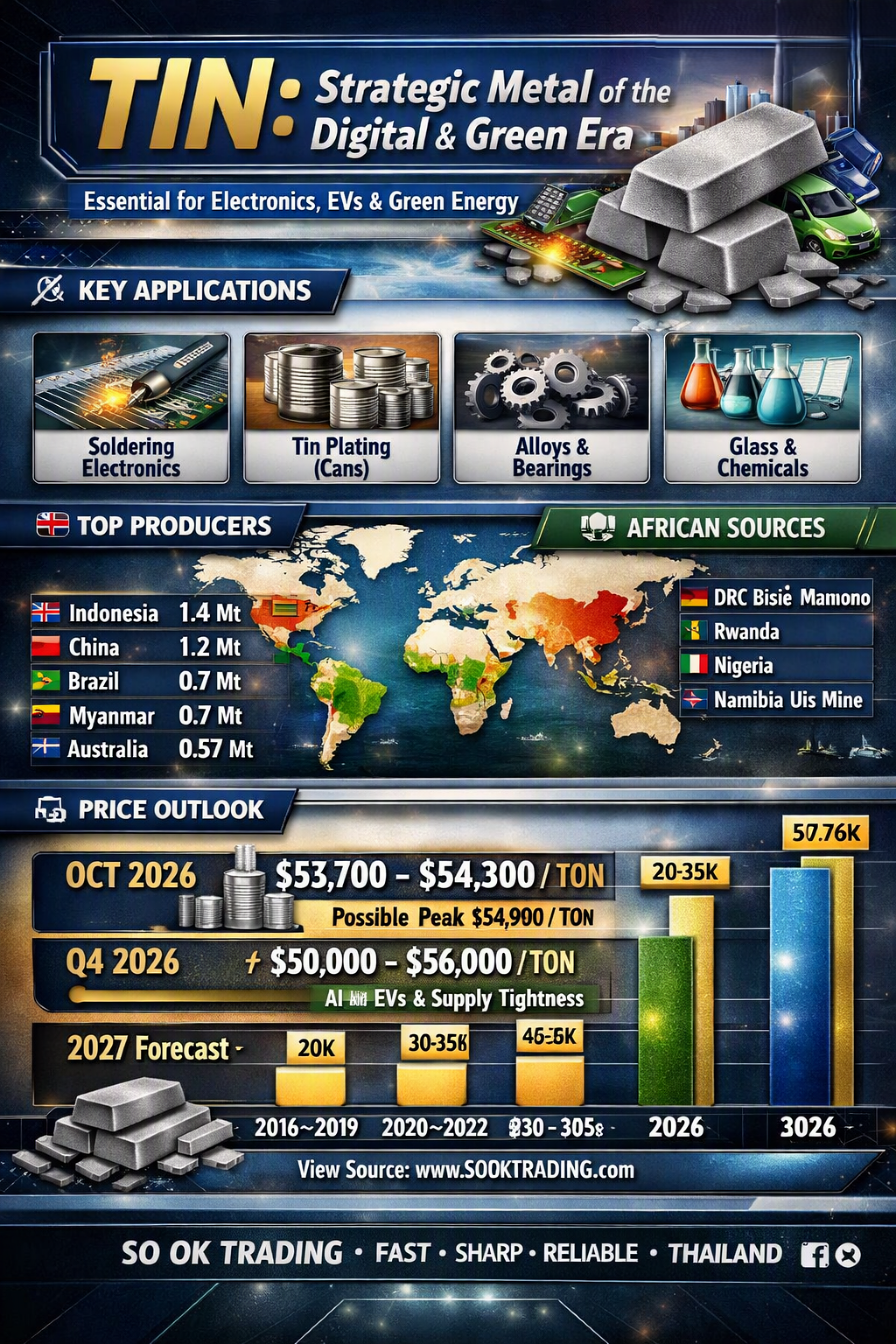
Electronic Soldering: Connecting circuits in smartphones, computers, and EVs
Tin-Plating: Coating steel sheets for food and beverage cans, ensuring rust protection and food safety
Alloys: Producing bronze, pewter, and alloys for machinery bearings
Glass Industry: Used in float glass manufacturing processes
Advanced Chemicals and Materials: Catalysts, plastic stabilizers, and ceramics
 
Major Producers and Regions
Indonesia: 1.4 million tons (Bangka-Belitung, offshore mines)
China: 1.2 million tons (Gejiu, Yunnan)
Brazil: 700,000 tons (Pitinga Mine, Amazon)
Myanmar: 700,000 tons (Man Maw, Wa State)
Australia: 570,000 tons (Renison Bell, Tasmania)
Over 75% of global reserves are concentrated in these five countries.
 
African Sources
DRC (Congo): Bisie Mine (highest grade globally, 4.5% Sn) and Manono (tin + lithium)
Rwanda: Regional hub for collection and export
Nigeria: Jos Plateau, tin plus rare metals (tantalum, niobium)
Namibia: Uis Mine (AfriTin Mining), revived and producing steadily
Others: Uganda, Zimbabwe, Burundi
Central and West Africa are emerging as “new treasure troves” of high-grade tin, though subject to strict Conflict Minerals regulations and traceability systems (iTSCI).
 
Outlook and Price Trends
October 2026

LME Price: USD 53,700–54,300 per ton (~1.78 million THB/ton)
Short-term outlook: Possible peak at USD 54,900 due to inventory shortages
Q4 2026 (Nov–Dec)

Expected range: USD 50,000–56,000 per ton
Drivers: Demand from AI, data centers, EVs
Pressure: Strong US dollar
2027

Prices likely to remain elevated due to structural supply deficit
If Indonesia and Myanmar maintain export restrictions, prices may stay above USD 50,000 per ton throughout the year
 
LME Tin Price History (2016–2026)
2016–2019: Average USD 20,000–22,000 per ton
2020–2022: Rose to USD 30,000–35,000 per ton driven by EV and semiconductor demand
2023–2025: Surged to USD 40,000–50,000 per ton
2026: Record high USD 57,760 per ton (52-week range)
 
⚠️ Caution
Tin dust or compounds may irritate the respiratory system
Tin from Central Africa has been classified as Conflict Minerals, requiring strict traceability for legality and transparency
 
Conclusion
Tin is transforming from a conventional industrial metal into a precious strategic resource with vital importance to the global economy. Its role in semiconductors, AI, EVs, and green energy makes it a cornerstone of future innovation.

Opportunities: Producing countries can leverage tin as a strategic asset for revenue and bargaining power
Challenges: Persistent supply shortages and geopolitical risks
Strategy: Investment in high-grade mines and robust traceability systems is essential
 
SO OK TRADING — FAST • SHARP • RELIABLE Your trusted partner in the non-ferrous metals market www.sooktrading.com Facebook: SOOK TRADING

Related Content
Aluminium Cans 2026: The New Symbol of Green Business — Sustainability Drives Growth
Thailand is entering a new era where aluminium cans are no longer just packaging — they have become symbols of sustainability, innovation, and circular growth. In 2025, the metal packaging industry is projected to generate over 18 billion THB, with aluminium accounting for 74.22% and aluminium cans leading at 58.48%. Many producers are switching from plastic to aluminium to meet ESG goals and to build a modern, eco-friendly brand image. If you are looking for Aluminium Coil, Ingot, or Remelt for sustainable packaging or industrial applications that demand international quality standards, please contact SO OK TRADING today.
20 Feb 2026
Gold Market Insight 2026 – Gold Shakes the World, Silver & Platinum Reshape the Investment Game in a Month of Precious Metals Volatility In-depth Analysis by SO OK TRADING
Gold Market Volatility – Silver & Platinum Challenge Global Markets | September 2026 September 2026 begins with intense turbulence in the precious metals market. Gold prices have sharply corrected from their record highs, while silver and platinum face mounting pressure from U.S. monetary policy and escalating geopolitical tensions. The overall picture reflects a critical turning point in the global metals market that investors worldwide must closely monitor.
2 Sept 2026
Renewable Energy from Waste to Value (Green Energy) กะลามะพร้าวจากเศษขยะไม่มีค่าสู่ พลังงานชีวภาพ ช่วยลดภาระ มลภาวะสิ่งแวดล้อม
ถ่านกะลามะพร้าว จากมะพร้าว ที่หลายคนใช้ในการผลิตหลายๆอย่าง ไม่ว่าเนื้อมะพร้าวทำเป็นน้ำมันมะพร้าว เป็นกะทิ ใยก็นำไปทำเตียงนอน น้ำมะพร้าวก็แสนอร่อย เนื้อมพร้าวก็นำมาทำขนม กะลามะพร้าวนำไปผลิตเป็นกระบวย ตักน้ำดื่ม คุณประโยชน์จากกะลามพร้าวเป็นที่รู้ จักกันมาอย่างแพร่หลาย แทบบอกได้เลยว่าทุกส่วนของกะลามะพร้าว สามารถที่ จะนำมาใช้ประโยชน์ได้เสมอ - แนวความคิดของเราจะในมาใช้ในส่วนผลิตเป็นพลังงานทดแทน ในอนาคตซึ่งถ่าน จะขาดแคลนเนื่องจากป่าไม้มีจำนวนน้อยลงไปทุกที เรามาดูกันนะครับว่าเราจะผลิต ถ่าน จากกะลามะพร้าวกันได้อย่างไร ?? - เปลือกที่เราทำเป็นถ่านกันบ้าง ทำจากเศษกะลาที่เหลือจากโรงงานอุตสาหกรรม หลากหลายแห่ง ไม่ว่าจะเป็น โรงงานทำกระทิสำเร็จรูป โรงงานผลิตกระทิส่ง ตลาดสด แม้แต่โรงงานผลิตวุ้นมะพร้าว เศษกะลาจำนวนมากนี้ก่อปัญหาให้ทาง โรงงานเป็นอย่างมาก เนื่องจากมีปริมาณมาก ไม่มีที่ทิ้ง หรือจัดเก็บเพื่อการทำลาย , การใช้กะลามะพร้าวมาเผาทำเป็นแหล่งพลังงานจัดว่าเป็นการลดมลภาวะช่วยโลก และ ก่อให้เกิดเศรษฐกิจหมุนเวียน (Green / Circular Economy) - กะลามะพร้าวที่ผ่านการเผาด้วยความร้อนสูง จากนั้นนำกะลาที่ได้ไปผ่านตะแกรง ร่อนให้เหลือเพียงแต่ชิ้นกะลาล้วนๆ เพื่อให้ได้ชิ้นกะลามะพร้าวที่มีคุณภาพสำหรับ ผลิตถ่านกะลาคุณภาพดี : เป็นรูปชิ้นกะลามะพร้าวที่ผ่านการเผาเป็นเรียบร้อยแล้ว และผ่านการร่อนจนเหลือเพียงแต่ชิ้นกะลาเท (จากกะลา 100% หลังจากที่ผ่านการเผาแล้วจะเหลือถ่านกะลาเพียงแค่ 20% เท่านั้น) - วัตถุดิบถ่านกะลามะพร้าว นำมาผ่านเครื่องบด เครื่องอัด โดยพิจารณาส่วนผสม ที่เหมาะสมเพื่อให้ได้สินค้าถ่านอัดแท่งที่มีคุณภาพมากที่สุด เพื่อให้ได้ถ่านอัดแท่งที่มีคุณภาพพร้อมที่จะส่งออกไปสู่ต่างประเทศ ให้สินค้าไทย ก้าวไปให้ไกลยังต่างประเทศไห้ได้มากที่สุด - หลังจากที่ผ่านเครื่องอัดกำลังสูงออกมาแล้ว สินค้าที่ไ้ด้ ทางเราต้องนำสินค้าถ่านอัดแท่ง เข้าเตาอบ เพื่อลดความชื้นภายในเนื้อถ่าน เพื่อให้ถ่านที่ส่งเข้าสู่ตลาดมีคุณภาพดีที่สุด ค่าความร้อนสูง ค่าความชื้นน้อยที่สุด เตาอบถ่านเราใช้เวลาอบนานถึง 3 วันเพื่อใ้้ห้ความชื้นในเนื้อถ่านน้อยที่สุด - ถ่านที่นำออกมาจากเตาอบ ที่ใช้เวลาอบนานมากถึง 3 วันเพื่อให้แน่ใจว่า ภายในเนื้อถ่านอัดแท่งจากกะลามะพร้าวจะมีความชื้นน้อยที่สุดเท่าที่จะเป็นไปได้ - หลังจากที่ถ่านไม่มีความร้อน ไม่มีความชื้นเรียบร้อยแล้ว ทางเราจะตัดแท่งก้อน ถ่านให้ได้ตามขนาดตามที่ลูกค้าสั่งมา ส่วนการบรรจุขึ้นอยู่กับลูกค้าว่าต้องการการ บรรจุแบบได ขนาดความยาวเท่าไร ซึ่งเป็นไปตามลูกค้าสั่งเสมอ และนำลงบรรจุเพื่อทำการส่งมอบ ให้ลูกค้าต่อไป - การขนส่งสินค้า ส่งมอบให้ลูกค้าที่ท่าเรือ เพื่อที่จะบรรจุเข้าตู้คอนเทรนเนอร์ ตามวันที่ลูกค้ากำหนด นะครับ เราจะขนส่งโดยใช้รถสิบล้อ ขนส่งจากโรงงาน ไปเข้าตู้สินค้าที่ท่าเรือกรุงเทพ หรือจุดนัดพบลูกค้า ตามแต่ลูกค้าได้สั่งนะครับ เราคำนึงถึงเวลาในการส่งสินค้าให้กับลูกค้าเสมอครับ ข ขั้นตอนการบรรจุสินค้าเข้าตู้ ก็เป็นอีกขั้นตอนหนึ่งที่เราให้ความสำคัญไม่แพ้กัน เนื่องจากว่าเราเข้าใจลูกค้าว่าต้องการบรรจุลงตู้ให้ได้มากที่สุด ทางเราจะจัดเรียงให้ แน่นที่สุดเพื่อให้บรรจุสินค้าเข้าตู้ได้มากที่สุดด้วย -ทุกขั้นตอนตั้งแต่เรื่องวัตถุดิบจนถึงการขนส่งไปถึงมือลูกค้าเป็นสิ่งที่ทาง SO OK TRADING เราให้ความสำคัญเสมอมา --------- Product Testing Specification Moisture = 6.4% Volatile Matter = 17.2% (18.4% at moisture free basis) Fixed Carbon = 73% (78.0% at moisture free basis) Ash = 3.4% (3.6% at moisture free basis) Sulfur = 0.0% (0.0% at moisture free basis) Heating Value = 6,870 kcal/kg. (7,340 kcal/kg at moisture free basis) Density = 970 kg/m3 High Quality Pure Coconut CHARCOAL Testing Specification Moisture = 7.1%-7.8% Volatile Matter = 13.0%-13.5% Fixed Carbon = 81.0%-83.0% Ash = 3.7%-7.7% Sulfur = 0.0% Heating Value = 7,100-7,300 kcal/kg Density = N/A
24 Nov 2025
This website uses cookies for best user experience, to find out more you can go to our Privacy Policy and Cookies Policy
Powered By MakeWebEasy Logo MakeWebEasy