Aluminium Cans 2026: The New Symbol of Green Business — Sustainability Drives Growth
Trends in Aluminum Can Usage in Thailand (2025–2026)
Entering the Era of “Sustainability Driving Growth”
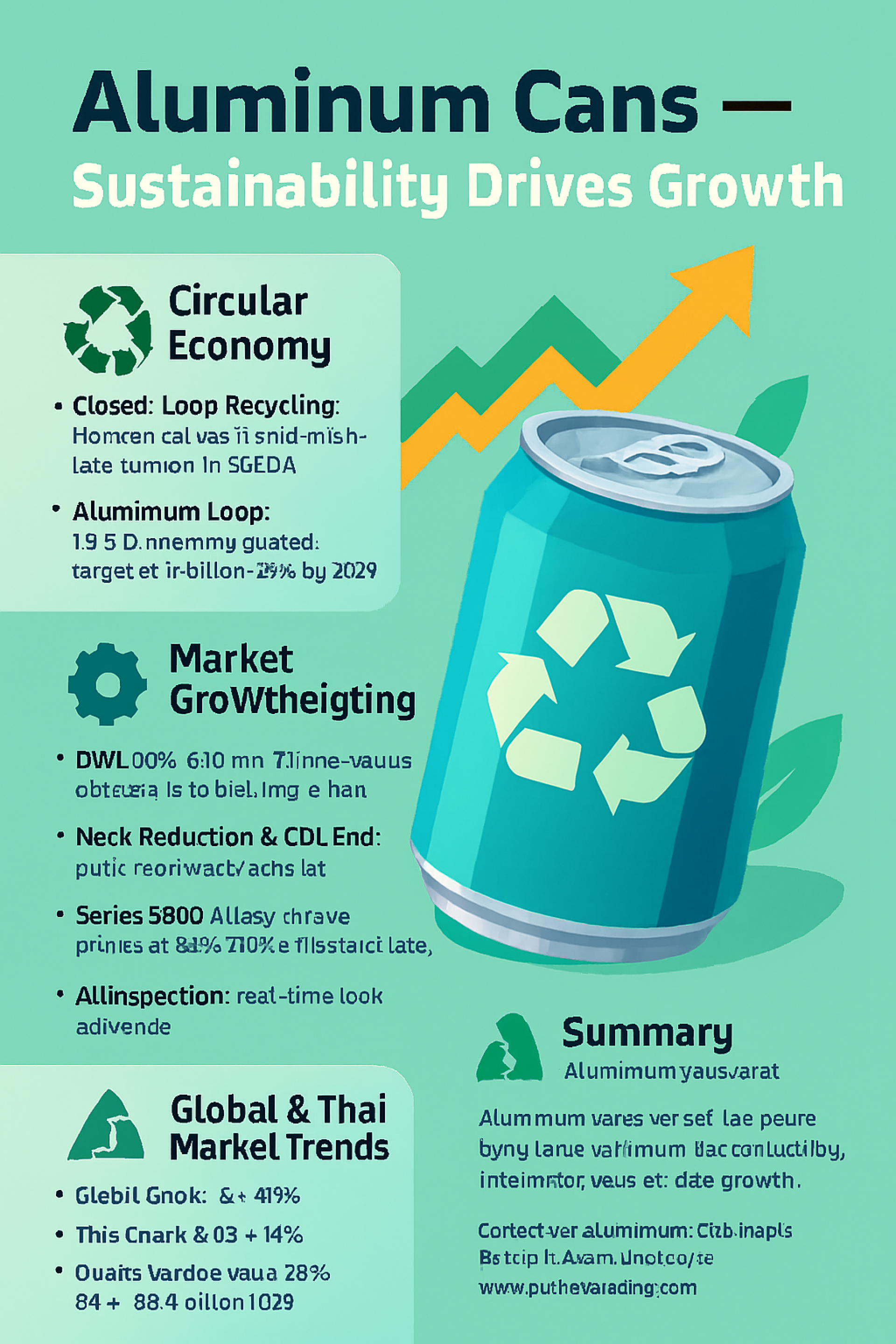
Transition to a Circular Economy
Thailand is a leader in the ASEAN region, having established a fully closed-loop recycling system. Can manufacturing plants and recycling facilities are located within a 200 km radius, enabling used cans to be transformed into new ones in just 60 days.
The Aluminium Loop project has already recycled more than 1.3 billion cans and aims to expand this figure to 5 billion within the next decade. By 2032, Thailand is expected to become the regional recycling hub.
Market Growth and Plastic Substitution
Demand for aluminum cans continues to rise, particularly in ready-to-drink beverages, craft beer, and convenience foods. Many businesses are switching from plastic to aluminum to align with ESG principles and modern brand positioning.
In 2025, the metal packaging industry is projected to generate approximately 18 billion THB in revenue, a 7.5% increase year-on-year. Aluminum accounts for 74.22% (around 14.5 billion THB), with cans holding the largest share at 58.48% (about 8 billion THB).
Lightweighting Innovations
Manufacturing technology has advanced significantly to balance cost efficiency and environmental impact:
DWI (Drawn & Wall Ironed): Reduces wall thickness to 0.07–0.10 mm, cutting aluminum usage by 30–40%
Neck Reduction & CDL End: Minimizes can neck and lid size to save material
Aluminum Series 5000: Used in lids and tabs for strength and pressure resistance
AI Inspection: Detects micro-leaks in real time to ensure maximum safety
Global and Thai Market Outlook (2025–2035)
The global market is expected to grow at a CAGR of 3.2–6.4%, reaching USD 845–992 billion by 2035. Thailand’s market is forecast to grow at 4.12–4.18% annually, with the goal of becoming ASEAN’s only closed-loop recycling hub.
Challenges from Chinese Imports
Despite Thailand’s strong potential, competition from imported finished products from China remains a challenge. In 2025, Thailand imported aluminum worth approximately USD 1.9 billion, mainly sheets, foil, and structural components. Tariff measures and TH-CBAM will play a crucial role in protecting domestic industries.
Conclusion
In Thailand, aluminum cans are no longer just packaging—they represent sustainability, innovation, and circular growth, connecting producers and consumers in a truly integrated way.
If you require ALUMINUM COIL (for packaging), ALUMINUM INGOT, or ALUMINUM REMELT, please contact SO OK TRADING via:
Website: www.sooktrading.com → click “Give INQUIRY”
Email: sooktrading@outlook.com