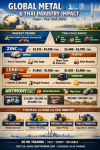
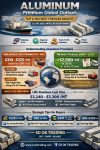
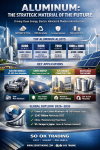
“Global Metal Market Volatility 2026: In-Depth Analysis of ZINC – LEAD – ANTIMONY and Their Impact on Thai Industry | SO OK TRADING Global Market Insights: FAST • SHARP • RELIABLE | Capturing Metal Price Signals to Reshape Thai Business Strategies for the
**Global Metal Price Analysis (ZINC – LEAD – ANTIMONY) and the Impact on Thai Industry
SO OK TRADING | September 22, 2026**
Introduction
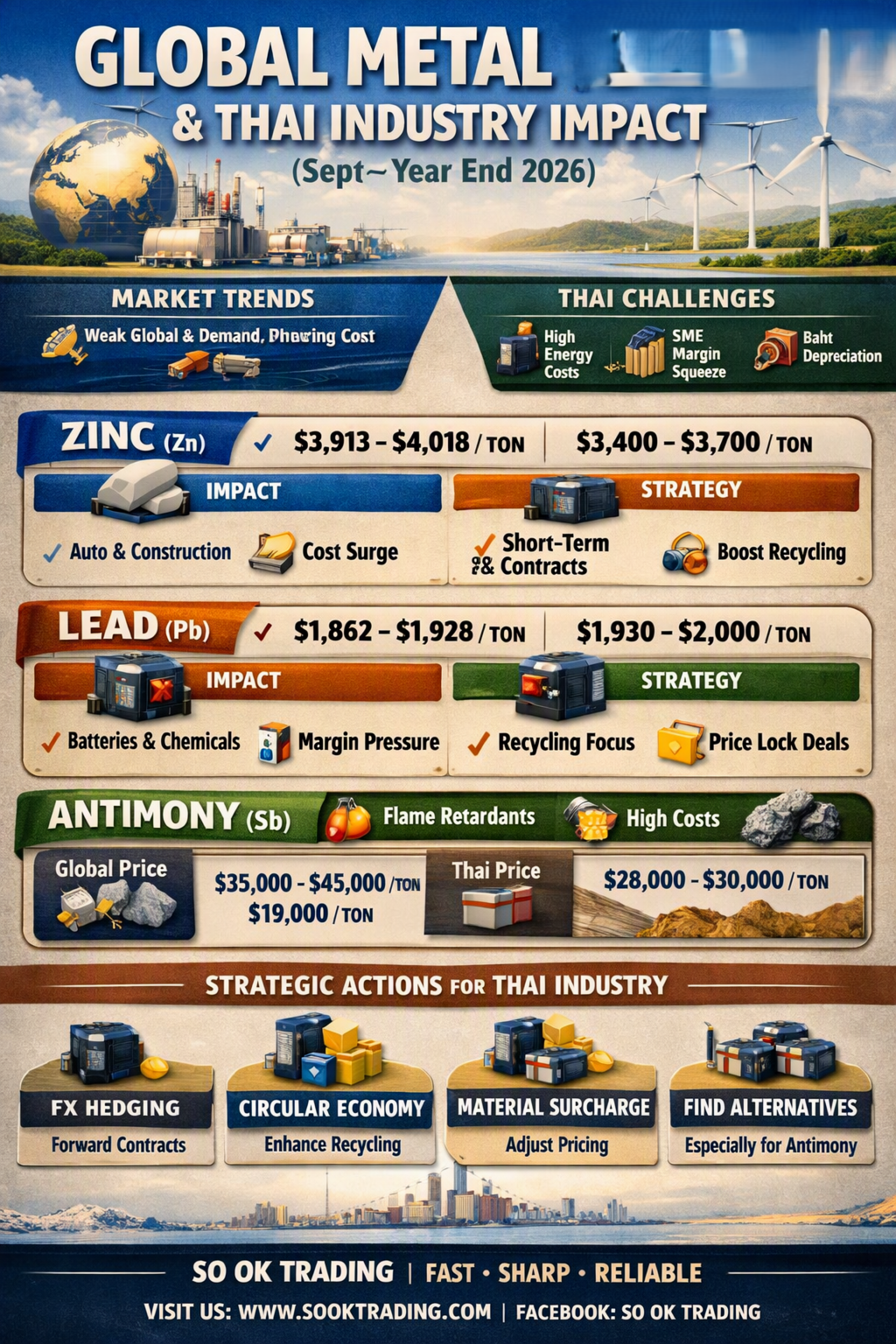
In 2026, the global base metals market is facing volatility driven by multiple factors: slowing demand in the construction sector, supply constraints from smelters, and rising energy costs due to geopolitical tensions. Zinc, Lead, and Antimony — essential raw materials for Thai industries — reflect the ongoing transition toward a clean energy economy and the restructuring of global supply chains. Thai businesses must adapt strategies to manage cost pressures and the risks of a weakening baht.
Market Overview and Price Trends
Zinc (Zn)
Current Price: $3,913 – $4,018 / ton
Q4 Forecast: $3,400 – $3,700 / ton (due to weaker global construction demand and China’s production recovery)
Impact on Thailand: Automotive, galvanized steel, and construction sectors face short-term cost surges
Strategy: Utilize short-term contracts and strengthen scrap recycling
Lead (Pb)
Current Price: $1,862 – $1,928 / ton
Q4 Forecast: $1,930 – $2,000 / ton (stabilized by recycling supply in China)
Impact on Thailand: Automotive batteries, chemicals, and radiation shielding materials see slight cost increases (~$60/ton), squeezing margins
Strategy: Expand recycling and secure price-lock contracts
Antimony (Sb)
Current Price: $35,000 – $45,000 / ton (global) | $19,000 / ton (Thai LCB price)
Q4 Forecast: $28,000 – $30,000+ / ton (China continues to restrict export quotas)
Impact on Thailand: Flame retardants, solar glass, and electronics face costs nearly double historical averages
Strategy: Accelerate search for substitutes and adjust production formulas
Common Challenges for Thai Industry
Energy & Geopolitical Risks: Electricity and fuel costs up ~20%
SME Pressure: Shrinking profit margins, limited ability to pass costs to consumers
Currency Risk: Baht expected to weaken slightly (33.00 – 33.60 / USD), raising import costs
Future Applications and Industry Outlook
Zinc (Zn)
Transitioning from construction metal to renewable energy support material
Key in solar panels, wind turbines, and data center structures
Development of Zinc-Air and Zinc-Ion batteries for energy storage
Lead (Pb)
Maintains relevance in 12V batteries despite EV transition
Most complete circular economy among metals
Essential for backup power systems and chemical industries
Antimony (Sb)
Strategic material in flame retardants and solar glass
High costs drive substitute material development
Critical resource in global supply chains
Strategic Recommendations for Thai Businesses
Currency Risk Management: Apply FX hedging and forward contracts to 50–70% of Q4 imports
Circular Economy: Strengthen scrap metal recycling to reduce reliance on global markets
Contract Adjustments: Include material surcharge clauses in long-term project agreements
Seek Alternatives: Prioritize substitute materials, especially for Antimony
✨ SO OK TRADING — FAST • SHARP • RELIABLE Your trusted partner in Thailand’s Non-Ferrous Metals market www.sooktrading.com | Facebook: SO OK TRADING