Middle East Battleground: Oil, Naphtha & Urea in the Era of Economic Warfare SO OK TRADING: 28 AUG 2026
Middle East Battleground: Crude Oil, Naphtha, and Urea Fertilizer Amidst the Economic Storm
SO OK TRADING : August 28, 2026
Introduction
The world is undergoing a major transition in energy and commodity markets. Crude oil, naphtha, and urea fertilizer prices are experiencing sharp volatility driven by geopolitical and economic pressures. What was once a military conflict in the Middle East is now shifting into a full-scale economic war. Global demand from China and the United States remains a decisive factor in price direction. Both producers and consumers must adapt to safeguard economic stability and supply chains.
Global Crude Oil Price Situation (August–September 2026)
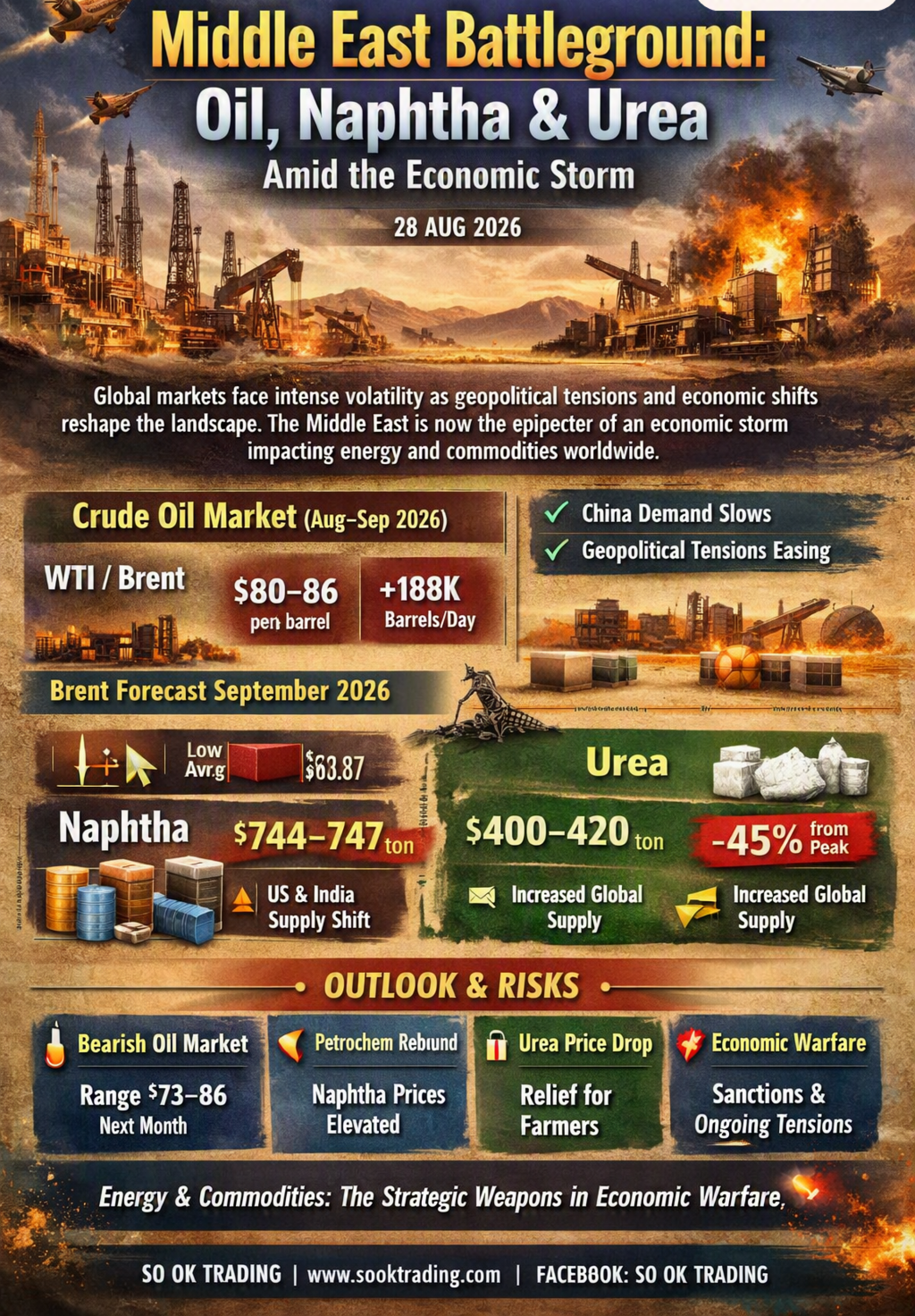
WTI and Brent crude fell more than 3%, moving within the range of $80–86 per barrel, as Middle East tensions eased and negotiations progressed to reopen shipping routes through the Strait of Hormuz.
OPEC+ plans to increase output by 188,000 barrels per day in September, adding more supply to the market.
Slowing demand from China continues to pressure prices downward.
J.P. Morgan forecasts Brent’s September average between $78–86 per barrel.
September Price Forecast
Brent: Low $78.77 | Average $80.85
WTI: Low $73.50 | Average $76.20
Upside Risk Factors
Global refined product inventories remain low
Risks from natural disasters and refinery attacks in Russia
Oil Prices in Thailand
Retail prices remain stable as the Oil Fund collects additional funds to strengthen liquidity.
Despite falling global prices, domestic price adjustments remain difficult.
⚔️ Geopolitical Situation
The U.S. shifts from military conflict to economic war (“Operation Economic Outcast”), imposing sanctions on Iran and its allies.
Iran faces an economic crisis: inflation surges to 84–100%, and the rial hits a historic low.
The Israel–Lebanon conflict drags on, with over 4,000 casualties.
Gaza and the West Bank remain tense, with ceasefire talks stalled.
Naphtha
Global prices stand at $744–747 per ton, up 33% from last year.
Petrochemical spreads are recovering, supporting refiners and upstream petrochemical producers.
Thailand diversifies imports from the U.S. and India to reduce reliance on the Middle East, despite higher transport costs.
Demand in the U.S. and Europe remains strong due to blending in gasoline.
Urea Fertilizer
Middle East FOB spot prices corrected to $400–420 per ton, down from the March–April peak of $720 per ton.
Temporary shipping route openings and China’s export resumption boosted supply, driving global prices down more than 45%.
Thailand accelerates negotiations with Russia to diversify risks and reduce Middle East exposure.
Outlook & Forward Direction
Crude Oil: September outlook remains bearish, with prices likely in the $73–86 per barrel range. OPEC+ output increases and slowing Chinese demand weigh on prices, though tight refined product inventories could provide upside.
Naphtha: Prices remain 33% higher year-on-year, but easing shipping routes and Thailand’s diversification strategy reduce pressure. Downstream petrochemical industries are recovering thanks to improved spreads.
Urea Fertilizer: Prices have dropped more than 45% from peak levels, easing farmers’ costs. However, fragile shipping routes and energy costs remain long-term risks.
Geopolitics: The Middle East war transitions into economic warfare, with the U.S. and allies imposing maximum sanctions on Iran. Military risks are easing, but proxy wars and tensions persist.
✨ Conclusion
The world is entering an era where energy and commodities serve as strategic weapons in economic warfare. Adaptation and diversification are the keys to maintaining economic stability for Thailand and the global economy in the coming period.
SO OK TRADING : Your Business Partner SO OK TRADING : FAST SHARP RELIABLE
VISIT US AT : WWW.SOOKTRADING.COM FACEBOOK : SO OK TRADING