Aluminum changes the world: Not just an ordinary can, but a smart package that shapes the future of food and beverages.
Aluminum: The Heart of Global & Thai Packaging
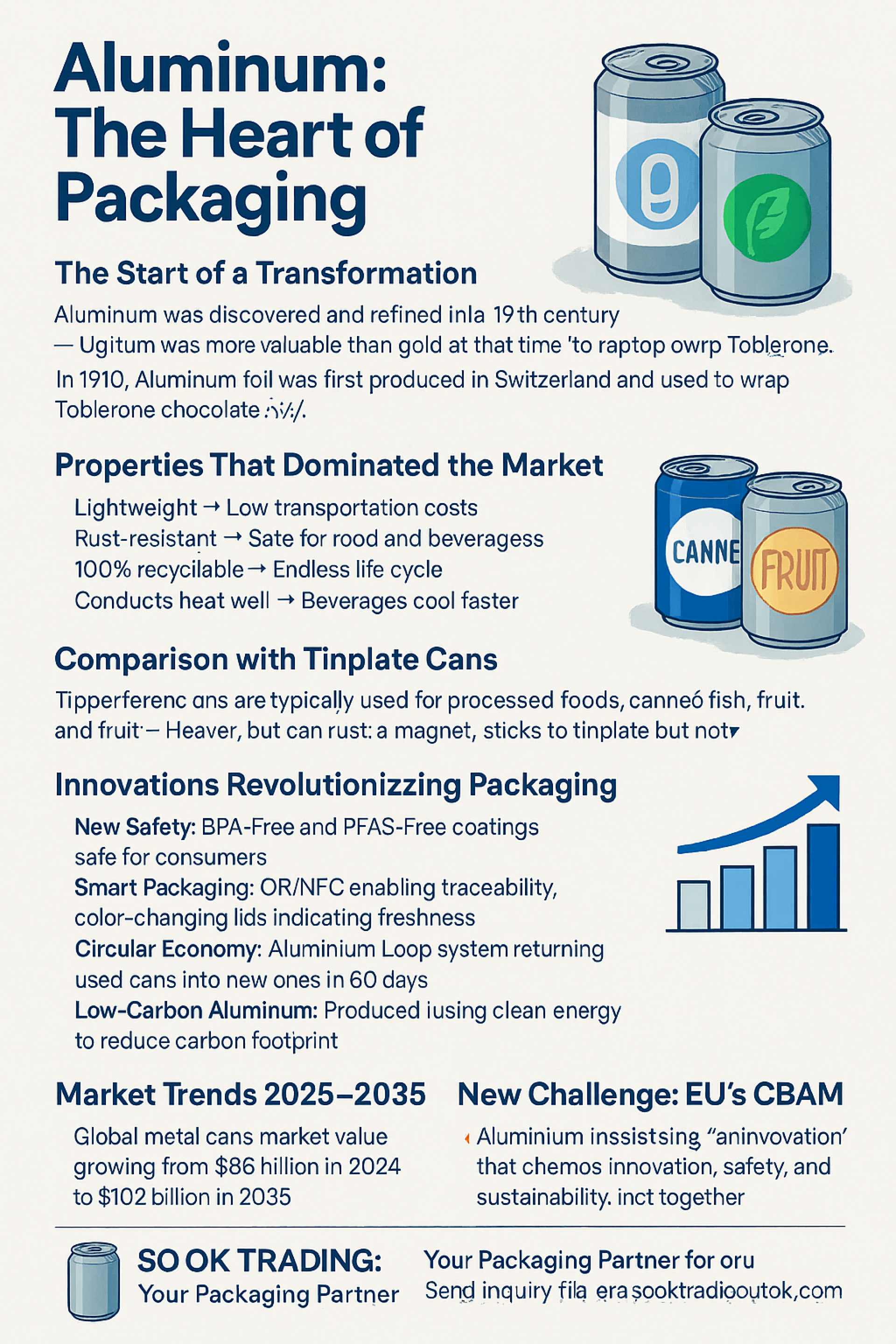
The Beginning of Transformation
Aluminum was discovered and successfully refined in the 19th century, but at that time it was more expensive than gold! In 1910, a Swiss factory produced aluminum foil for the first time, and the following year it was used to wrap Toblerone chocolate—marking aluminum’s entry into the food industry.
In 1958, Coors developed the two‑piece aluminum can, and in 1963 Schlitz Brewing introduced the “Easy‑Open” pull tab. Consumers no longer needed a can opener, and popularity skyrocketed.
Why Aluminum Dominates the Market
Lightweight → Reduces transportation costs
Rust‑free → Safe for food and beverages
100% recyclable → Infinite life cycle
High thermal conductivity → Beverages cool faster
Comparison with Tinplate Cans
Aluminum cans are widely used for carbonated drinks, beer, and ready‑to‑drink coffee. They are lightweight, rust‑resistant, and endlessly recyclable, though they dent more easily under impact.
Tinplate cans, on the other hand, are commonly used for processed foods such as sardines, canned fruit, and condensed milk. They are strong and heat‑resistant, but if the coating is incomplete they can rust. They are also heavier, which increases transportation costs.
A simple test many people use: magnets stick to tinplate cans, but not to aluminum cans.
Innovations Revolutionizing Packaging
New Safety Standards: BPA‑Free and PFAS‑Free internal coatings for consumer safety
Smart Packaging: QR/NFC for traceability, freshness indicators with color‑changing lids
Circular Economy: “Aluminium Loop” system recycles used cans into new ones within 60 days
Low‑Carbon Aluminum: Produced with renewable energy to reduce carbon footprint
Market Trends 2025–2035
Global metal can market projected to grow from $66 billion in 2024 to $102 billion in 2035
Average annual growth rate: 4–5%
In Thailand, Sleek Cans and Alu Bottles are gaining popularity among younger consumers and limited‑edition products
New Challenge: EU’s CBAM
Scope: Covers aluminum from raw materials to packaging cans
Requirement: Report greenhouse gas emissions throughout the production process
Impact on Thailand: Export costs to the EU will rise unless clean energy or recycled aluminum is adopted
✨ Summary
Aluminum is not just packaging—it is an innovation that connects business, safety, and sustainability. With the transition toward Net Zero and the adoption of Smart Packaging, aluminum cans are becoming more than containers—they are the symbol of the future for the food and beverage industry.
SO OK TRADING: Your Packaging Partner
SO OK TRADING is committed to creating and promoting packaging that balances sustainability and innovation, connecting Thai producers with the global market.
For more information:
www.sooktrading.com
sooktrading@outlook.com