“Thailand Sugar Industry 2026: From Cane Fields to a Green World — Transforming into the Bio‑Circular‑Green Economy and Driving the Power of a Sustainable Bio‑Economy” SO OK TRADING | 25 AUG 2026

Thailand Sugar Industry 2026: From Rising Production to Green Transformation — Entering the Bio‑Circular‑Green Economy and Driving the Power of a Sustainable Bio‑Economy
SO OK TRADING | 24 August 2026
Introduction
The year 2026 marks a pivotal turning point for Thailand’s sugar and molasses industry — a year of “higher production but declining revenues.” Favorable weather conditions under the La Niña phenomenon boosted sugarcane and sugar output by more than 6% year‑on‑year. Yet, global price pressures drove overall industry revenues down by approximately 9% compared to the previous year.
Amid this volatility, Thai sugar mills are accelerating their transition into the BCG Economy (Bio‑Circular‑Green Economy), creating added value from every drop of cane — from sugar and molasses production to clean energy and high‑value bio‑based products.
Global & Thai Market Overview
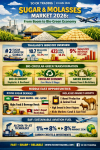
Exporter Status: Thailand remains the world’s #2–3 sugar exporter, holding ~10% of global market share.
Production Growth: 95.4M tons of cane processed, yielding 10.7M tons of sugar (+6.3% YOY).
Export Prices: Average export price fell to USD 423/ton (−14.4% YOY).
Global Market: World sugar output rose to 189.3M tons, while raw sugar prices dropped to 15.3–16.8 cents/lb.
Demand Slowdown: Global consumption growth weakened due to economic headwinds and trade measures.
Molasses Market: A Transitional Resource
Molasses remains in high domestic demand, serving three major sectors:
Renewable Energy: Ethanol production for gasohol blending.
Food & Beverage: Alcohol fermentation, MSG, soy sauce, and seasoning.
Agriculture: Animal feed and bio‑fertilizers.
Major players such as Mitr Phol, Thai Roong Ruang, and KBS dominate the integrated molasses market.
Middle East Opportunities
The Middle East is emerging as a strategic target market for Thai sugar and molasses exports, driven by Food Security and Green Economy policies.
Sugar:
GCC markets (Saudi Arabia, UAE, Qatar) show strong demand in food & beverage sectors.
India’s export restrictions in 2026 open new opportunities for Thai exporters.
Molasses:
Rising demand for ethanol and animal feed in desert regions.
Niche growth in camel and goat feed markets, where Thailand’s stable supply offers a competitive edge.
Transition to the BCG Model
Thai sugar mills are evolving into Biorefinery Complexes, guided by three pillars:
Bio‑Economy: Bioplastics, bioethanol, alternative sweeteners, and high‑value extracts.
Circular Economy: Zero‑waste practices, bagasse packaging, organic fertilizers, and biogas.
Green Economy: Biomass power plants, ethanol expansion, and carbon credit trading.
New S‑Curve: Sustainable Aviation Fuel (SAF)
Thailand’s sugar industry is advancing into SAF (Sustainable Aviation Fuel) production via Alcohol‑to‑Jet (ATJ) technology from cane and cassava ethanol.
Policy Mandate: SAF blending requirement of 1% in 2026, rising to 8% by 2036.
Supply Potential: Surplus ethanol capacity ensures sustainable production.
Business Opportunities: Long‑term contracts with airlines, foreign investment, and carbon credit revenues.
Key Challenges
Strict Green Certification standards in EU & US.
SAF production costs remain 2–3× higher than fossil jet fuel.
Need for robust traceability systems to prevent deforestation concerns.
Outlook
Short Term (1–3 years): Price pressures and sugar tax impacts persist, but SAF and Middle East expansion provide new revenue streams.
Medium Term (5–10 years): Thailand positions itself as ASEAN’s Biorefinery hub, with growing influence in Middle Eastern sugar and molasses markets.
Long Term (10–20 years): Thailand’s sugar industry evolves from a commodity producer into a global leader in Green Transformation, aligned with Net Zero goals.
Conclusion
2026 is a year that proves “more production does not always mean more revenue.” The Thai sugar industry must embrace the BCG model and invest in SAF, while expanding into high‑value Middle Eastern markets. This transformation is not merely adaptation — it is the creation of a new future for Thailand’s sugar and molasses industry.
SO OK TRADING — FAST • SHARP • RELIABLE www.sooktrading.com Facebook: SO OK TRADING