Share

“Copper Supercycle 2026: Copper as the Heart of the New Energy World — Signals of the Global Metal Market Shifting into the AI and Clean Energy Era” When Copper Prices Surge in August 2026: SO OK TRADING: 12 AUG 2026

Last updated: 12 Aug 2026
1612 Views

“Copper Supercycle 2026: When Copper Becomes the Strategic Metal of the AI and Clean Energy Era” : SO OK TRADING : 12 AUG 2026

Analyzing the factors driving aluminum prices higher in August 2026

 
LME Copper Price Overview (Aug 11–12, 2026)
Cash Bid/Ask: 14,238–14,240 USD/ton (~6.46 USD/lb)
3M Bid/Ask: 14,090–14,092 USD/ton (~6.39 USD/lb)
Converted to THB: 466–471 THB/kg
Market Situation: Severe Backwardation — cash prices are ~140 USD/ton higher than forward contracts, reflecting tight supply and surging immediate demand.

 
⚡ Key Drivers of the Rally
Sudden shutdown of Indonesia’s Gresik Smelter → immediate drop in refined copper supply
Continuous decline in LME inventories → acute physical scarcity
Intensified backwardation → buyers paying premiums for immediate delivery
Speculative buying amid U.S. inflation concerns → copper used as an inflation hedge
 
Technical Outlook
Resistance: 14,400 USD (psychological level), 14,850 USD (all-time high)
Support: 14,090 USD (short-term), 13,800 USD (daily EMA)
Strategies:

Buy on Dip → wait for a rebound at 14,090 USD support
Momentum Breakout → buy on breakout above 14,400 USD, target 14,850 USD
 
Copper Outlook 2026
August (Short-Term)
Price Range: 13,500–14,500 USD/ton
Trend: Bullish momentum driven by supply shock
Q3 2026
Price Range: 13,200–13,800 USD/ton
Trend: Resilient but volatile
Factors: U.S. Section 232 tariffs, AI data center & clean energy demand
Full Year 2026
Bear Case: 9,800–11,000 USD (China slowdown)
Base Case: 12,075–13,500 USD (tight supply + tariffs)
Bull Case: 13,735–15,000 USD (severe shortage + China recovery)
 
Financial Institutions’ Views
Citi: Most bullish → target 14,500–15,000 USD
Goldman Sachs: Raised year-end target to 13,735 USD (640,000-ton deficit)
J.P. Morgan: Cautious on macro risks → base case 12,500–13,000 USD
Bank of America: Average 11,313 USD, but potential spike to 15,000 USD
 
Global Copper Industry Trends
Clean Energy Electrification Copper is the backbone of power grids, EVs, and solar farms
AI Data Centers Massive copper demand for high-density wiring & cooling systems → ~475,000 tons in 2026
Substitution Risk If copper prices stay above 14,000 USD too long, industries may switch to aluminum
 
✨ Summary
Short-Term: Prices rising on smelter shutdown & tariff-avoidance buying
Mid-Term: Correction risk if U.S. Section 232 tariffs are confirmed
Long-Term: Tight supply + structural demand → copper entering a structural bull market
 
SO OK TRADING : Your Trusted Business Partner FAST • SHARP • RELIABLE www.sooktrading.com



Related Content
ALUMINUM PRICE TREND 2026
An analysis of the aluminum market in 2026 indicates a likely continued market deficit and upward price pressure, driven by constrained supply and resilient demand from green energy sectors. However, significant volatility is expected due to policy uncertainties and the potential for new Indonesian supply to eventually balance the market. Key Drivers and Projections for 2026 Supply Side Analysis Capacity Constraints: China's primary aluminum output is approaching its self-imposed 45 million-tonne capacity cap, limiting global supply growth. Power Challenges: Smelters outside of China face intense competition for power from energy-intensive sectors like AI data centers, which are willing to pay higher prices for long-term contracts. This has kept significant capacity offline in Europe and the US. Production Disruptions: Outages and potential shutdowns at existing smelters in Iceland and Mozambique further tighten the market. Scrap Supply Pressure: The EU's planned implementation of the Carbon Border Adjustment Mechanism (CBAM) and potential scrap export tariffs in spring 2026 are expected to impact global scrap flows, creating regional shortages and price volatility. New Capacity: Indonesia is a key source of new supply, with several projects in the pipeline. However, analysts suggest the pace of the ramp-up may be slower than expected due to infrastructure and policy challenges, meaning it is unlikely to fully offset near-term tightness. Demand Side Analysis Green Transition Demand: Demand from "green" sectors such as solar panels, new energy vehicles, and energy transition infrastructure remains strong, providing fundamental support for the market. Substitution Effect: Aluminum's wide price discount relative to copper has encouraged substitution in electrical applications, acting as a tailwind for demand and prices. Construction and Automotive: The construction and automotive industries continue to be major consumers, with growing demand for lightweight, low-carbon aluminum products. Price Forecasts and Volatility The market is expected to remain in a deficit in 2026, with estimates ranging from 200,000 to 600,000 tonnes. This structural tightness is leading most analysts to forecast sustained or rising prices. Bullish Views: Analysts at Bank of America project prices of $3,000/tonne as early as 2026. J.P. Morgan also expects prices to approach $3,000/tonne in Q1 2026. ING forecasts an average price of $2,900/tonne for the year. Bearish/Conservative Views: Goldman Sachs is an outlier, forecasting prices to decline to $2,350/tonne by Q4 2026, anticipating a market surplus later in the year. SMM forecasts a "high first, then lower" pattern, with prices finding equilibrium in the $2,700–$2,800/tonne range by year-end. Premiums: Regional premiums, particularly the US Midwest premium, are expected to remain high and volatile due to tariffs and regional supply dynamics, creating a disconnect from the LME benchmark price. In essence, 2026 is projected to be a year of high volatility where participants need to focus on scenario readiness rather than relying on a single price forecast, as geopolitical and energy policies significantly influence regional supply and costs
31 Dec 2025
“Circular Economy Transforming Global Energy: Biofuels & Waste-to-Energy Towards Net Zero”
Energy Transition 2026: Biofuels & Waste-to-Energy Outlook SO OK TRADING — 23 July 2026 The global energy landscape is entering a new era. Biofuels are shifting from food crops to agricultural residues, waste, and used cooking oil — paving the way for Sustainable Aviation Fuel (SAF) and Bio-Hydrogen as key solutions for decarbonizing aviation and heavy industries. At the same time, Waste-to-Energy (WTE) is emerging as a rising star in the Circular Economy, transforming community waste into clean power and industrial fuel. With Europe’s Carbon Border Adjustment Mechanism (CBAM) and upcoming domestic carbon tax policies, industries in Thailand are accelerating the transition to RDF fuels, biomass, and SAF investments to stay competitive and sustainable. SO OK TRADING is proud to stand at the forefront of this transformation — delivering WOOD PELLET and RDF3 products that are eco-friendly, reliable, and ready to support businesses in achieving Net Zero goals.
23 Jul 2026
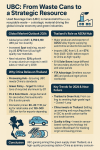
UBC: The Recycling Treasure of the Century – The Heart of the Green Supply Chain from Cans to Strategic Resource
UBC Scrap: The Green Gold of the Future From waste cans to strategic resource—UBC (Used Beverage Cans) are now powering the global circular economy. With over 99% purity and 95% less energy use than virgin aluminum, UBC is the key to low-carbon manufacturing.
11 Feb 2026
This website uses cookies for best user experience, to find out more you can go to our Privacy Policy and Cookies Policy
Powered By MakeWebEasy Logo MakeWebEasy