“Aluminium 3104 – The Lightweight Alloy Behind Every Beverage Can, Driving a New Packaging Era in the Age of Circular Economy” Aluminium Insights for Cans | SO OK TRADING | 8 AUG 2026
Aluminium 3104: The Heart of the Global Can Industry, Driving a Sustainable Future to 2035
Insights by SO OK TRADING | 8 AUG 2026
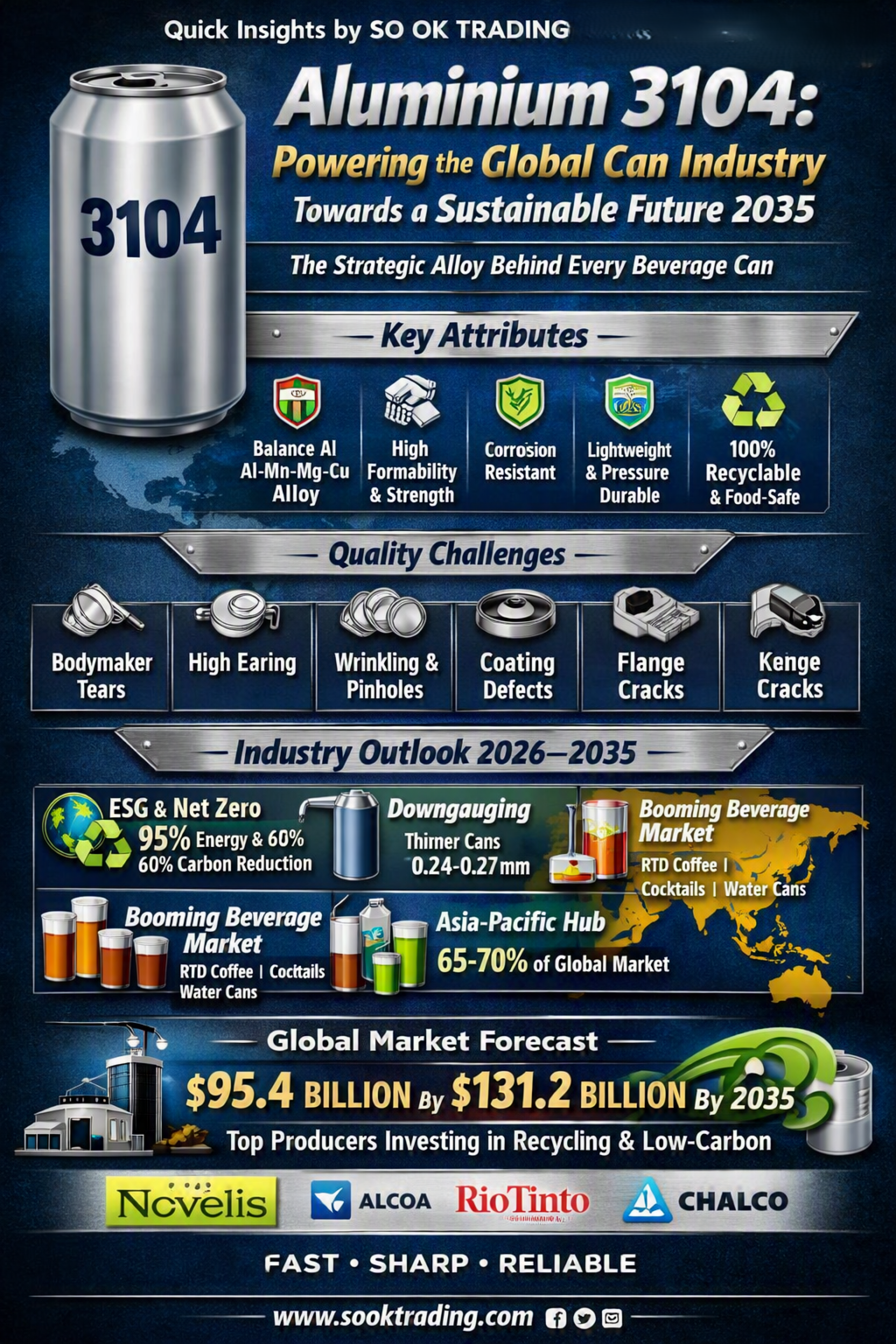
Aluminium 3104 is the strategic alloy behind the beverage cans we use every day. With its perfect balance of lightweight strength, food safety, and infinite recyclability, it has become the backbone of the global packaging industry.
Key Properties
Balanced Al-Mn-Mg-Cu Alloy: Mn ~0.8–1.4% for strength, Mg ~0.8–1.2% for toughness and corrosion resistance, Cu in small amounts for structural integrity
Excellent Deep Drawing & Ironing: Elongation ~20% allows ultra-thin walls without tearing
Lightweight yet Pressure-Resistant: Cold-rolled (H19) to withstand carbonation pressure in sodas and beer
Corrosion-Resistant & Food-Safe: Internal coating prevents direct contact with beverages
100% Recyclable: A true circular economy material, reducing energy and carbon footprint
Quality Control
High-speed production lines (over 2,000 cans per minute) demand flawless sheet quality:
Precise chemical composition (Mn/Mg balance, Fe & Si control)
Consistent mechanical properties (tensile, yield, elongation)
Low earing rate (<3%)
Clean surfaces free of oil and defects
Uniform thickness at micron-level precision
⚠️ Common Quality Issues
Bodymaker tears during ironing
High earing (excessive edge waviness)
Wrinkling and pinholes
Coating defects from oil contamination
Flanging cracks at the can’s neck
Industry Outlook (2026–2035)
ESG & Net Zero: Aluminium cans replacing plastic and glass, recycling cuts ~95% energy and ~60% carbon
Downgauging Trend: Thickness reduced to ~0.24–0.27 mm while maintaining strength → lower costs and lighter packaging
New Beverage Markets: RTD coffee, cocktails, and canned water driving demand
Asia-Pacific & Thailand as Hubs: Asia-Pacific holds ~65–70% of global share, CAGR ~7–7.85%; Thailand is a key production and export base
Challenges: Volatile LME aluminium prices, EU CBAM pushing high-recycled content, need for investment in recycling and low-carbon technology
Global Market Overview
2026 market size: ~USD 95.42 billion → 2035: ~USD 131.19 billion (CAGR ~3.6%)
Overall aluminium market: 2025 ~USD 188–204 billion → 2035 ~USD 299–343 billion (CAGR ~4.5–6.2%)
Flat-rolled products: ~41–46% market share
Secondary aluminium (recycled): growing importance under environmental and cost pressures
Major Industry Players
Global leaders investing in recycling and low-carbon aluminium include: Novelis (US/India), Alcoa (US), Rio Tinto (UK/Australia), Norsk Hydro (Norway), Chalco (China), Rusal (Russia), Emirates Global Aluminium (UAE), Hindalco Industries (India), Vedanta Aluminium (India), South32 (Australia), Ball Corporation & Constellium (US/Europe).
Conclusion
Aluminium 3104 is truly a strategic material for the future of global packaging. Its balance of lightweight durability, safety, and recyclability makes it the foundation of sustainable beverage cans. With ESG momentum and new beverage markets expanding, demand will continue to rise. Yet, success will depend on how producers adapt to energy costs, carbon taxes, and recycling investments. Those who embrace low-carbon innovation will lead the industry into 2035.
SO OK TRADING Your trusted partner in the aluminium packaging industry FAST • SHARP • RELIABLE www.sooktrading.com Facebook: SO OK TRADING