“KOSPI Collapse: South Korea’s Greatest Financial Tragedy — When Leverage Became a Time Bomb, Wiping Out Portfolios and Shaking Asia’s Economy”
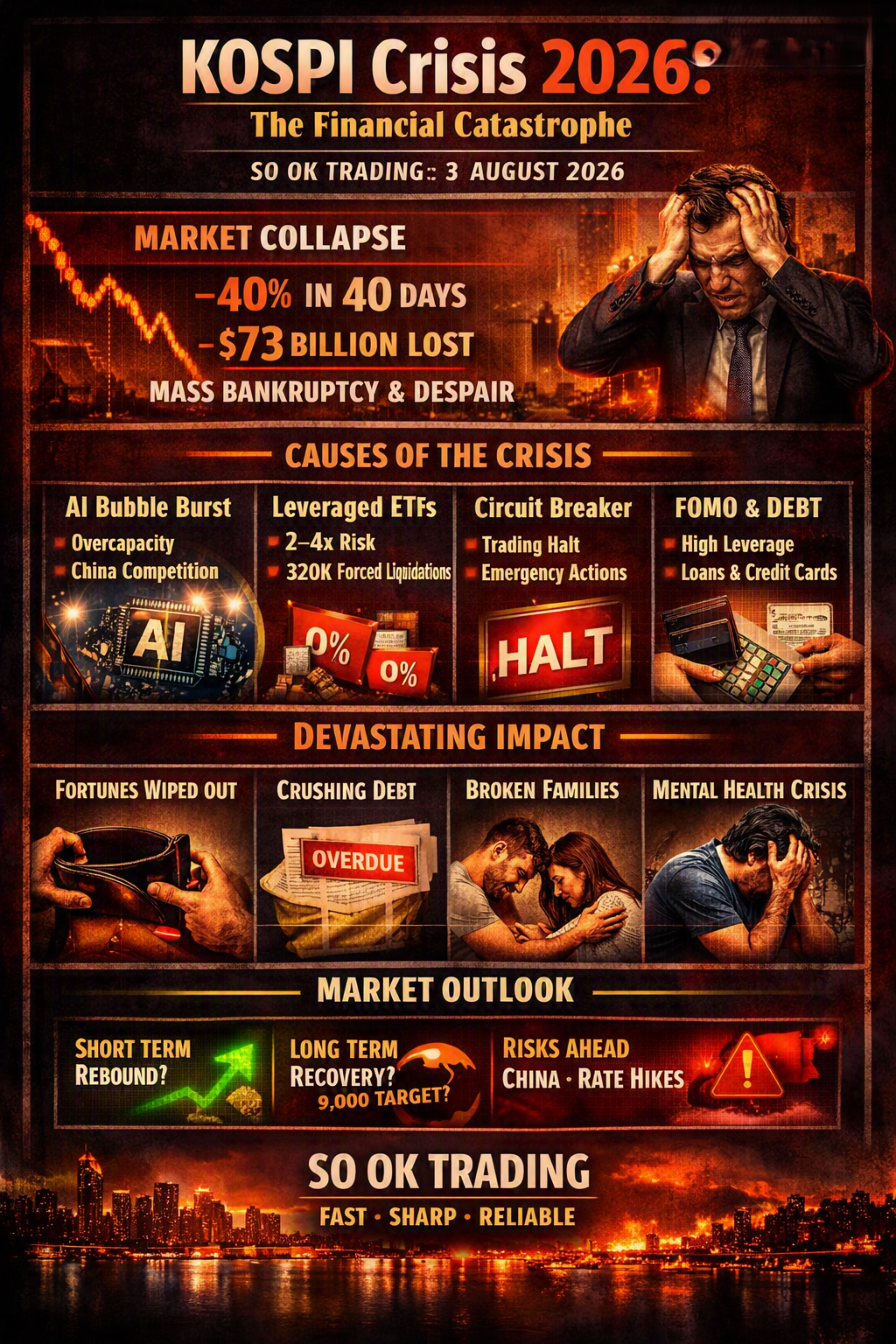
South Korea Stock Market Crisis (KOSPI) 2026 – The Greatest Financial Tragedy
SO OK TRADING : 3 AUGUST 2026
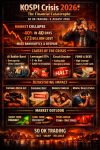
South Korea’s stock market has just faced the most severe correction in its history. The KOSPI index plunged more than 40% within only 40 days, wiping out over 3.1 trillion won (approximately 73 trillion baht) in market value. This loss is not just red numbers on a screen — it is a financial catastrophe that left countless families bankrupt, erased lifelong savings, and pushed many into complete ruin.
Key Causes of the Crisis
AI Chip Bubble Burst
Semiconductor and HBM stocks soared far beyond fundamentals due to speculation.
Concerns about overcapacity and China’s ability to produce its own chips triggered heavy sell-offs in giants like Samsung and SK Hynix.
Single-stock Leveraged ETFs: A Double-edged Sword
Allowed investors to leverage individual stocks by 2–4 times.
A mere 10% drop in stock prices wiped out 30–40% of investors’ capital instantly.
Over 320,000 accounts were forced into liquidation, creating a domino effect that dragged the market down further.
Government Measures and Circuit Breakers
Trading was halted for two consecutive days to curb panic.
Emergency measures included suspending new leveraged ETFs, banning high-leverage product advertising, and tripling minimum deposits for new investors.
FOMO and Debt-fueled Trading
Many believed AI stocks were the “shortcut to wealth.”
Investors not only used savings but also borrowed through bank loans, personal credit, and credit cards.
When portfolios collapsed, debts remained, driving many into bankruptcy.
Real-life Impact
From Riches to Zero: Portfolios worth hundreds of millions of won were liquidated to nothing.
Crushing Debt: Some investors not only lost their capital but also owed additional debt from leveraged ETFs.
Broken Families: Wedding funds, home down payments, and children’s education savings were wiped out.
Mental Health Crisis: Reports of depression and acute stress surged dramatically.
Market Outlook (August 2026)
Short Term: After leveraged accounts were cleared, government stimulus through the Sovereign Wealth Fund and insider stock purchases fueled a rebound.
Medium to Long Term: Institutions like Morgan Stanley and Goldman Sachs see potential recovery to 9,000 points, citing continued demand for AI chips.
Risks: Extreme volatility, China’s semiconductor advances, and possible interest rate hikes by the Bank of Korea.
Lessons the World Must Remember
Leverage is the Executioner of Finance
It multiplies gains in bull markets but destroys lives in downturns.
Don’t Forget Valuation Amid Growth
Even good companies can become dangerous when overpriced.
Forced Sales Trigger a Domino Collapse
Margin calls can wipe out portfolios and accelerate market crashes.
FOMO and Debt are Traps
Borrowing to invest hands control of your life to the market.
Cold Money is the Best Shield
Only invest with money you can afford to lose.
Conclusion
The KOSPI crisis of 2026 was not just a market correction but a national financial tragedy, proving that: “When financial innovation combines with greed and debt, the wealth of the people can be destroyed in an instant.”
SO OK TRADING : Your Trusted Business Partner SO OK TRADING : FAST • SHARP • RELIABLE VISIT US AT : WWW.SOOKTRADING.COM FACEBOOK : SO OK TRADING