“Global Reset 2026: Navigating Geopolitical Storms as the World Economy Transitions into a New Era of Change and Game-Changing Shifts” SO OK TRADING : September 23, 2026
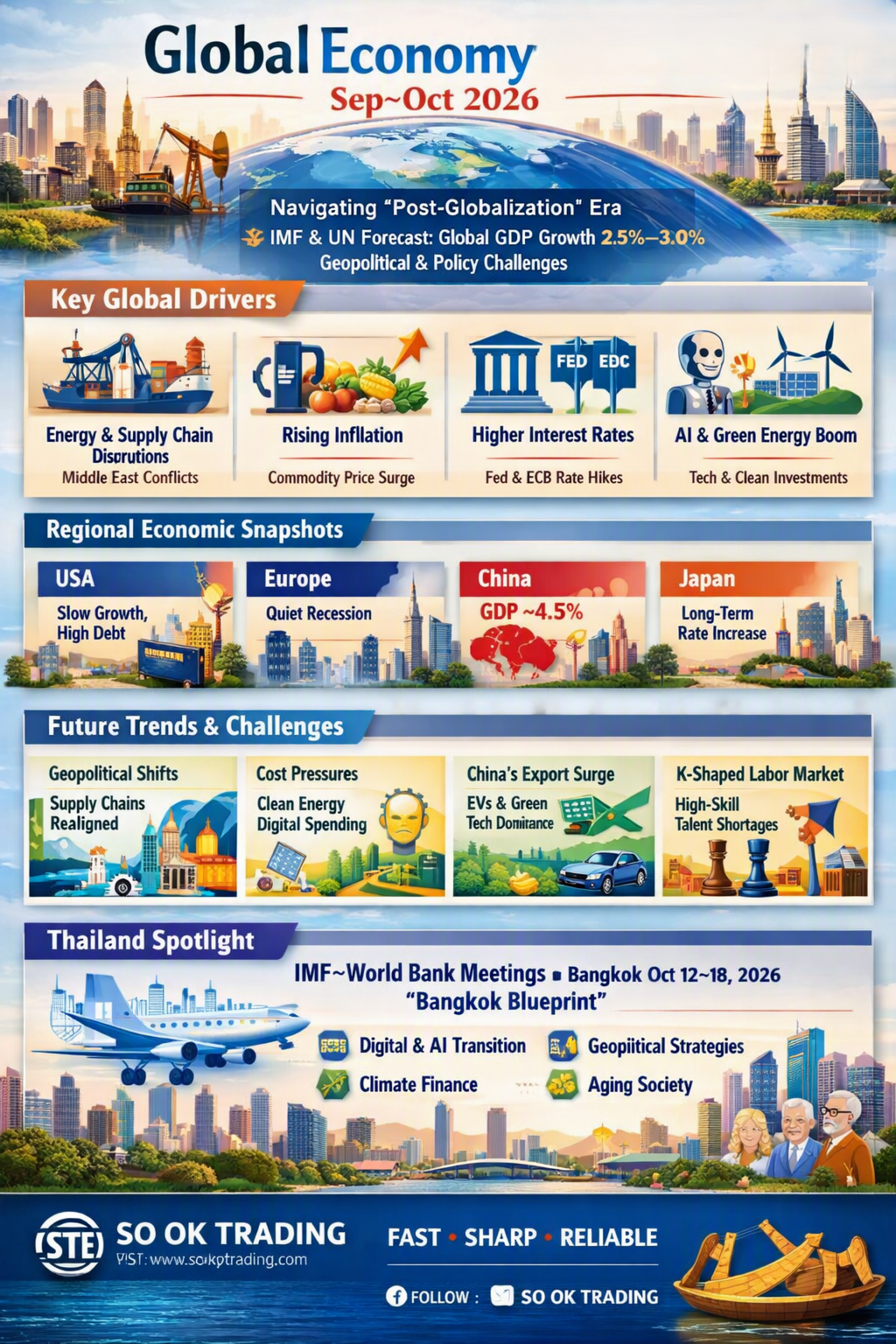
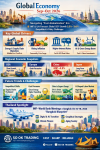
Global Economy Sep–Oct 2026: Navigating Geopolitical Storms and Transitioning into a New Era
✨ Introduction Between September and October 2026, the global economy finds itself in a state of “holding steady” amid persistent geopolitical tensions and policy volatility. While not plunging into a severe recession, growth has slowed noticeably. The IMF and UN have revised global GDP growth forecasts down to 2.5–3.0%, below pre-crisis averages. This shift reflects the onset of the “Post-Globalization” era, where supply chains and trade rules are being restructured.
Key Drivers and Regional Dynamics
Key Global Drivers
Energy Crisis and Supply Chain Disruptions – Conflicts in the Middle East and the prolonged Russia–Ukraine war have triggered global supply shocks, driving energy costs higher.
Resurgent Inflation – Rising oil and commodity prices have kept inflation elevated.
Renewed Interest Rate Hikes – The Fed and ECB signal further rate increases to curb inflation, reversing earlier expectations of cuts.
AI and Green Energy Investments – Massive capital flows into AI infrastructure and clean energy projects are cushioning the global economy.
Regional Snapshots
United States: Growth continues but slows, pressured by record-high public debt and trade policy uncertainty.
Europe: Fragile recovery, with manufacturing slipping into a “Quiet Recession.”
China: EV and clean energy exports remain strong, but GDP growth is revised down to ~4.5%.
ASEAN & South Asia: Fastest-growing region globally, benefiting from supply chain relocation, though vulnerable to currency volatility.
Japan: Long-term interest rates rise, ending the era of ultra-low rates, stabilizing the yen.
India: Maintains the world’s fastest growth rate (6–6.5%).
Middle East: Conflicts disrupt energy markets; GCC nations accelerate diversification into non-oil sectors.
South Korea: Semiconductor and AI demand provide momentum, but trade tensions between the US and China pose risks.
Outlook and Future Directions
Geopolitical Realignment: Great power competition reshapes supply chains toward ASEAN and Africa.
High Costs and Interest Rates: Clean energy and digital infrastructure demand keeps structural interest rates elevated.
China’s Export Surge: EVs and clean energy products flood global markets, raising trade friction risks.
K-Shaped Labor Market: Manufacturing stagnates while high-tech industries face acute talent shortages.
Thailand’s Outlook
Exports pressured by high shipping costs and slowing global demand.
Government introduces the “Thai Help Thai Plus” program to support domestic consumption.
Key highlight: Thailand hosts the IMF–World Bank Annual Meetings from October 12–18, 2026 in Bangkok.
Launch of the “Bangkok Blueprint” focusing on:
Digital and AI transition
Managing geopolitical fragmentation
Climate finance architecture
Addressing aging societies
Conclusion
The global economy in Sep–Oct 2026 is navigating a path filled with both challenges and opportunities. Geopolitical tensions and high interest rates weigh on growth, yet investments in AI, clean energy, and supply chain reconfiguration provide critical momentum. For Thailand, hosting the IMF–World Bank Annual Meetings represents a golden opportunity to shape the future of the global economy and attract investment into next-generation industries.
SO OK TRADING: Your Business Partner FAST • SHARP • RELIABLE www.sooktrading.com Facebook: SO OK TRADING