“ALUMINUM NEXT – CANNED REVOLUTION: The Power of Thailand’s Packaging Industry Towards a Sustainable Future 2035”
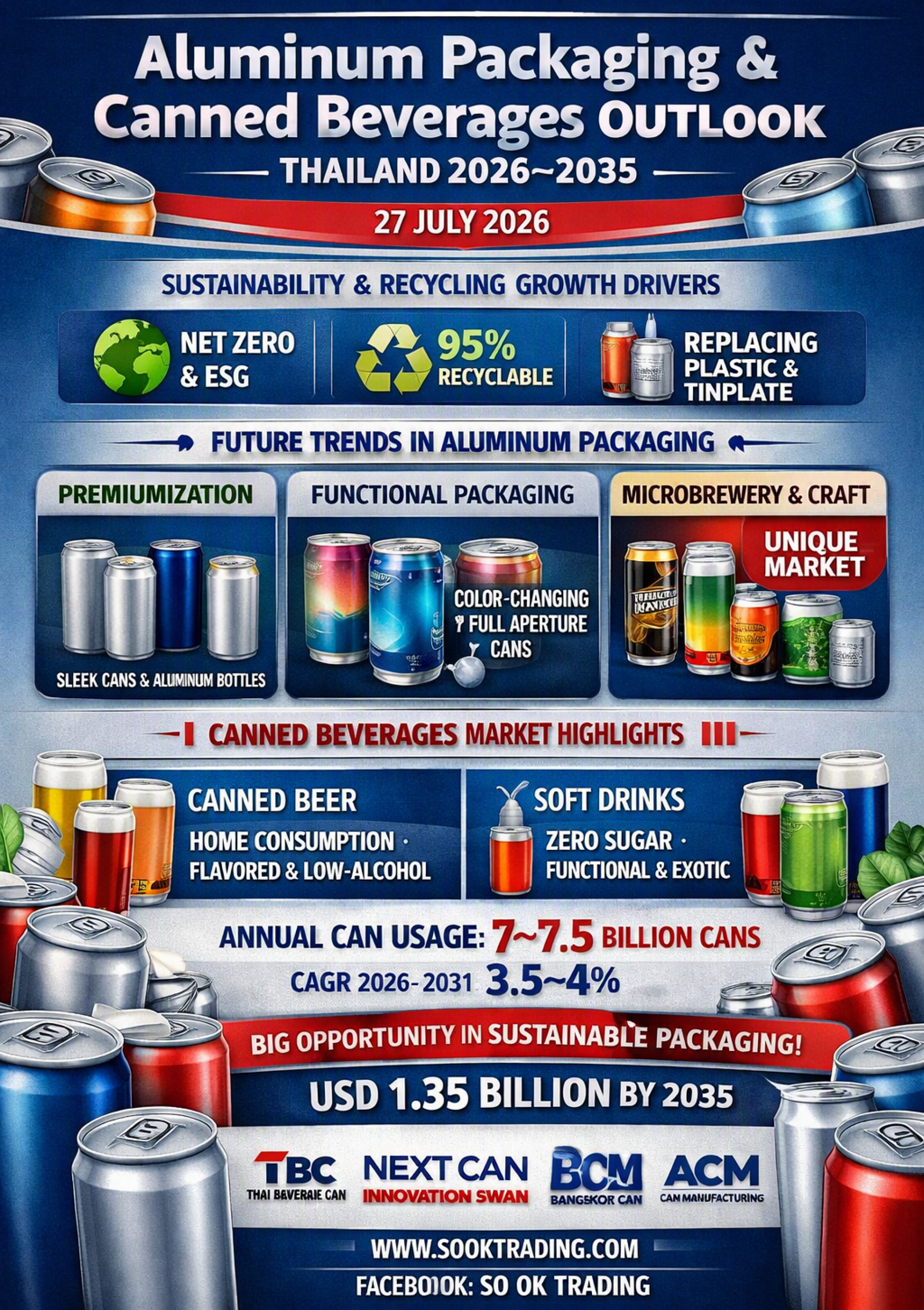
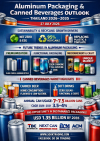
Outlook: Thailand’s Aluminum Packaging & Canned Beverage Industry 2026–2035
SO OK TRADING : July 27, 2026
Aluminum Packaging → Usage in Thailand
Continuous Growth Aluminum remains the “star” of global packaging thanks to its 100% recyclability and alignment with the principles of the Circular Economy.
Key Drivers: Aluminum Packaging in Thailand
Net Zero & ESG Trends → Manufacturers must adopt eco-friendly materials
High Energy & Raw Material Costs → Recycled aluminum reduces costs by more than 95%
→ Aluminum is expected to increasingly replace other packaging types such as plastic and tinplate
Future Directions: Aluminum Packaging in Thailand
Premiumization Modern can designs (sleek, slim, tall) will be widely used in premium beverages. Aluminum bottle cans will expand in premium and luxury drink markets.
Functional Packaging Innovations such as color-changing cans when chilled, full-aperture lids, and ESG-compliant packaging will gain traction.
Microbrewery & Craft Market Small breweries and niche brands will leverage cans to reach home consumers, creating a unique market segment.
Canned Beverages & Aluminum Packaging Trends in Thailand
Beer Cans
Growth driven by home consumption and portability
Future trends: flavored beers (fruit-based), low/no alcohol beers, craft beer cans
Target groups: Gen Z, Millennials, women, and light drinkers
Soft Drink Cans
Driven by sugar tax and health trends
Zero-sugar formulas will become the new standard
Functional soft drinks (with added vitamins, relaxation extracts) will expand
Exotic flavors (green tea, specialty fruits) will differentiate products
Usage & Growth
Total consumption: 7–7.5 billion cans/year (2026 data)
Market share: cans account for ~25% of Thailand’s beverage market (vs. ~60% in Vietnam and ~70% in Cambodia) → huge growth potential
Major Producers of Aluminum Beverage Cans in Thailand
TBC (Thai Beverage Can) → Capacity over 7 billion cans/year (Chang Beer, Beer Lao, Oishi, canned coffee, etc.)
NEXT CAN INNOVATION + SWAN → Focus on energy drinks (Red Bull), canned coffee, soft drinks, and export markets
BCM (Bangkok Can Manufacturing) → Focus on Singha Beer, Asahi Beer, soft drinks, etc.
ACM (Asia Can Manufacturing – Carabao Group) → Capacity over 1 billion cans/year, focusing on Carabao brand beverages; a new player in the market
Market Growth Outlook
CAGR: 3.5–4% (2026–2031)
Key drivers: tourism recovery, rising temperatures, health trends, expansion of functional drinks and RTD beverages
Future Applications of Aluminum Packaging in Thailand
Lifestyle Integration → Cans will symbolize modern lifestyles, combining health, convenience, and premium image
ESG & Sustainability → Thai producers aim to use 74–80% recycled cans by 2030
Smart Packaging → QR codes, AR experiences, and supply chain tracking will be adopted
Global Competitiveness → Thailand has strong potential to become ASEAN’s can production hub, especially in beer and soft drink markets
Summary & Opportunities
Thailand’s can usage is still low compared to neighboring countries → enormous growth potential
Competition will shift from “price” to “quality + sustainability”
Recycling, lightweighting, and packaging innovation will dominate the market
ESG, carbon credits, and recycled content will be key differentiators
Market Outlook Between 2026–2035, Thailand’s aluminum beverage packaging market is expected to reach USD 1.35 billion.
✨ Conclusion Aluminum packaging and canned beverages will become the cornerstone of Thailand’s beverage industry, meeting consumer demands for health, convenience, and sustainability. Companies that successfully combine new flavors + packaging innovation + ESG compliance will win the loyalty of the new generation of consumers.
SO OK TRADING : Your Business Partner FAST SHARP RELIABLE
Website: WWW.SOOKTRADING.COM
Facebook: SOOK TRADING
SO OK TRADING : With over 15 years in the aluminum packaging industry for both beverages and food, we are the trusted partner for your business.