“Circular Economy Transforming Global Energy: Biofuels & Waste-to-Energy Towards Net Zero”
Biofuels & Alternative Energy Trends : SO OK TRADING : 23 July 2026
Biofuels
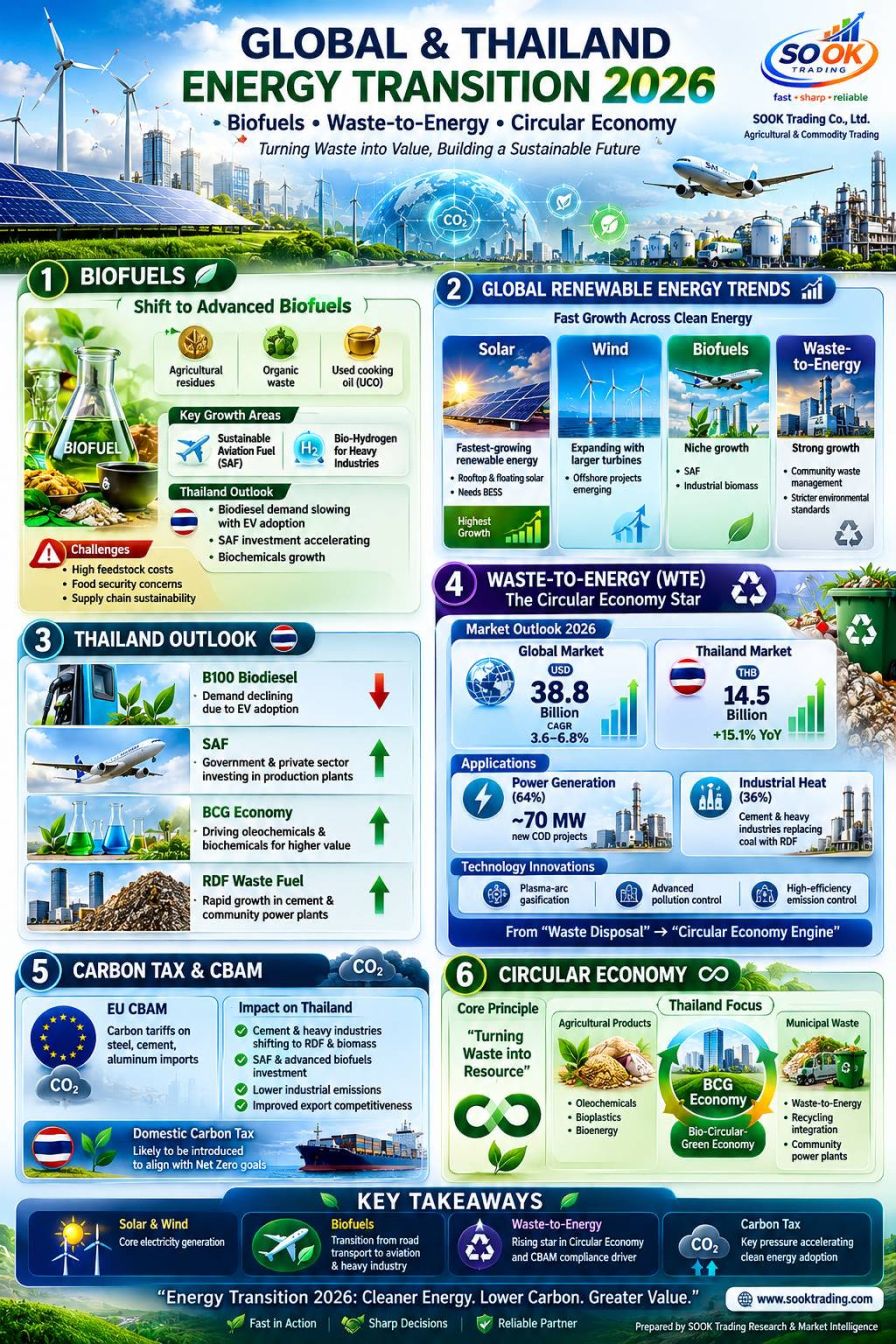
Biofuels are transitioning from food crops to agricultural residues, waste, and used cooking oil to avoid land-use competition and enhance sustainability. In aviation and heavy industries where battery power is not feasible, Sustainable Aviation Fuel (SAF) and Bio-Hydrogen are emerging as key solutions for decarbonization.
In Thailand, the biodiesel and ethanol markets are slowing due to the rise of electric vehicles (EVs), but investments in SAF and the development of high-value biochemicals are expanding.
Industrial Applications
Factories are shifting to wood pellets and palm shells as coal substitutes to comply with international carbon tax measures such as Europe’s CBAM (Carbon Border Adjustment Mechanism). At the same time, biogas is being upgraded into Compressed Bio-Methane Gas (CBG) for use in industries and heavy transport.
⚠️ Challenges
Higher feedstock collection and processing costs compared to solar and wind energy
Food security risks from competition between food crops and energy crops
Global Renewable Energy Overview
Solar: Fastest-growing, largest share of renewable energy, but requires BESS for stability
Wind: Continuous growth with larger turbines and offshore wind projects despite high costs
Biofuels: Niche growth focused on SAF and industrial biomass
Waste-to-Energy (WTE): Strong role in community waste management and power generation with stricter environmental standards
Thailand Outlook
Biodiesel (B100): Slowing due to EV adoption and blending policy adjustments
SAF: Government and private sector investing in production plants
BCG Economy: Driving agricultural products into high-value oleochemicals and biochemicals
RDF Waste Fuel: Rapid growth in cement plants and community power plants to mitigate CBAM impacts
♻️ Waste-to-Energy (WTE) — Rising Star of the Circular Economy
Global Market 2026: USD 38.8 billion, CAGR 3.6–6.8%
Thailand Market 2026: THB 14.5 billion, +15.1% YoY
Power generation (64%): Community and private waste-to-energy plants totaling over 70 MW COD
Industrial heat (36%): Cement and heavy industries replacing coal with RDF
New Technologies: Plasma-arc gasification, advanced pollution control systems
Role: From “waste disposal” → to “circular economy engine,” creating clean energy and solving urban waste problems
Carbon Tax & CBAM
EU CBAM: Carbon tariffs on imports such as steel, cement, and aluminum → pressuring Thai industries to adopt clean fuels
Impact on Thailand:
Cement and energy-intensive industries accelerating RDF and biomass adoption
SAF and advanced biofuel investments to meet international aviation standards
Domestic Carbon Tax: Likely to be introduced to incentivize emission reductions and align with Net Zero goals
Circular Economy
Principle: Transform “waste” into “resources” (RDF, SAF, Biochemicals)
Thailand Focus:
Promoting the BCG Economy (Bio-Circular-Green) model
Converting agricultural products into oleochemicals and bioplastics
Integrating waste-to-energy and recycling into environmental management and value creation
Summary
Solar & Wind: Core electricity generation
Biofuels: Transition from road transport to aviation and heavy industry
Waste-to-Energy: Rising star in the Circular Economy, key for CBAM compliance
Carbon Tax: Major driver accelerating clean energy transition
Overall, Waste-to-Energy and advanced biofuels will be central to Thailand’s and the world’s energy transition, with carbon tax policies and the Circular Economy acting as catalysts for investment and innovation.
SO OK TRADING : Your Trusted Business Partner SO OK TRADING : FAST • SHARP • RELIABLE
Visit us: WWW.SOOKTRADING.COM Facebook: SO OK TRADING WhatsApp: +66955564255