“Global Outlook 2026: In‑Depth Analysis of the World Economy — Major Powers Driving the New Era | SO OK TRADING”
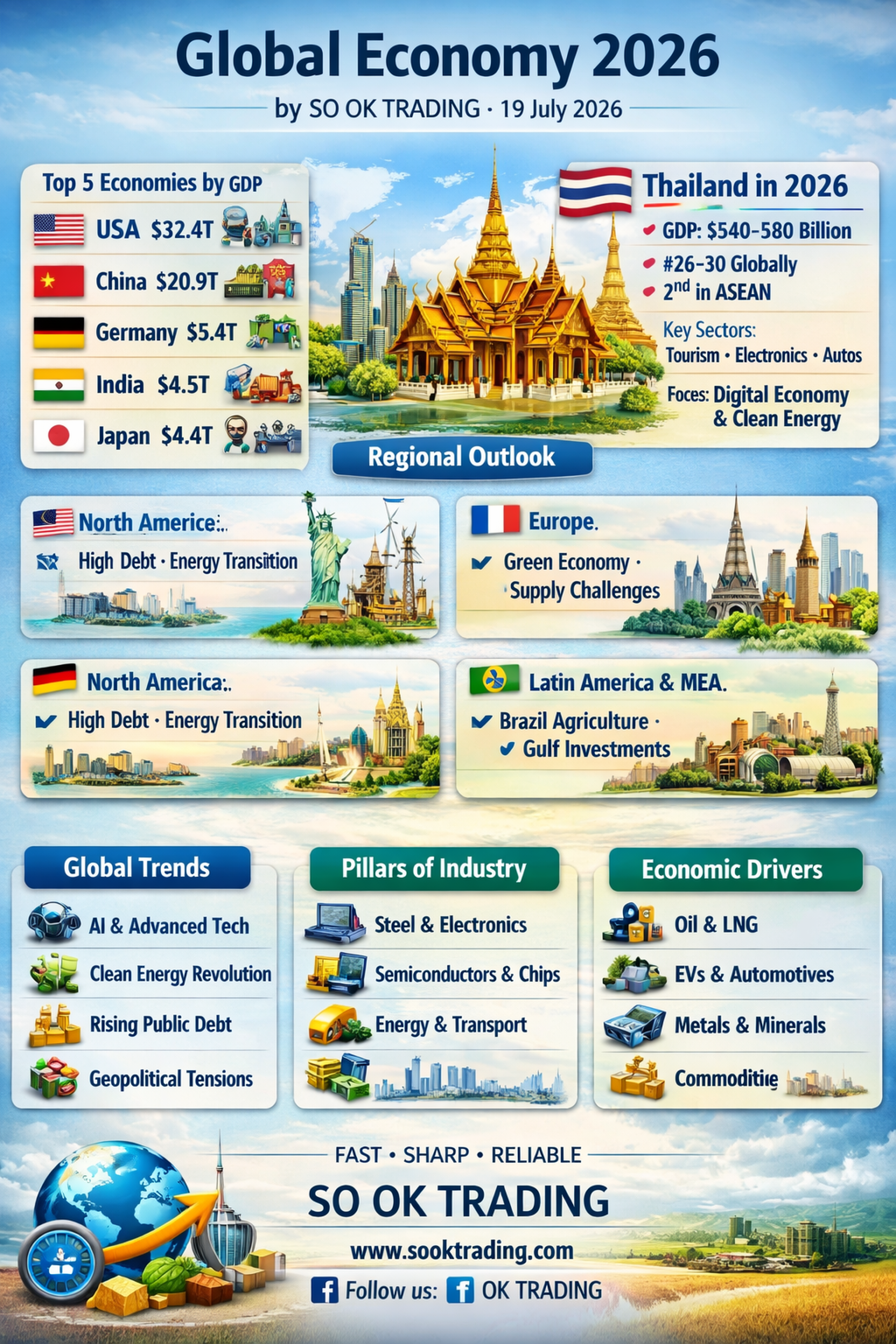
Global Economic Outlook 2026
SO OK TRADING | July 19, 2026
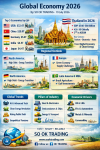
In 2026, the global economy is valued at approximately $123.6–126 trillion, with four major powers — the United States, China, Germany, and India — together accounting for more than half of the world’s output.
Top 10 Economies (Nominal GDP)
United States – $32.38 trillion
Outlook: Continues to lead the global economy for over 100 years, driven by technology, innovation, and strong domestic consumption.
Risk: High public debt and volatility in the technology sector.
China – $20.85 trillion
Outlook: Still a manufacturing and export powerhouse, but growth is slowing due to aging demographics and real estate issues.
Opportunity: Investment in AI and clean energy may help sustain competitiveness.
Germany – $5.45 trillion
Outlook: Remains the heart of Europe’s economy, especially in automotive and engineering.
Risk: Pressured by energy costs and the transition to a green economy.
India – $4.50 trillion
Outlook: The fastest-growing economy in the world, fueled by domestic demand and infrastructure investment.
Opportunity: Potential to rise to the world’s third-largest economy within the next decade.
Japan – $4.38 trillion
Outlook: Still a leader in precision technology, but growth is slowing due to an aging society.
Risk: May be overtaken by India and lose its leading role in Asia.
6–10: United Kingdom, France, Italy, Russia, Brazil/Canada
Thailand’s Economy 2026
GDP: $540–580 billion
Global Ranking: 26–30
ASEAN Ranking: 2nd largest, after Indonesia
Key Sectors: Tourism, electronics exports, automotive, food
Risks: High household debt, weak domestic purchasing power, geopolitical tensions
Outlook: Accelerating investment in digital economy, clean energy, and new infrastructure will help maintain ASEAN leadership and reduce the risk of being overtaken by Vietnam in PPP terms.
Three Dimensions of Global Economy
Nominal GDP: United States leads
GDP (PPP): China leads, India rises to 3rd
GDP per Capita: Wealthy small nations such as Liechtenstein, Luxembourg, Singapore
Regional Outlook
North America
United States: Still the global leader, but faces debt pressure and tech market volatility
Canada: Supported by energy and mining, but must accelerate clean energy transition
Europe
Germany & France: Core of Europe’s economy, but challenged by high energy costs and green transition
United Kingdom: Strong in finance and services, but Brexit continues to affect investment confidence
Asia
China: Growth slowdown, but remains the world’s manufacturing hub
India: Fastest growth, driven by domestic market and infrastructure
Japan: Slowing due to aging society, but still strong in technology
ASEAN: Rising region, with Indonesia and Vietnam emerging as new leaders
Latin America
Brazil: Agricultural giant, but faces political and currency risks
Mexico: Supported by manufacturing and exports to the U.S.
Middle East & Africa
Saudi Arabia & GCC: Massive investments in clean energy and infrastructure
Africa: Growth potential from resources and young population, but political stability remains a challenge
Backbone Industries of the World
Steel & Iron: Foundation of infrastructure and heavy industry
Semiconductors & Chips: The brain of the digital era, powering AI, EVs, and communications
Key Drivers of the Global Economy
Energy: Oil, natural gas, LNG
Technology & AI: Chips, servers, data centers
Automotive & Machinery: EVs and manufacturing industries
Metals & Minerals: Essential raw materials in industrial supply chains
Global Economic Trends
AI & advanced technology investment
Rising demand for clean energy
High public debt increasing financial vulnerability
Geopolitical fragmentation and supply chain restructuring
✨ The world is entering a new economic era driven by AI, clean energy, and supply chain restructuring. Asia and ASEAN are rising regions, while the United States remains the leader but faces debt and technological competition.
SO OK TRADING: Your Trusted Business Partner SO OK TRADING: FAST • SHARP • RELIABLE
www.sooktrading.com Facebook: SO OK TRADING