“Sugar Economy: Thai Sugar – From Sweetness to Future Energy” (SO OK TRADING | 14 July 2026)
“Thai Sugar – From Sweetness to Global Energy”
By SO OK TRADING | 14 July 2026
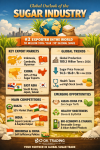
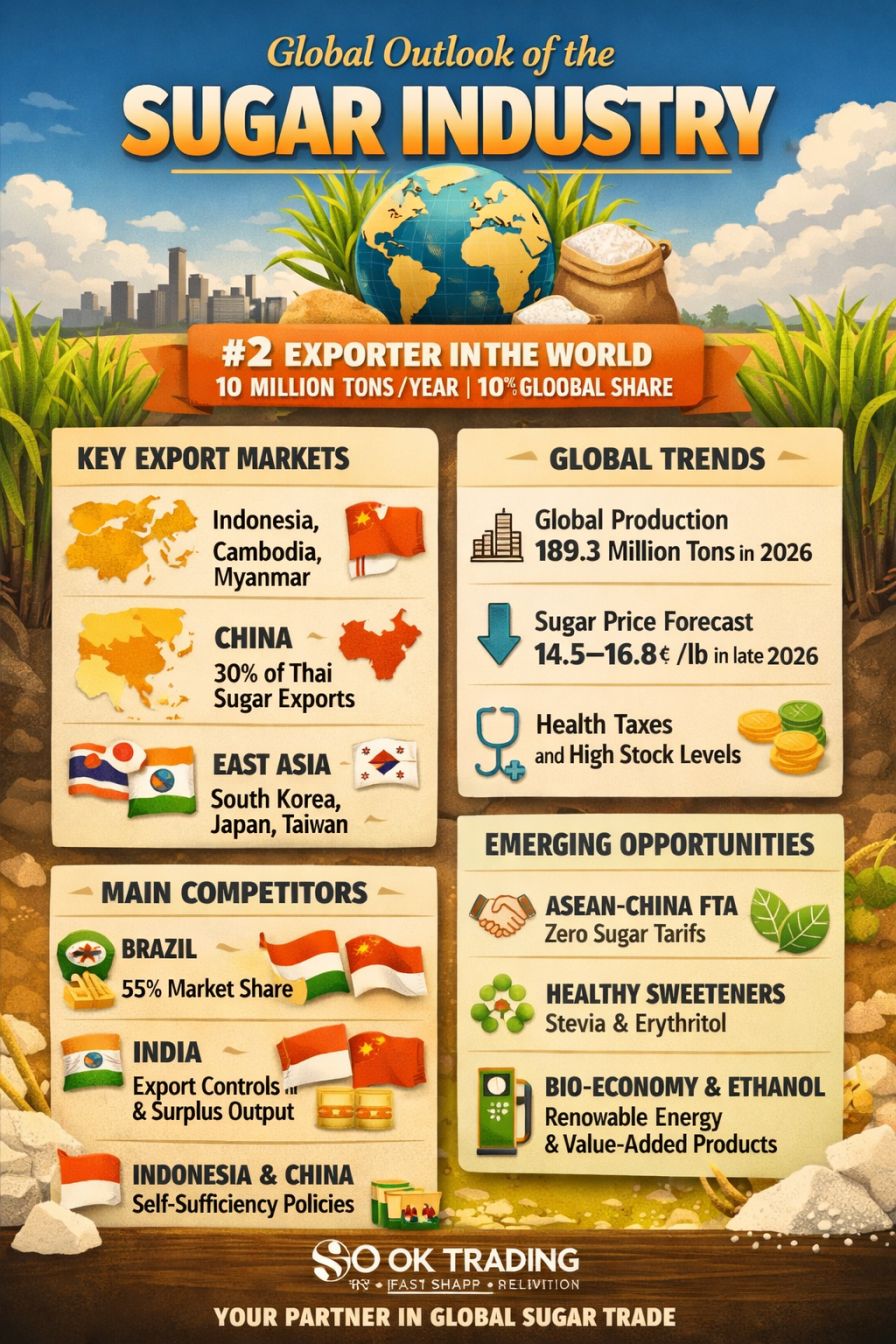
Thailand is not only a major sugar producer but also the world’s second-largest sugar exporter, after Brazil. With an annual production capacity of over 10 million tons and a global market share of around 10%, sugar remains both a key source of income and a pillar of Thai agriculture, continuously linking the nation to the global economy.
Major Export Markets of Thai Sugar
ASEAN: Indonesia, Cambodia, and Myanmar are Thailand’s top markets, supported by geographic advantages and low transport costs.
China: The second-largest market, accounting for about 30% of Thai exports, especially refined sugar, which China cannot produce sufficiently.
East Asia: South Korea, Japan, and Taiwan import Thai sugar for use in high-quality food and beverage industries.
Situation and Outlook
In 2026, sugar and molasses exports are expected to grow by 11.9%–13.9%, reaching about 6.7–6.8 million tons.
Global sugar prices are likely to rise due to India’s export restrictions, benefiting Thailand and Brazil.
However, in the second half of the year, global raw sugar prices are forecast to remain stable to slightly weaker, at 14.5–16.8 cents per pound, due to increased global production and high stock levels.
⚠️ Challenges for Thai Sugar Industry and Exports
China’s ban on processed sugar and syrup imports has affected more than 40 Thai exporters.
Indonesia’s self-sufficiency policy forces Thailand to diversify markets to reduce risks.
Upstream production risks include sugarcane white leaf disease and rising labor costs.
New Opportunities
ASEAN–China FTA (Form E): Reduces refined sugar import tariffs from 30% to 0%, strengthening competitiveness.
China’s health market: Rising demand for sugar substitutes such as Erythritol and Stevia.
Emerging markets: Africa and the Middle East (e.g., Sudan), shifting to Thai sugar imports due to geopolitical disruptions in the Strait of Hormuz.
Global Sugar Outlook
Global sugar production in 2026 is expected to reach 189.3 million tons, led by India and Thailand.
High global stocks and health-driven sugar taxes are dampening demand.
Year-end risks: Rising crude oil prices from geopolitical tensions and El Niño, which may reduce sugarcane yields in the next season.
Competitors in the Global Market
Brazil: Holds over 55% of global market share, with flexibility to switch cane between sugar and ethanol depending on oil prices.
India: Despite export restrictions, production recovery has led to oversupply, pressuring global sugar prices downward.
ASEAN & China: Thailand benefits from FTA and low transport costs but must watch Indonesia’s self-sufficiency policy and China’s ban on processed sugar.
⛽ Sugar-to-Ethanol Transition
Brazil: When crude oil prices rise, mills shift cane to ethanol production, reducing sugar supply and supporting prices.
Thailand: Moving toward a Bio-economy, expanding beyond raw sugar exports into renewable energy and high-value products.
Strategic Opportunity: Balancing “sugar for consumption” and “sugar for energy” can reduce global market risks and strengthen economic stability.
Future Outlook (2026–2035)
Thailand will maintain its position as the world’s second-largest exporter.
Traditional sugar markets will grow at only 1.2%–1.3% CAGR.
Processed and innovative sugar products (e.g., liquid sugar, sugar substitutes) will grow at a stronger 3.5% CAGR.
Thai sugar industry is transitioning from commodity to bio-economy and value-added products.
Strategic Takeaways for Thai Sugar Industry
Monitor crude oil prices as a key factor in sugar vs. ethanol production.
Diversify markets to reduce reliance on Indonesia and China, while expanding into Africa and the Middle East.
Invest in bio-economy and sugar substitutes (Stevia, Erythritol) to capture fast-growing health markets.
Use hedging to lock in costs and profits, mitigating risks from currency and oil price volatility.
SO OK TRADING – Partnering Thai Sugar with the Global Market
As a distributor and exporter of high-quality sugar, SO OK TRADING serves as a bridge between Thai producers and the global market. With strengths in FAST • SHARP • RELIABLE, we deliver raw sugar, refined sugar, and processed sugar products, while expanding into bio-economy and renewable energy.
SO OK TRADING does not just sell sugar — we sell sustainable business opportunities to partners worldwide.
www.sooktrading.com sooktrading@outlook.com Facebook: SO OK TRADING