“Post-Middle East Conflict 2026: Economic Recovery, Lower Costs, Revived Logistics, and Capital Flows — New Opportunities for Thai and Global Businesses” : SO OK TRADING · June 27
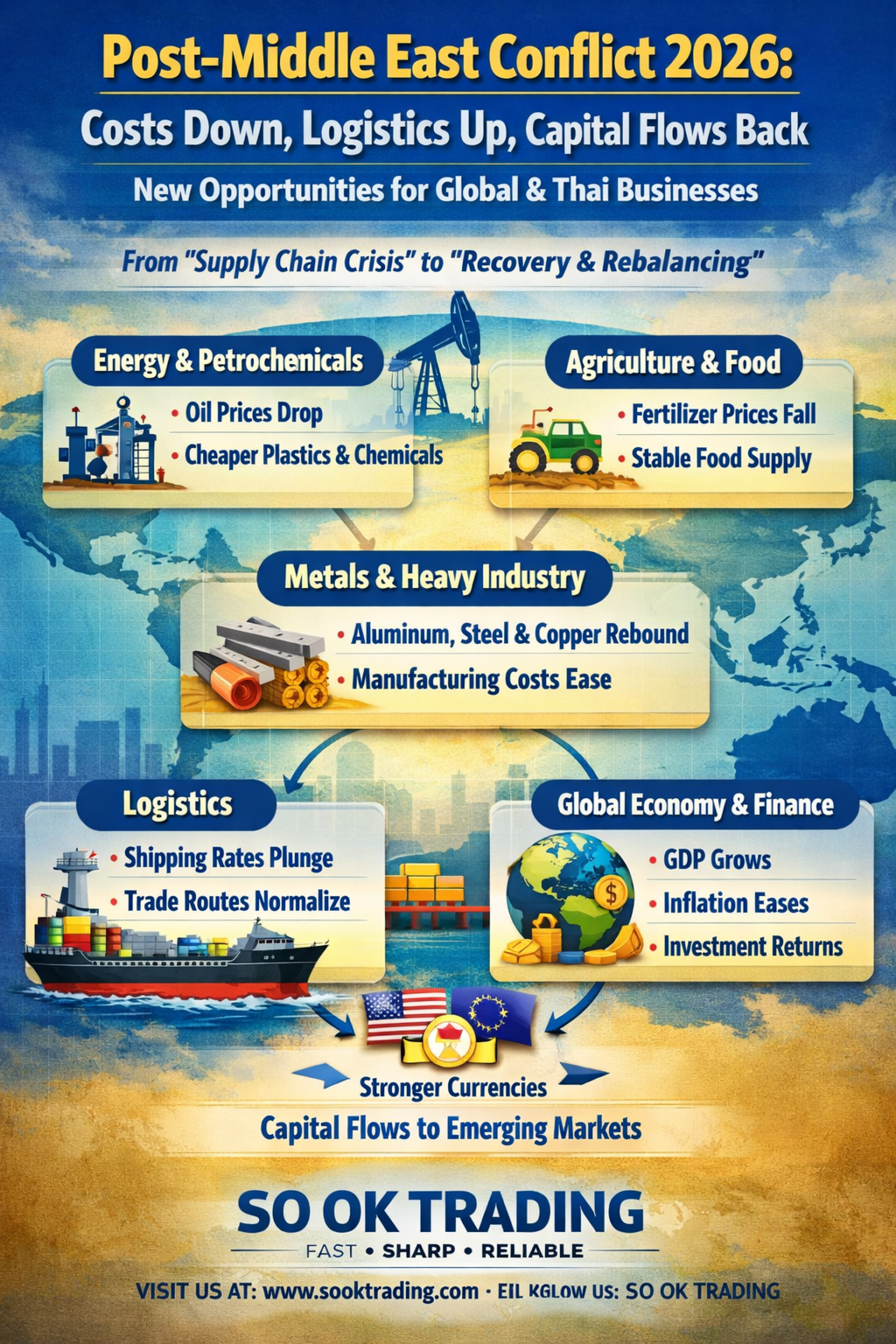
Post-Middle East Conflict 2026: Lower Costs, Revived Logistics, Capital Flows Back — New Opportunities for Thai and Global Businesses” : SO OK TRADING · June 27
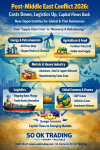
As the Middle East conflict eases, the world is shifting from a “supply chain crisis” to a phase of “recovery and rebalancing.” This transition impacts every industry — from energy and metals to agriculture and global finance.
⛽ Energy & Petrochemicals: Cost Pressure Eased
Crude Oil: Prices are trending downward as supply risks fade and shipping through the Strait of Hormuz normalizes.
Naphtha: Costs for plastics and petrochemicals decline as Middle Eastern refineries resume full exports, giving Asian producers a competitive edge.
Fertilizers & Agriculture: Food Price Risks Reduced
Key raw materials such as natural gas and sulfur return to global markets.
Fertilizer prices gradually stabilize, lowering farmers’ costs and easing long-term food price risks.
️ Metals & Heavy Industry: Recovery Brings New Opportunities
Aluminum: Prices cool as Middle Eastern smelters ramp up production.
Steel: Supply from Iran and Turkey flows smoothly into global markets, pushing prices down.
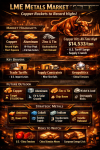
Copper: Demand rebounds, driven by investment in EVs and clean energy.
Logistics: Shipping Costs Plunge
Safe passage through the Suez Canal reduces transport costs immediately.
Container circulation normalizes, easing pressure on global trade.
Other Industries: Rubber & Cassava Starch
Synthetic Rubber: Production costs fall in line with lower oil and naphtha prices.
Natural Rubber: Exports from Thailand and Indonesia flow more smoothly, stabilizing demand.
Industrial Cassava Starch: Lower energy and freight costs boost competitiveness in Western markets.
Global Economy & Finance
Global GDP 2026: IMF projects 3.1%, World Bank 2.5%, avoiding severe recession.
Inflation: Still high at 4.4% in 2026, but expected to decline significantly in 2027.
Monetary Policy: The Fed and ECB maintain high interest rates but may begin easing toward year-end.
Thai Baht & Financial Markets
Thai Baht: Long-term strengthening expected from trade balance recovery, though short-term weakness persists due to Fed rate hike signals.
Capital Flows: Investment funds return to emerging markets, benefiting Thailand.
Global Stock Markets: Logistics and consumer sectors gain, while energy and shipping stocks face profit-taking.
Gold: Prices retreat as geopolitical risk premiums fade.
✅ Conclusion
The easing of the Middle East conflict marks a critical turning point: global production costs decline, logistics normalize, and investor confidence rebounds. While short-term monetary pressures remain, the medium- to long-term outlook presents a golden opportunity for businesses ready to adapt and leverage lower costs.
SO OK TRADING Your business partner in a fast-changing world www.sooktrading.com Facebook: SO OK TRADING FAST • SHARP • RELIABLE