“ASEAN Metal Chain: Underground Treasures Transforming Mines into Future Metals, Driving the New Global Economy” — SO OK TRADING : 24 JUNE 2026
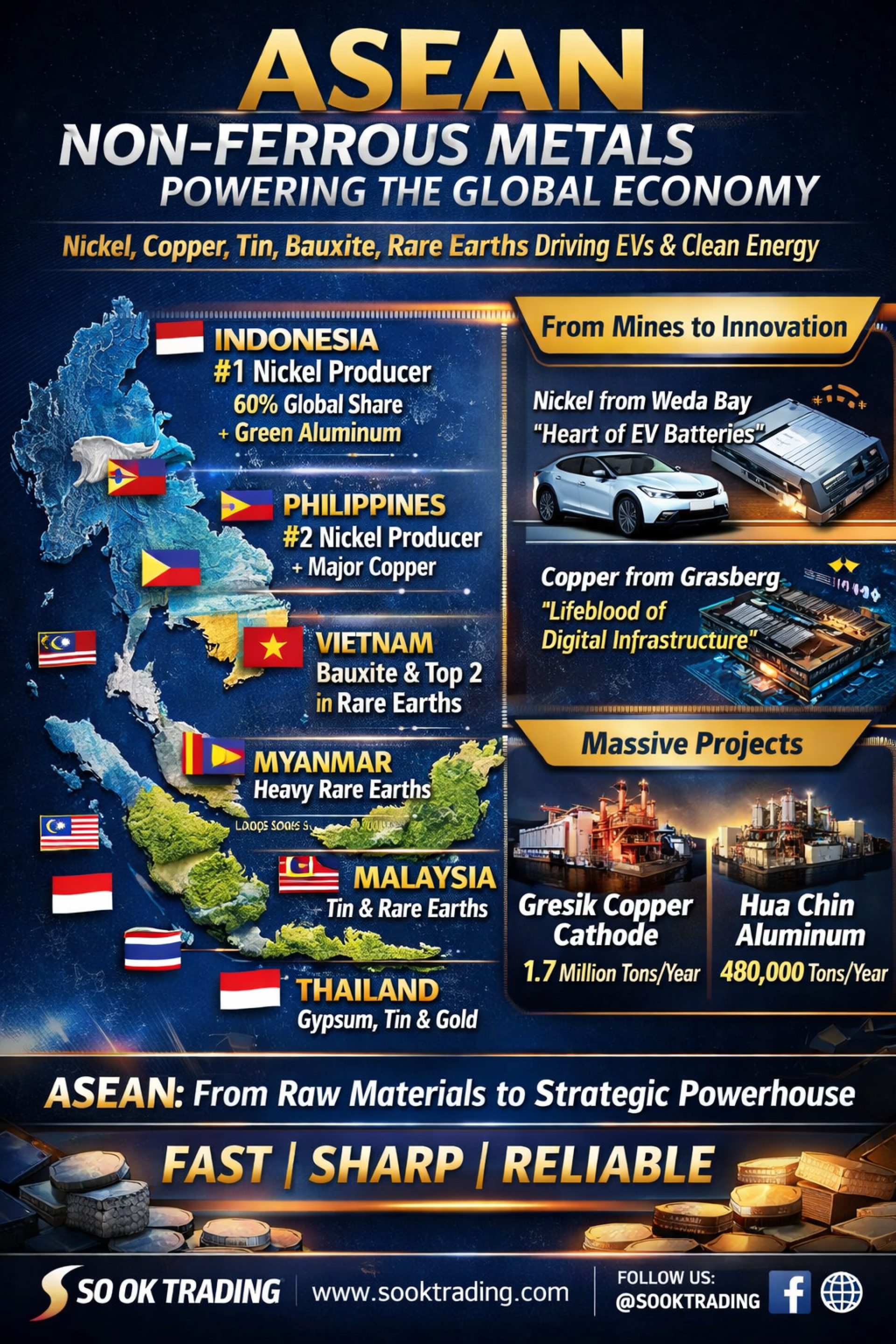
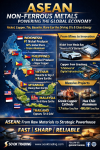
ASEAN: The Treasure Trove of Non-Ferrous Metals – The New Heart of the Global Economy SO OK TRADING | 24 June 2026
Overview
The ASEAN region is one of the richest areas in the world for non-ferrous metals. Nickel, copper, tin, bauxite, and rare earth elements — all of these are the backbone of EVs, clean energy, and advanced technology industries.
Indonesia – The Powerhouse of Nickel and Aluminum
Accounts for about 60% of global nickel production (Weda Bay, Morowali, Obi Island)
Hua Chin Smelter and PT Kalimantan Aluminum Industry projects are transforming Indonesia from a raw ore exporter into a Green Aluminum producer connected to the LME market
Impact: Global aluminum supply increases by over 2.5 million tons, balancing China’s dominance and stabilizing prices
Philippines – The World’s #2 Nickel Producer
Key deposits: Palawan, Surigao, and Mindanao
Home to Tampakan Mine, one of Asia’s largest copper projects
Vietnam – Bauxite and Rare Earths
Vast bauxite reserves in the Central Highlands
Ranked second in the world for rare earths, just after China, especially concentrated in Lai Chau Province
Myanmar – Heavy Rare Earths Hub
Kachin State is a globally significant source of heavy rare earths
Additional tin and zinc deposits in Tanintharyi and Shan State
Laos – Copper and Gold
Sepon Mine and Phu Bia Mine are the main copper and gold producers
Southern Laos holds high potential for bauxite
Malaysia – Tin and Rare Earths
Perak and Pahang are the centers of tin and rare earth production
Kuantan’s Lynas Project is one of the largest rare earth producers outside China
Thailand – Gypsum, Tin, and Gold
The world’s largest exporter of gypsum
Chatree Gold Mine is a major gold producer
Southern Thailand (Phuket, Tak) hosts tin and tungsten deposits
Vision: From Mines to the Future
Nickel from Indonesia’s Weda Bay is not just ore — it is the heart of EV batteries. Copper from the Grasberg Mine is the lifeblood of digital infrastructure. Rare earths from Vietnam and Myanmar are the critical elements driving global high-tech industries.
ASEAN nations are no longer simply selling raw materials — they are selling the future.
Facts and Outlook
Gresik Copper Cathode (1.7 million tons/year)
Hua Chin Aluminum (480,000 tons/year)
These massive smelting projects symbolize ASEAN’s shift toward Green Metals and the EV Economy. ASEAN is evolving from a resource supplier into a strategic player in the global industrial chain.
Conclusion
ASEAN’s non-ferrous metal resources not only generate immense revenue, but also serve as the power shaping the future of the world.
SO OK TRADING — FAST | SHARP | RELIABLE www.sooktrading.com Facebook: SOOK TRADING