Share

“Copper: The Metal the World is Fighting For – Copper Awakening, The New Power of the Global Economy” SO OK TRADING: June 12, 2026
Last updated: 12 Jun 2026
1084 Views

Copper: The Silence Before the Storm – When AI and Clean Energy Shake the Global Market SO OK TRADING : June 12, 2026

 
Current Global Copper Price
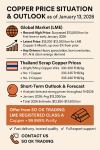
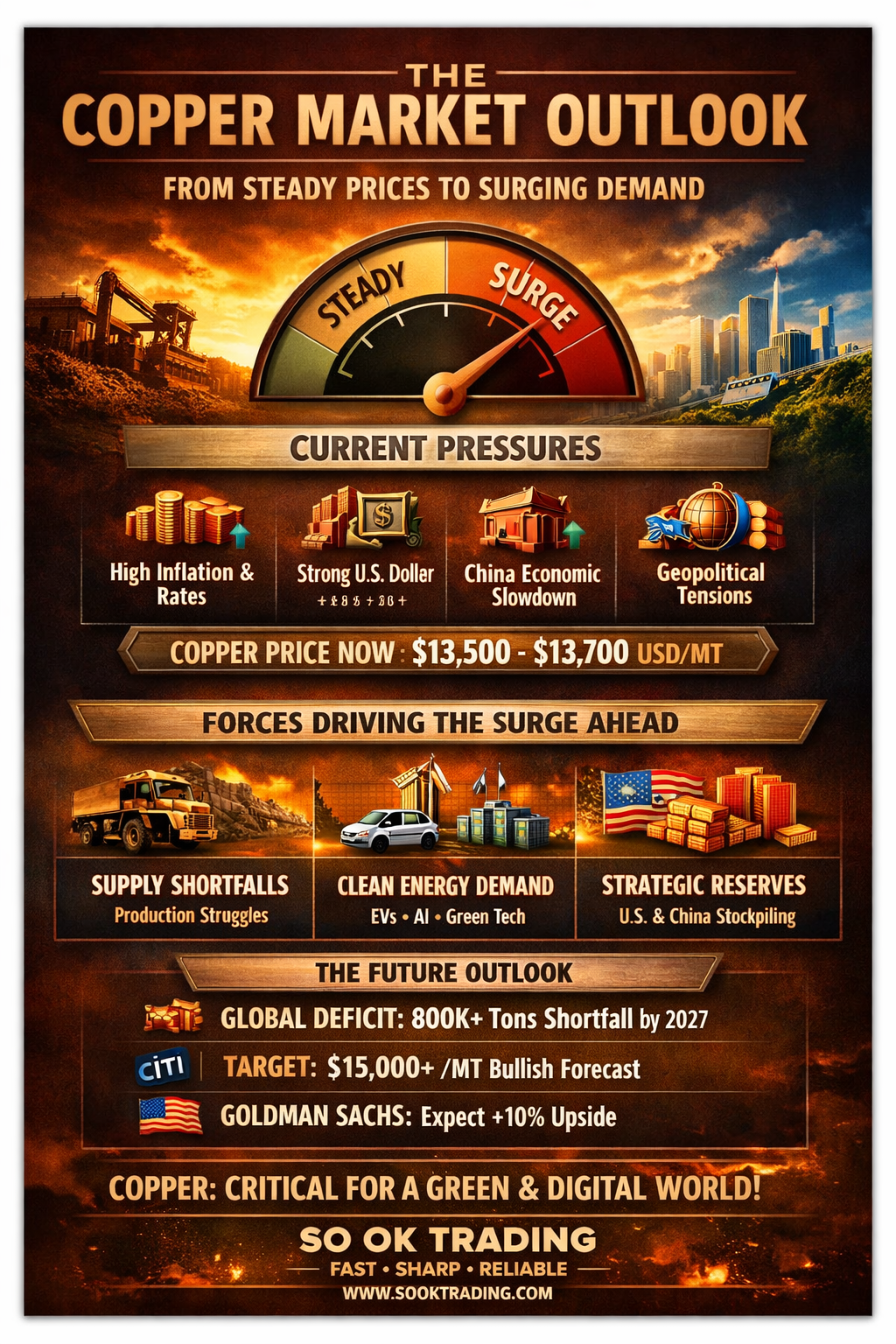
Copper prices are now in a state of “quiet under pressure,” hovering around USD 13,500–13,700/MT. Yet behind this calm lies immense forces ready to erupt in the second half of 2026–2027.

 
Short-Term Price Pressures (May–June 2026)
High Inflation & Interest Rates: Investors slow speculation, prices remain flat
Strong Dollar: Copper becomes more expensive for buyers using other currencies
China’s Economic Slowdown: Construction and industrial demand declines
Geopolitical Tensions: Middle East uncertainty weighs on the market
Copper prices fluctuate narrowly within USD 13,400–13,900/MT (Westmetall).

 
Long-Term Price Drivers (June 2026 Onward)
Mine Supply Shortfalls: Production issues in Chile, Indonesia, and Africa → upward pressure in H2 2026
Strategic Stockpiling: U.S. and China accelerate copper reserves for security
Mega-Trends in Clean Energy & Digitalization: EVs, Data Centers, Smart Grids require massive copper
Goldman Sachs projects a global copper deficit of 640,000 tons in 2026 and another 170,000 tons in 2027.

 
Financial Institutions’ Outlook
Citi: Most bullish, expects prices to break USD 15,000
Goldman Sachs: Raises target by 10% due to mine supply issues
UBS: Recommends long positions if prices dip to USD 12,800–13,000
Bank of America: Clean energy demand is the main driver, positive outlook
J.P. Morgan: Cautious due to geopolitical risks
 
Copper Demand Trends (2026–2027)
New Power Grids: Copper usage rises 40–60% per kilometer
AI Data Centers: Demand surges to 710,000 tons in 2026
Electric Vehicles (EVs): Each EV uses 3–4 times more copper than a gasoline car
China Real Estate: Stable to slowing, replaced by tech and clean energy demand
 
Conclusion for Businesses
Today’s stable copper prices represent “the calm before the storm.” In the second half of 2026–2027, fierce competition for copper delivery contracts will emerge.

Copper is becoming a strategic global asset. It is no longer just an industrial metal, but the heartbeat of the digital economy and clean energy future.

 
⚙️ SO OK TRADING FAST • SHARP • RELIABLE www.sooktrading.com | Facebook: SO OK TRADING


Related Content
“Yong Jie New Material – Transforming Aluminum Packaging from China to Thailand: The Future Supply for Cans, Ends & Tabs”   SO OK TRADING | 25 JUNE 2026
Yong Jie New Material – Revolutionizing Global Aluminum Packaging: From Cans to Lids and Tabs New Supply from China, Entering the Thai Market | SO OK TRADING | June 25, 2026 The 5000 series aluminum is rapidly emerging as the material of the future in packaging — strong, lightweight, corrosion‑resistant, and easy to form. Following a major $180 million merger with Arconic China, Yong Jie New Material is ready to deliver premium specifications H19 / H48 to the Thai market. Transforming the can, lid, and tab industry to meet world‑class standards. SO OK TRADING – FAST | SHARP | RELIABLE
25 Jun 2026
ALUMINUM PRICE TREND 2026
An analysis of the aluminum market in 2026 indicates a likely continued market deficit and upward price pressure, driven by constrained supply and resilient demand from green energy sectors. However, significant volatility is expected due to policy uncertainties and the potential for new Indonesian supply to eventually balance the market. Key Drivers and Projections for 2026 Supply Side Analysis Capacity Constraints: China's primary aluminum output is approaching its self-imposed 45 million-tonne capacity cap, limiting global supply growth. Power Challenges: Smelters outside of China face intense competition for power from energy-intensive sectors like AI data centers, which are willing to pay higher prices for long-term contracts. This has kept significant capacity offline in Europe and the US. Production Disruptions: Outages and potential shutdowns at existing smelters in Iceland and Mozambique further tighten the market. Scrap Supply Pressure: The EU's planned implementation of the Carbon Border Adjustment Mechanism (CBAM) and potential scrap export tariffs in spring 2026 are expected to impact global scrap flows, creating regional shortages and price volatility. New Capacity: Indonesia is a key source of new supply, with several projects in the pipeline. However, analysts suggest the pace of the ramp-up may be slower than expected due to infrastructure and policy challenges, meaning it is unlikely to fully offset near-term tightness. Demand Side Analysis Green Transition Demand: Demand from "green" sectors such as solar panels, new energy vehicles, and energy transition infrastructure remains strong, providing fundamental support for the market. Substitution Effect: Aluminum's wide price discount relative to copper has encouraged substitution in electrical applications, acting as a tailwind for demand and prices. Construction and Automotive: The construction and automotive industries continue to be major consumers, with growing demand for lightweight, low-carbon aluminum products. Price Forecasts and Volatility The market is expected to remain in a deficit in 2026, with estimates ranging from 200,000 to 600,000 tonnes. This structural tightness is leading most analysts to forecast sustained or rising prices. Bullish Views: Analysts at Bank of America project prices of $3,000/tonne as early as 2026. J.P. Morgan also expects prices to approach $3,000/tonne in Q1 2026. ING forecasts an average price of $2,900/tonne for the year. Bearish/Conservative Views: Goldman Sachs is an outlier, forecasting prices to decline to $2,350/tonne by Q4 2026, anticipating a market surplus later in the year. SMM forecasts a "high first, then lower" pattern, with prices finding equilibrium in the $2,700–$2,800/tonne range by year-end. Premiums: Regional premiums, particularly the US Midwest premium, are expected to remain high and volatile due to tariffs and regional supply dynamics, creating a disconnect from the LME benchmark price. In essence, 2026 is projected to be a year of high volatility where participants need to focus on scenario readiness rather than relying on a single price forecast, as geopolitical and energy policies significantly influence regional supply and costs
31 Dec 2025
“Dollar Strengthens – Baht Weakens: Oil, Fed & Geopolitics Driving Asia’s Currency Pressure”
“Baht Weakens – Dollar Surges: Oil, Fed & Geopolitics Reshaping Global Market Balance”
22 Jun 2026
This website uses cookies for best user experience, to find out more you can go to our Privacy Policy and Cookies Policy
Powered By MakeWebEasy Logo MakeWebEasy