Aluminum Scrap Wars 2026: When Scrap Aluminum Becomes the Green Gold of the World SO OK TRADING | 25 May 2026
Scrap Wars 2026: When Aluminum Scrap Becomes the World’s Green Gold
Overview of the Aluminum Scrap Market in 2026
Aluminum scrap, once regarded as mere waste, is now elevated to a strategic raw material fiercely contested worldwide. Prices have surged to the highest level in four years, making scrap the centerpiece of the electric vehicle industry, eco-friendly packaging, and digital infrastructure.
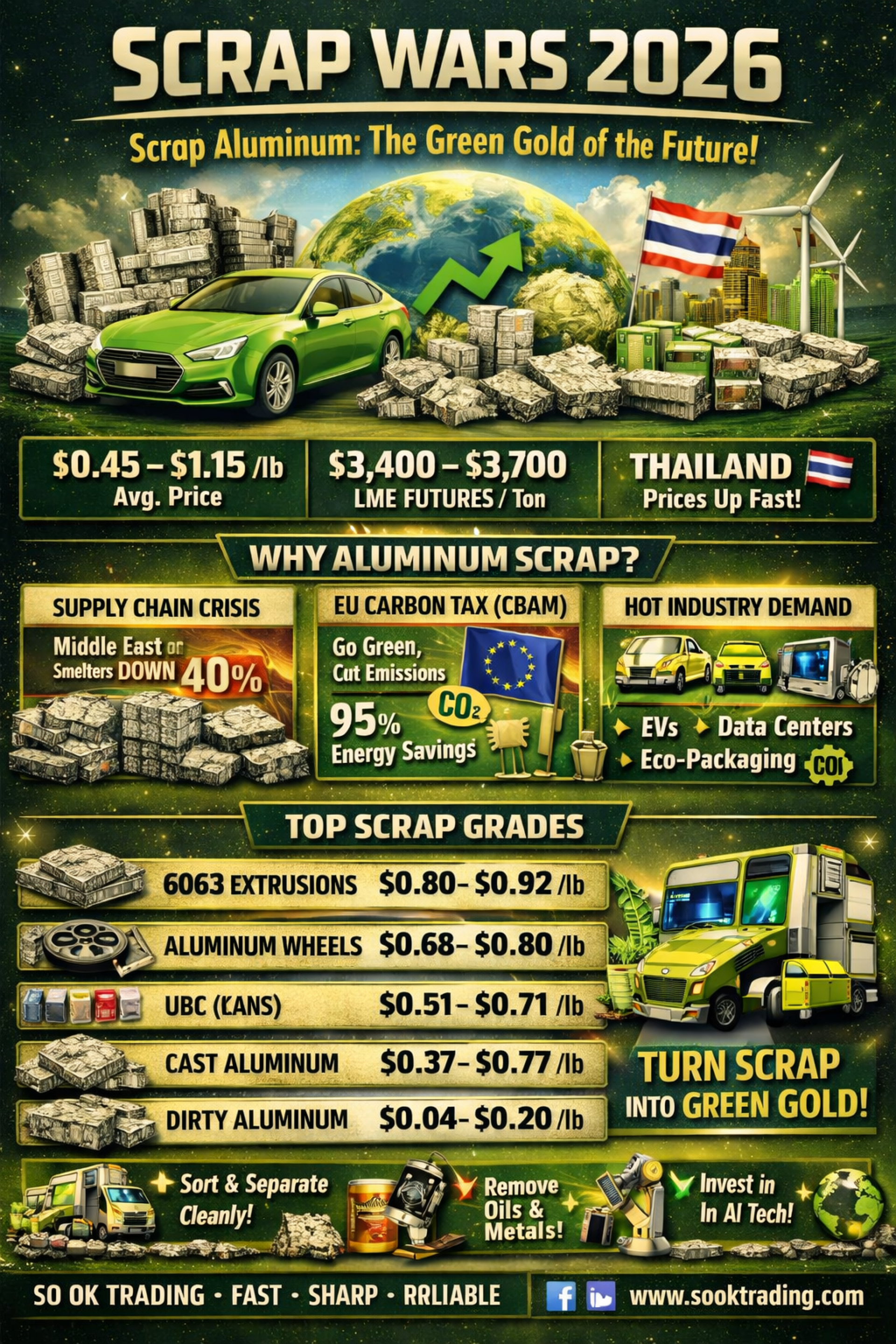
Average Price of Aluminum Scrap in 2026
$0.45 – $1.15 per pound (36 – 92 THB/kg)
Aluminum LME Futures: soaring to $3,400 – $3,700 per ton
Thai Market: scrap aluminum prices rise in line with global mechanisms
Key Drivers and Global Supply Chain Crisis
Major smelters in the Middle East (ALBA, EGA) lost over 40% of production capacity due to war
China capped production at 45.5 million tons/year → pollution and environmental control → insufficient supply
Primary aluminum is not enough → markets rely on recycled scrap instead
Europe’s CBAM policy → accelerating circular economy → scrap shortage intensifies
2026: Carbon Tax Fully Enforced
Producers and users of aluminum turn to Green Aluminum from recycling, which reduces energy use by up to 95%. Recycled aluminum is directly integrated into production to cut costs and comply with environmental policies.
Industries Competing for Aluminum Scrap
EVs: lightweight recycled aluminum for structures and batteries
Data Centers: aluminum for cooling systems
Eco-Friendly Packaging: closed-loop beverage cans
AI-Sorting Innovation: precise scrap sorting to maximize recycled aluminum usage
Recycling Plant Investments
Advanced AI and sensor technology to remove impurities
Higher purity → scrap value multiplies
Reduced burn loss → better selling prices
Driving circular economy and green metal supply → meeting global demand for low-carbon materials
Types of Aluminum Scrap and Approximate Prices
6063 Extrusions (profiles) → ~36–92 THB/kg | highest price
Aluminum Wheels (alloy rims) → ~68–80 THB/kg
UBC – Beverage Cans → ~51–71 THB/kg | highest recycling rate
Sheet Aluminum → ~48–64 THB/kg
Cast Aluminum → ~37–77 THB/kg
Dirty Aluminum (with iron/contaminated) → ~4–20 THB/kg | lowest price
Scrap Aluminum Sorting Process (For Businesses)
Clear grading: separate profiles, wheels, cans
Remove contaminants: oil, plastic, iron → immediate price increase
Invest in AI-Sorting: higher purity, reduced burn loss → better market prices
Boost circular economy and green metal supply: meeting global demand for low-carbon materials
✨ Conclusion
2026 marks the era when aluminum scrap is no longer just leftover metal but the “Green Gold” every country and industry craves. Businesses that can collect, sort, and clean scrap aluminum to standard will gain strong bargaining power and create immense added value in the global market.
SO OK TRADING: Your Business Partner SO OK TRADING: FAST SHARP RELIABLE
VISIT US AT: WWW.SOOKTRADING.COM FACEBOOK: SO OK TRADING