“Energy Pulse 2026: Naphtha Recovery – Positive Signals from the Global Energy Crisis Toward a New Market Balance” Article by SO OK TRADING | May 18, 2026
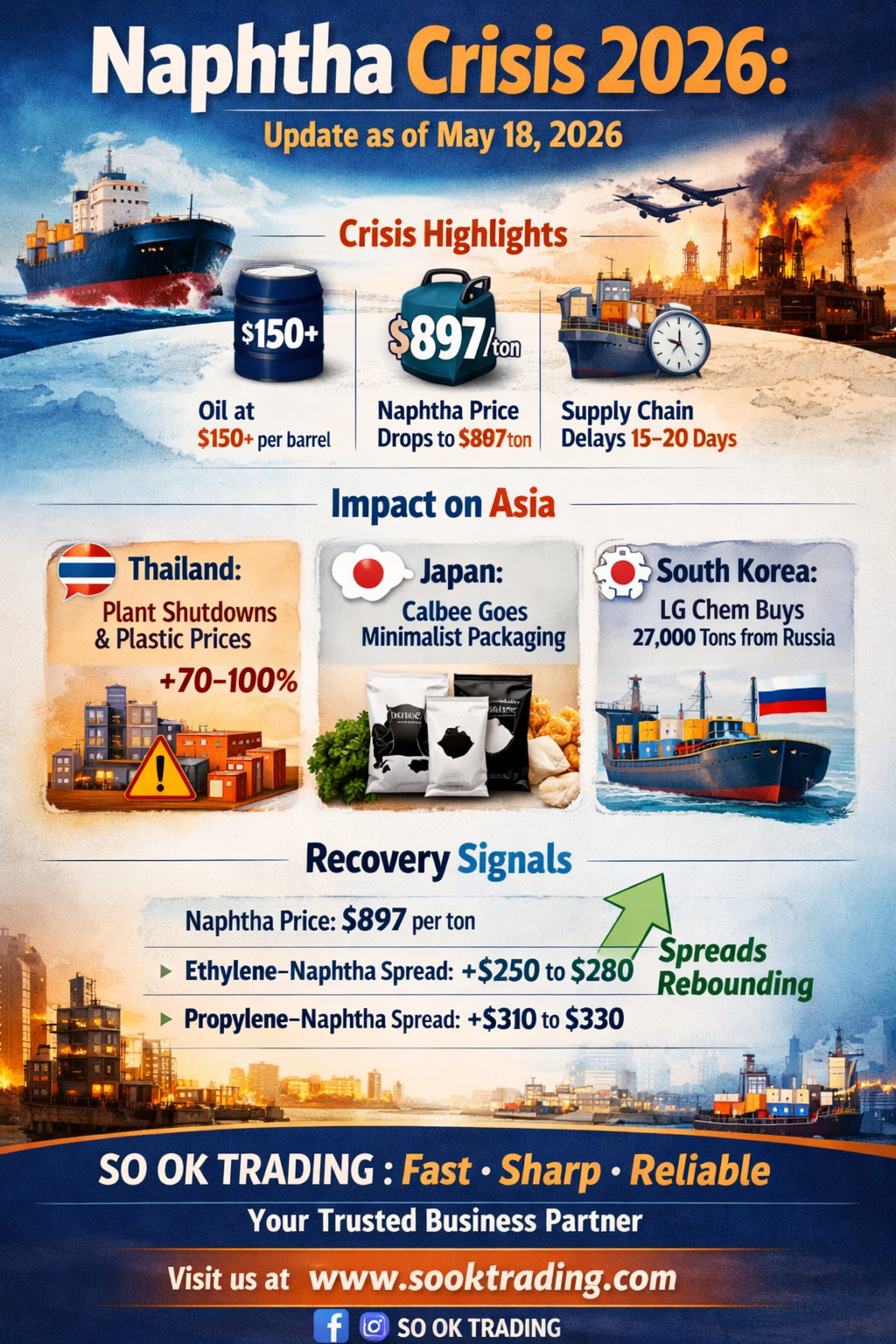
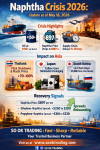
Naphtha Crisis 2026 – Situation Update (May 18, 2026)
Positive Outlook | SO OK TRADING
Since the Middle East conflict erupted on February 28, 2026, the global energy market has been shaken. Crude oil prices surged past $150 per barrel, driving Asian naphtha prices to nearly double. By mid‑May, prices corrected to $897 per ton, though still 62.54% higher than last year.
The key issue is not only price but also the “supply chain lag”. Even as prices ease, actual deliveries remain delayed by 15–20 days, with ports congested due to competition for shipments from the Middle East.
Impact on Thailand
SCGC declares Force Majeure: Rayong Olefins (ROC) plant temporarily shut down due to shortages of naphtha and propane.
Stock tightness: First shipment of 55,000 tons arrived safely, but demand still unmet.
Plastic prices surge: Rising 70–100%, hitting packaging and downstream industries.
IPA shortage: Thailand imports 100% of IPA, a key solvent in packaging printing, causing severe disruption.
New strategy: PTTGC and SCGC studying a joint venture in olefins–polyolefins to strengthen bargaining power and reduce costs, with clarity expected by Q3 2026.
Case Study: Japan
Packaging crisis: Shortages of solvents and resins lead to ink scarcity.
Calbee adapts: Simplifies packaging of 14 products to black‑and‑white, effective May 25, 2026.
Minimalist design trend: Food and beverage producers shift to simple packaging to cut costs and convey authenticity.
Regional Adaptations
South Korea: LG Chem bypasses sanctions temporarily, purchasing 27,000 tons of naphtha from Russia.
Japan: Government diversifies imports, turning to the U.S. for supply.
Thailand: PTTGC–SCGC joint venture plan to boost global competitiveness.
Recovery Signals
Naphtha prices down from peak $1,020 → $897 per ton.
Spread rebound:
Ethylene–Naphtha: +250–280 (still below healthy 300–350).
Propylene–Naphtha: +310–330.
Plastic prices remain high:
HDPE: $1,150–1,180/ton
LDPE: $1,220–1,260/ton
PP: $1,200–1,230/ton
Outlook Ahead
If the Middle East situation does not flare up again, the naphtha and plastics crisis is expected to ease by late June – early July 2026. Spread recovery will be a key positive driver for Thai petrochemical stocks such as PTTGC, SCC, IRPC.
Key Takeaways for Marketers
Crisis = Opportunity: Japan’s adaptation shows “minimalist design” can become a new trend.
Diversification is survival: Securing alternative supply sources beyond the Middle East is essential.
SO OK TRADING FAST • SHARP • RELIABLE Your Trusted Business Partner
www.sooktrading.com Facebook: SO OK TRADING