Share

“FERROUS & NON FERROUS 2026: Metals on Fire, Prices Soar and Shake the Global Economy – Energy Wars and Strategic Metals Rock the World” : SO OK TRADING : May 2, 2026
Last updated: 2 May 2026
134 Views

“Boiling Metals, Soaring Prices, Shaking the World – When Energy and Geopolitics Become the Key Variables” (FERROUS, NON-FERROUS): Metals and Non-Metals Rock the World: SO OK TRADING: May 2, 2026

 
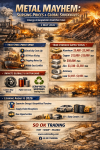
2026 is no ordinary year for the metals market. Every price chart has become the “storyline” of the most intense global economic drama in years — a chapter filled with volatility, tension, and pressure from all directions.

 
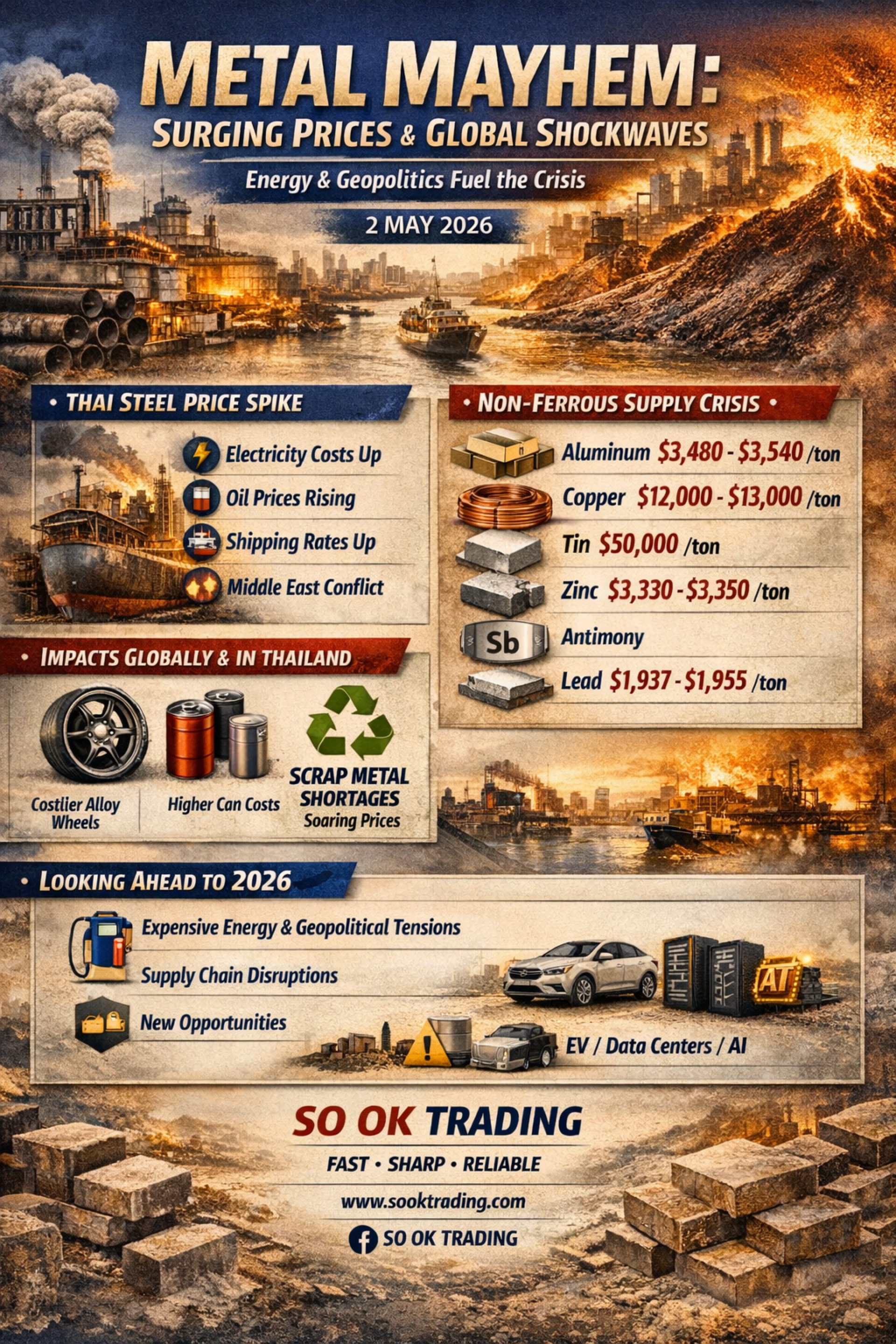
Thai Steel and the Unbearable Cost Burden In April, Thai steel producers announced price increases of 10–15%, with signals of further hikes in May. Construction rebar has risen to 22–23 THB/kg, while structural steel stands at 26–30 THB/kg.

 
The Four Pressures Driving Steel Prices Higher

Rising electricity costs
Expensive oil and transportation
Surging freight rates due to geopolitical crises
Middle East war tightening steel supply
This scene reflects clearly that energy costs are the main driver pushing steel prices upward.

 
Non-Ferrous Metals and the Supply Crisis If steel is a “life drama,” non-ferrous metals are an “action movie” — full of intensity.

Aluminum: Prices surged to $3,480–3,540/ton after Middle Eastern smelters were attacked, cutting supply by 9%. EV and solar demand continue to push prices higher.
Copper: Holding high at $12,000–13,000/ton due to mine shortages in Chile and Indonesia. Demand from data centers and the clean energy transition remains a strong support.
Tin: Exploded past $50,000/ton as Indonesia restricted exports and AI chips/semiconductors drove demand.
Zinc: At $3,330–3,350/ton, with tightness from low inventories, though large mines returning may ease pressure in the second half.
Antimony: Prices have eased from peaks but remain historically high, used in PV glass and strategic weaponry.
Lead: Stable at $1,937–1,955/ton, supported by lead-acid batteries for data centers and backup power systems.
These figures show that non-ferrous metals are strategic resources the world cannot live without, and every supply crisis is fuel for price surges.

 
Impact on the World and Thailand

Alloy wheel and aluminum parts manufacturers raised prices immediately.
Beverage industry faces pressure from rising aluminum can costs.
Non-ferrous and ferrous recycling markets are tight, as primary resources are unavailable.
 
Conclusion: The Metals World in 2026 Expensive energy, heated geopolitics, and new technology demand are the three forces keeping prices high.

Lessons for producers and consumers:

Accelerate procurement before the next price hike
Watch supply crises that can shake the market in a single day
Seek opportunities in new industries using strategic metals — EVs, data centers, AI
✨ This article is not just a price report but a story of “boiling metals,” showing that in 2026, metals are no longer just commodities — they are the driving force of the future economy.

 
SO OK TRADING: Your Business Partner SO OK TRADING: FAST • SHARP • RELIABLE

VISIT US AT: WWW.SOOKTRADING.COM FACEBOOK: SO OK TRADING

Related Content
COPPER PRICE AND TREND  2026
Copper prices are expected to remain elevated and bullish in 2026, driven by strong demand from the green energy transition (EVs, renewables, grid upgrades) and persistent mine supply constraints/disruptions, with forecasts generally placing prices in the $10,000 to over $12,000 per tonne range, although some analysts foresee a slight cooling to $10,000-$11,000 as market balances tighten. Key factors include IRA spending, AI infrastructure needs, constrained new mine supply, and potential Chinese economic recovery, creating tight markets despite some projected minor surpluses. Key Price Predictions (2026): Goldman Sachs: $10,000 - $11,000/tonne range, averaging $10,710/tonne in H1 2026. J.P. Morgan: Averaging around $12,075/tonne, with potential spikes to $12,500/tonne in Q2. Bank of America: Average of $11,313/tonne, with potential for $15,000/tonne spikes. UBS: $11,000/tonne by Sept 2026. World Bank: Average of $9,800/tonne. Bullish Drivers: Energy Transition: Massive demand for grid expansion, EVs, and renewable infrastructure. AI Infrastructure: Increased demand for data centers. Supply Deficit: Mine disruptions (Grasberg, Kamoa-Kakula, etc.) and difficulty bringing new mines online. China: Potential economic rebound acting as a catalyst. Potential Headwinds/Volatility: Policy-induced Surpluses: E.g., from IRA incentives or scrap availability. Stronger USD: Can weigh on commodity prices. Slower Demand: If China's recovery falters. Overall Outlook: Expect a tight market with strong underlying demand, leading to high prices, but with significant volatility due to policy shifts and mine output fluctuations. The market is moving towards a structural deficit, supporting higher prices long-term
30 Dec 2025
การ Supply วัตถุดิบเช้าโรงงาน แบบ LAST MILES: ประโยชน์ของผู้ประกอบการ (SO OK TRADING Can Provide This Type of Service)
าร Supply วัตถุดิบเข้าโรงงานแบบ Last-mile มีความสำคัญต่อการลดต้นทุน การเพิ่มประสิทธิภาพ และการรักษาความสามารถในการแข่งขัน โดยการจัดส่งวัตถุดิบจากจุดสุดท้ายไปยังโรงงานอย่างรวดเร็วและตรงตามเวลา จะช่วยลดค่าใช้จ่ายที่ไม่จำเป็น เช่น การเก็บสต็อกมากเกินไป, ลดความล่าช้าที่อาจเกิดขึ้นในกระบวนการผลิต, และทำให้การผลิตมีความยืดหยุ่นมากขึ้น เพื่อตอบสนองความต้องการของตลาด. ความสำคัญของการ Supply วัตถุดิบเข้าโรงงานแบบ Last-mile ลดต้นทุนการจัดเก็บวัตถุดิบ: การส่งวัตถุดิบแบบ Just-in-time ช่วยลดความจำเป็นในการสต็อกวัตถุดิบจำนวนมาก ซึ่งทำให้ลดต้นทุนค่าคลังสินค้าและค่าใช้จ่ายในการบริหารจัดการสต็อก. เพิ่มประสิทธิภาพการผลิต: การส่งวัตถุดิบที่จำเป็นในเวลาที่ต้องการ ช่วยป้องกันการหยุดชะงักของสายการผลิต และทำให้การผลิตเป็นไปอย่างราบรื่นและต่อเนื่อง. ตอบสนองความต้องการของตลาด: ช่วยให้โรงงานสามารถผลิตสินค้าได้รวดเร็วขึ้น เพื่อตอบสนองความต้องการของลูกค้าที่เปลี่ยนแปลงอยู่เสมอ. ลดความเสี่ยงจากความผันผวนของตลาด: ทำให้โรงงานสามารถปรับเปลี่ยนการผลิตได้ตามความต้องการของตลาดที่เปลี่ยนแปลง โดยไม่ต้องกังวลกับสต็อกวัตถุดิบที่ล้นเกิน. ใช้ประโยชน์จากเทคโนโลยี: การใช้เทคโนโลยีในการวางแผนเส้นทาง, การติดตามสถานะการขนส่งแบบเรียลไทม์, และการวิเคราะห์ข้อมูล สามารถช่วยลดความผิดพลาดและเพิ่มประสิทธิภาพการจัดส่งวัตถุดิบได้. SO OK Trading สามารถให้บริการ LAST MILE SUPPLY กับลูกค้าที่ใช้บริการ และ ยังสามารถช่วยบริหารจัดการสินค้าคงคลัง พร้อมทั้งประสานงานกับลูกค้า เพื่อการส่งมอบวัตถุดิบ เข้าสายการผลิตอย่างตรงตามเวลา ป้องกันปัญหาวัตถุดิบ ไม่เพียงพอต่อสารการผลิต และ การบริการนี้ยังไม่มีต้นทุนส่วนเพิ่มที่สูงเกินไป คู่ค้าของ SO OK TRADING สามารถแข่งขันในตลาดได้
3 Dec 2025
This website uses cookies for best user experience, to find out more you can go to our Privacy Policy and Cookies Policy
Powered By MakeWebEasy Logo MakeWebEasy