“Naphtha: The Lifeblood of Global Industry — From Byproduct to Strategic Material, Driving Plastics, EVs, and a Sustainable Future” SO OK TRADING | 2 May 2026
Naphtha: From Byproduct to “Strategic Material” of Global Industry
SO OK TRADING | 2 May 2026
What is Naphtha
Naphtha is a liquid hydrocarbon product derived from crude oil refining. It is highly volatile, flammable, and contains 5–12 carbon atoms. Once considered a mere byproduct, today it plays a crucial role in petrochemicals, plastics, textiles, fuels, and the fast-growing electric vehicle (EV) industry.
Types of Naphtha
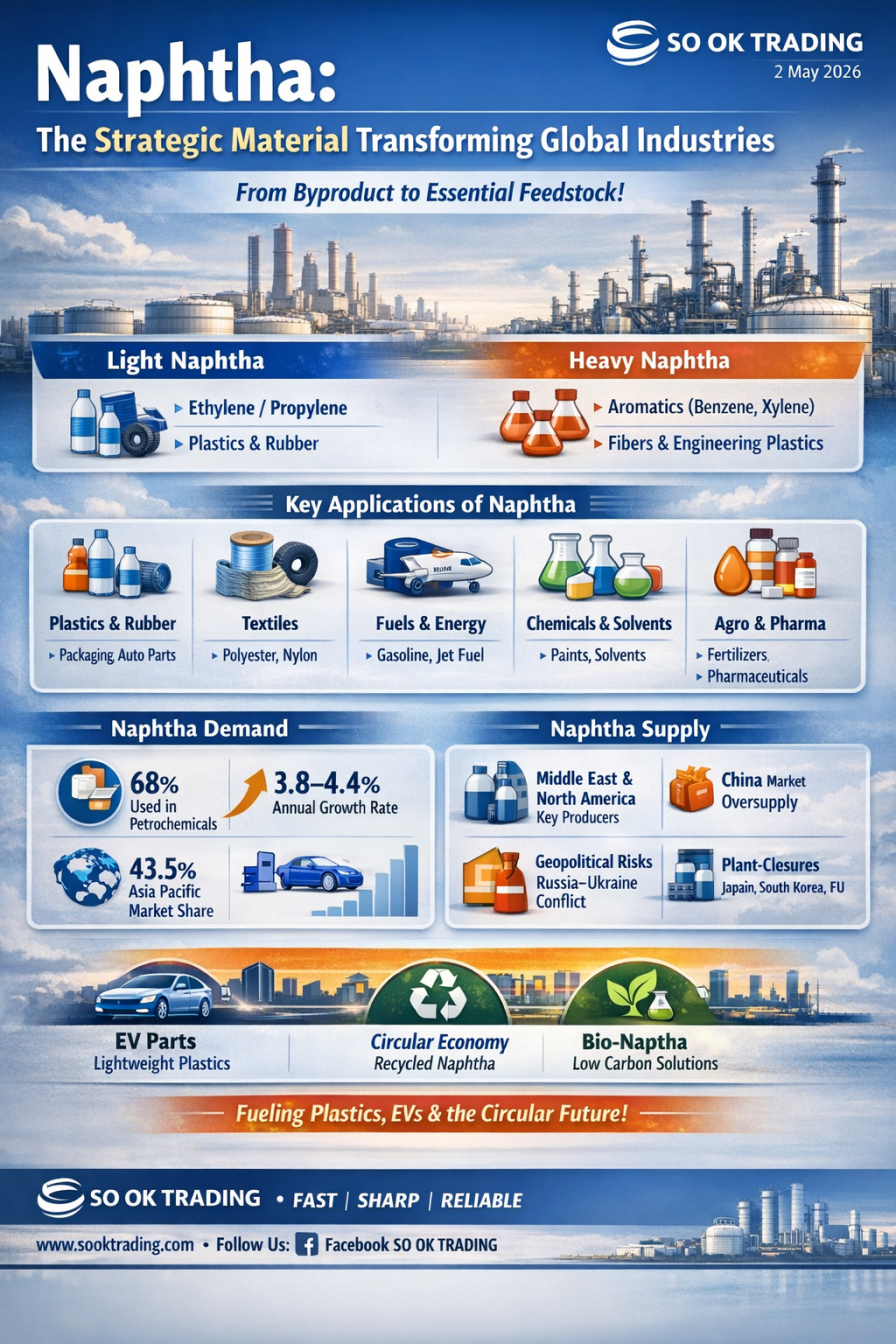
Light Naphtha: Boiling point 30–90°C, carbon number 5–6 → Produces ethylene and propylene → Packaging plastics, synthetic rubber
Heavy Naphtha: Boiling point 90–200°C, carbon number 6–12 → Produces aromatics (benzene, xylene) → Synthetic fibers, engineering plastics
Applications of Naphtha
Plastics & Synthetic Rubber: PE, PP → Plastic bags, PET bottles, food films, car bumpers, tires
Textiles & Fibers: Polyester, Nylon → Clothing, fishing nets, ropes
Fuels & Energy: Octane booster in gasoline, lighter fuel, aviation fuel
Industrial Chemicals: Solvents in paints, varnishes, adhesives, cleaning agents
Agriculture & Others: Ammonia production → Urea fertilizer, pharmaceutical and cosmetic ingredients
Demand
68% of global naphtha is consumed in petrochemicals
CAGR 3.8–4.4% growth projected until 2030
Asia-Pacific (China, India) holds 43.5% of global market share
Pressure: Low cracker margins, some plants switching to LPG
Support: Strong demand for food packaging, beverages, and electronics plastics
Supply
Major producers: Middle East, North America
China: Massive capacity expansion → Oversupply, price and spread pressure
Risks: Middle East conflicts, Russia–Ukraine war → Supply disruptions
Structural adjustments: Japan, South Korea, EU closing or downsizing old plants
Usage Trends (2025–2026)
Thailand: Market recovery driven by tourism and consumption, though household debt remains a drag → Demand from plastics and packaging
EV & Lightweighting: Engineering plastics from naphtha increasingly used in auto parts → bumpers, consoles, wire insulation
Circular Economy: Chemical recycling → Recycled naphtha with quality equal to virgin plastic
Bio-Naphtha: Producers blending bio-feedstock to reduce carbon footprint
Major Players in Thailand
PTT GC: Integrated production from naphtha to plastic resins
SCGC: Focus on circular naphtha and engineering plastics
IRPC: Specialty plastics for automotive and electronics
Thai Oil (TOP): Produces naphtha from crude refining for petrochemical plants
Market Battle: Naphtha vs Bioplastics
Price: Naphtha-based plastics remain cheaper (economies of scale)
Performance: Bioplastics still less durable
Adaptation: Producers blending bio-feedstock → Bio-Naphtha
Conclusion
✨ Naphtha is transforming from “fuel” into a “strategic material” driving the plastics and EV industries of the future. Demand is fueled by plastics and EVs, while supply faces pressure from China’s overcapacity and geopolitical risks.
SO OK TRADING — Your Trusted Business Partner FAST • SHARP • RELIABLE www.sooktrading.com | Facebook: SO OK TRADING