“The New Energy War: A Post‑Conflict World, Economic Power Shift, and the Winners Who Adapt Fast” — Country and regional economic analysis after the Middle East War 2026 with SO OK TRADING
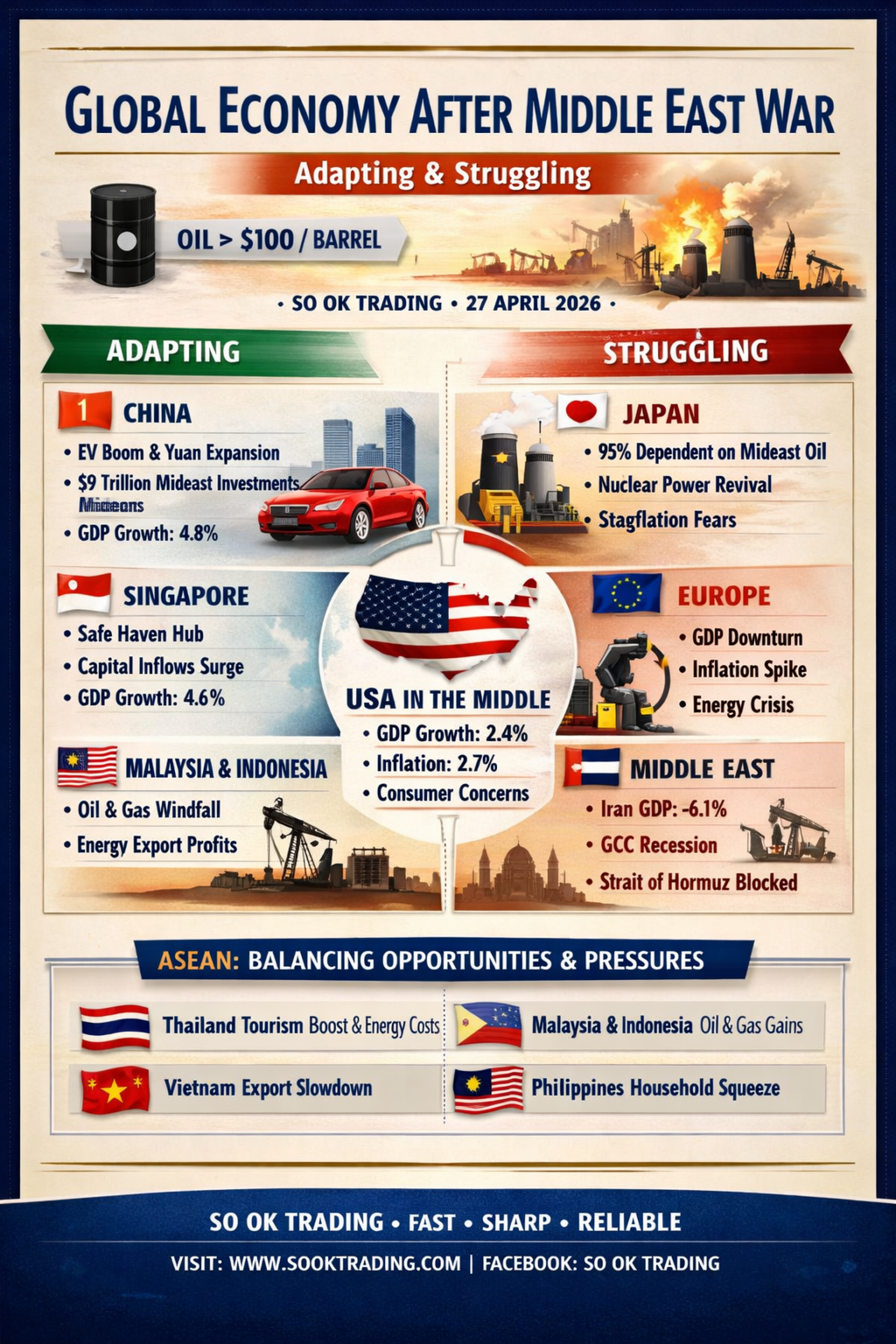
Global Economy After the Middle East War: Who Adapts, Who Is Vulnerable — Summary by SO OK TRADING, April 27, 2026
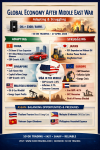
The war in the Middle East has shaken not only politics but also the global economy. Oil prices have surged past $100 per barrel, forcing many countries to adapt quickly. Here is a snapshot of major economies and regions.
China: Turning Crisis into Opportunity
Uses high oil prices as a push to accelerate the transition to electric vehicles (EV), where China already leads the market
Invests over 9 trillion baht in the Middle East, expanding soft power and promoting the yuan over the dollar
GDP growth remains strong at 4.8%, despite slowing exports
Singapore: Global Safe Haven
Q1 GDP growth at 4.6%, below expectations
Inflation spikes due to energy costs; government distributes cash and coupons to citizens
Emerges as a safe haven, attracting massive capital inflows from the Middle East
Japan: Vulnerable to Energy Shock
95% dependent on Middle Eastern oil
Releases over 80 million barrels of reserves and revives nuclear power
Faces stagflation risk: high inflation with slowing growth
United States: Strong but Anxious
GDP expected to grow 2.4% despite prolonged conflict
Oil and gasoline prices surge, pushing inflation to 2.7%
Fed keeps interest rates high at 3.5–3.75%, delaying rate cuts
Consumer confidence plunges to historic lows
Europe: Technical Recession
Eurozone GDP contracts by 0.1%, forecast cut to 0.9%
Inflation rises to 3.1% due to energy shock
Accelerates REPowerEU plan to reduce fossil fuel dependence
Middle East: Stagnation and Decline
IMF projects growth of only 1.1–1.4%
Iran contracts by -6.1%, GCC faces negative growth
Closure of the Strait of Hormuz cuts global oil supply by over 20%
Services and aviation paralyzed, foreign investment slows
ASEAN: Between Opportunity and Pressure
Though not in the battlefield, ASEAN economies are hit by energy costs and global supply chain disruptions
Thailand: Higher energy costs pressure households, but tourism recovery provides support Malaysia & Indonesia: Oil and gas exporters benefit from high prices, but inflation risk looms Vietnam: Manufacturing and exports slow due to rising logistics costs Philippines: Household economy squeezed by expensive imports
ASEAN stands at “two sides of the coin” — some benefit from high energy prices, others bear heavy costs.
✨ Overall Summary
China: Turns crisis into opportunity, expands influence and accelerates EV transition
Singapore: Reinvents itself as a safe haven, attracting capital
Japan & Europe: Vulnerable to energy dependence, structural reforms urgent
United States: Strong but shaken consumer confidence
Middle East: Suffers the heaviest blow, with economic contraction and damaged security image
ASEAN: In the middle — some gain, others pressured
This crisis shows that energy is not just fuel, but a catalyst for global economic transformation. Those who adapt quickly will emerge as winners in the new economic game.
SO OK TRADING: Your Business Partner FAST • SHARP • RELIABLE WWW.SOOKTRADING.COM Facebook: SO OK TRADING