“Global Aluminum Shock 2026: Supply Shock Shakes Thailand’s Economy – High for Longer with Recycling as the New Hero” BY SO OK TRADING April 27, 2026
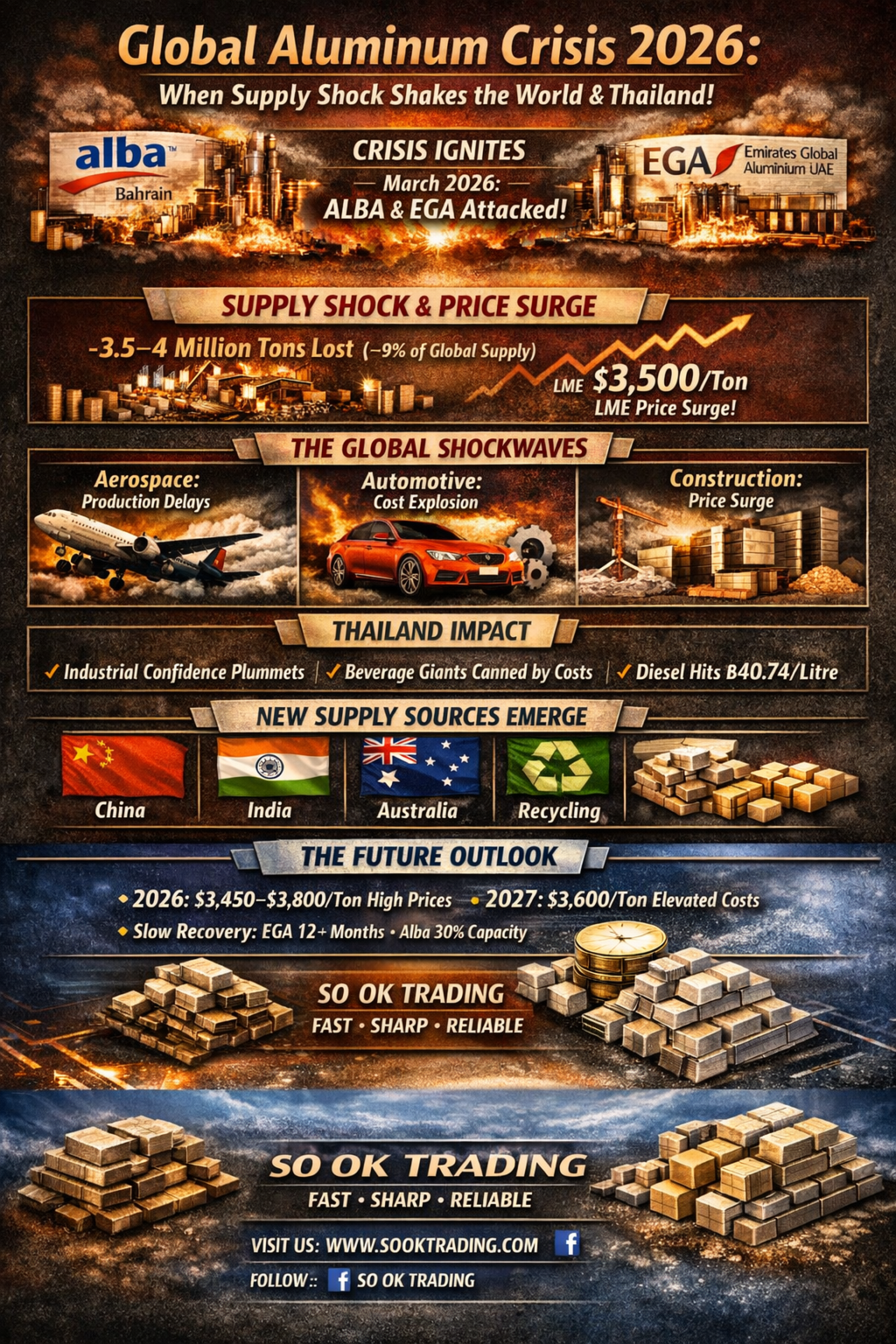
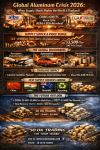
Global Aluminum Crisis 2026: When Supply Shock Shakes the World and Thailand
Imagine the world walking on a grand stage called the “global metals market.” Suddenly, the spotlight goes out—because giant smelters in Bahrain and the UAE are attacked. This Supply Shock is the opening act that forces the entire world to pay attention.
Ignition of the Crisis
In mid-March 2026, Alba (Aluminium Bahrain) and EGA (Emirates Global Aluminium) were attacked, wiping out 3.5–4 million tons of production capacity—about 5–6% of global demand. The Strait of Hormuz was shut down like an iron curtain blocking global trade.
Prices surged immediately: LME jumped 6% to $3,492–3,500 per ton
Premium-grade shortage: Aerospace and automotive industries requiring high-quality aluminum faced severe disruption
Shockwaves Across the Globe
Aerospace: Aircraft production lines risk halting due to the loss of high-grade metal
Automotive: Component costs soared, forcing some companies to delay new model launches
Construction: Contractors locked into old prices faced instant losses
Thailand in the Battlefield
Thailand was not spared from the tremors:
Industrial Confidence Index plunged to 88.6
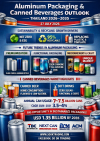
Beverage cans: CBG and OSP pressured by packaging costs
Construction materials: Aluminum section prices rose 15–30%
Transportation costs: Diesel prices spiked to 40.74 THB/liter (+36%)
When Middle Eastern Supply Collapses, the World Seeks Alternatives
China: Export up +12.8%, cheaper than global market
India: Expanding production capacity
Australia: Key alumina supplier
Canada: Low-carbon aluminum powered by hydroelectricity
ASEAN: Vietnam, Indonesia, Malaysia expanding production bases
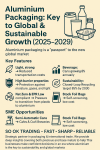
Recycling: Scrap aluminum uses only 5% of the energy required for new production
The Uncertain Future of Aluminum
2026: Prices expected at $3,450–3,800 per ton
2027: Stabilization begins, but average remains high at $3,600 per ton
Recovery is slow: EGA requires at least 12 months for repairs, while Alba operates at only 30% capacity. Market structure shifts: China and India may become new supply centers, while recycling emerges as the “hero” of the industry.
Conclusion: High for Longer
This is not a temporary crisis. Supply will not return to normal until at least 2027. Businesses must adapt quickly:
Secure alternative import sources
Invest in circular economy and recycling
Manage inventories tightly to withstand prolonged high prices
✨ Ultimately, those who adapt fastest will be the winners in this global economic game.
Notes
EGA (Emirates Global Aluminium): The largest aluminum producer in the UAE, a major player in the premium global market
Alba (Aluminium Bahrain): One of the world’s largest aluminum smelters
Together, they account for about 9% of global production, or roughly 7 million tons annually. The attacks therefore shook not just the region but the entire global supply chain.
SO OK TRADING: Your Business Partner SO OK TRADING: FAST SHARP RELIABLE Visit us: WWW.SOOKTRADING.COM Facebook: SO OK TRADING