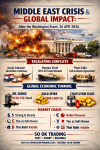
"Global Crisis Overlap: Washington Shock – Middle East in Flames, Oil–Gold–Currencies Enter Panic Mode" Impacts from the Washington Incident and Unrest in the Middle East Conflict Analysis by SO OK TRADING: April 26, 2026
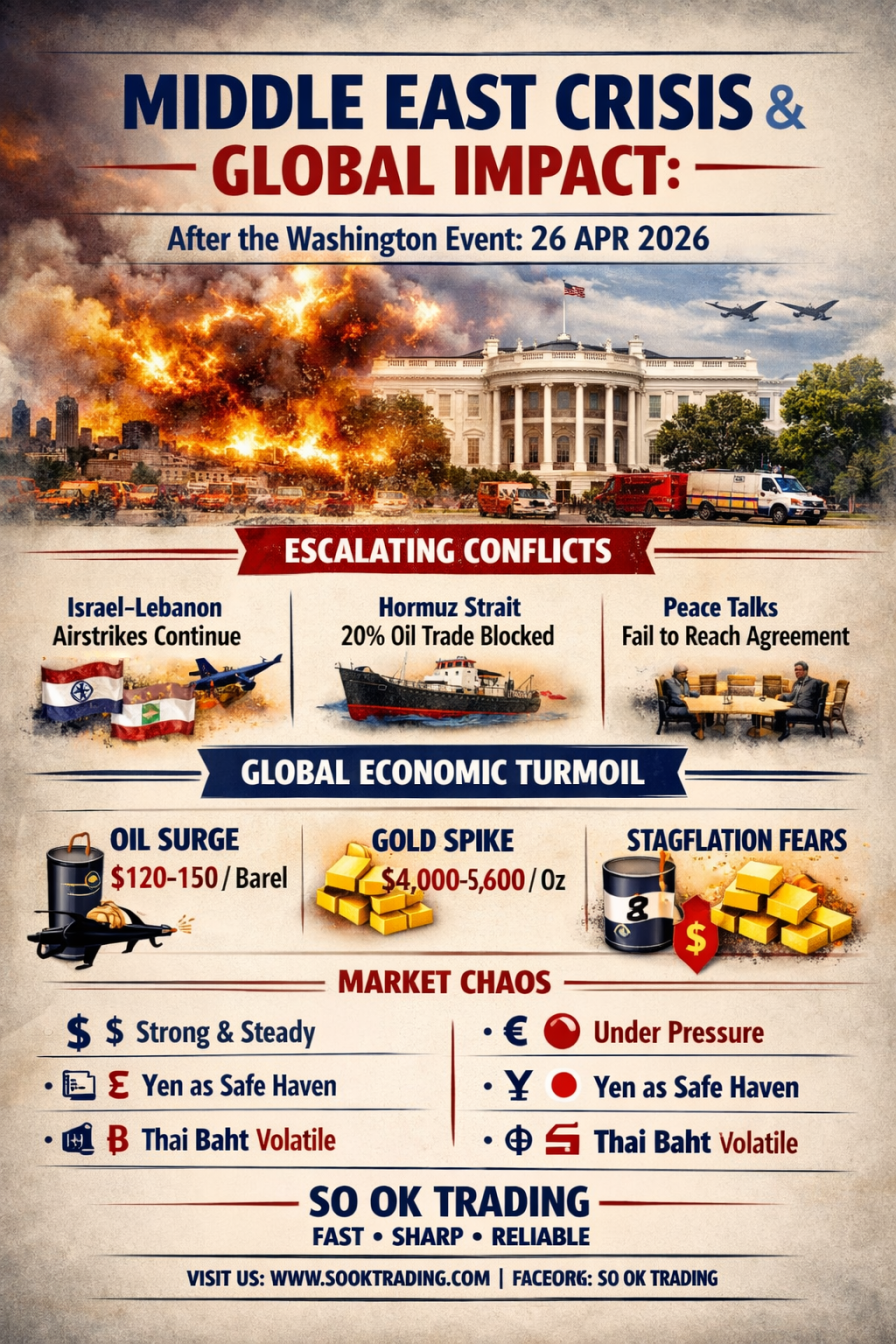
Middle East Crisis and Global Market Impact : After the Washington Incident : April 26, 2026
Introduction: From Washington to the Middle East
In the early hours of April 26, 2026 (Asia time), the world focused on two major events simultaneously — escalating tensions in the Middle East and the shooting at the White House Correspondents’ Dinner in Washington, D.C. This incident not only caused turmoil in the United States but also sent immediate shockwaves across global politics and economics.
A War Without End
Israel–Lebanon: Despite a temporary ceasefire announcement, airstrikes continue.
Strait of Hormuz: Over 20% of global oil shipments blocked, energy markets panic, supply insufficient, oil prices surge.
Peace Talks: The second round of negotiations in Pakistan yielded no results, while violence on the ground persists.
Global Economy Shaken
Oil and Fertilizer Prices: Soaring costs intensify global inflation, raising stagflation risks.
Thai Consumer Confidence Index: April shows a sharp decline due to rising living costs.
The Washington Shooting
President Donald Trump and cabinet members were escorted out immediately.
The perpetrator was arrested at a security checkpoint.
Although the U.S. president is safe, the incident placed immense pressure on the government’s stability and image.
Strategic Impact Assessment: After the Washington Shooting
United States: Likely to adopt a hardline stance, increasing military presence in the Middle East → war escalation expected.
China and Russia: Seize the opportunity to expand diplomatic influence and support regional allies.
Iran: May escalate tensions further, potentially imposing a permanent closure of the Strait of Hormuz.
Israel: Accelerating military operations.
Crisis in Oil, Fertilizer, Gold, Aluminum, Copper, and Currencies: Global Market in Panic
Crude Oil: Could surge to $120–150 per barrel, driven by heightened supply risks from Hormuz tensions and stricter sanctions.
Gold: Prices soar rapidly as a safe-haven asset. In 2026, volatility is expected to remain high, with mid- to long-term ranges projected between $4,000 and $5,600 per ounce. Leading banks and financial institutions forecast continued upward momentum this year.
Aluminum and Copper: Prices rise with higher energy costs and strong industrial demand, especially in developing and emerging markets.
Currency and Global Market Outlook
U.S. Dollar (USD): Despite geopolitical tensions, the dollar remains strong as the world’s primary reserve currency, moving within a narrow band as investors seek stability.
Euro (EUR): Pressured by European economic uncertainty and Middle East crisis, likely to weaken against the dollar.
Japanese Yen (JPY): Slight appreciation as a safe-haven asset, though constrained by the Bank of Japan’s loose monetary policy.
Thai Baht (THB): Short-term volatility due to energy prices and foreign investor sentiment, but supported by recovering exports and tourism. Expected range: 32.0–32.5 THB/USD.
Additional Analysis
Middle East tensions are driving high volatility in global markets, particularly in energy and precious metals. Investors must closely monitor developments and prepare for short- to medium-term risks.
The rapid rise in gold prices reflects growing demand for safe-haven assets amid geopolitical and economic uncertainty. Despite pressure from high interest rates and a strong dollar, gold demand continues to climb.
On currencies, the U.S. dollar remains the most trusted globally, with no signs of sharp depreciation in the short term. Meanwhile, the euro and Thai baht may face greater pressure and volatility depending on unfolding events.
Conclusion
The world is entering a “temporary power vacuum” in the Middle East, as the U.S. grapples with internal crises while other powers and regional actors accelerate military and diplomatic moves. This situation not only tests U.S. stability but also marks a turning point that could lead to full-scale war.
For global markets: energy and gold will be the key indicators. Investors and businesses must brace for sharp and rapid volatility in the short term.
SO OK TRADING: Your Business Partner SO OK TRADING: FAST SHARP RELIABLE
VISIT US AT: WWW.SOOKTRADING.COM FACEBOOK: SO OK TRADING