“Silicon Metal Reshaping the Future: From Quartz to AI Chips and Clean Energy — The New Heart of Global Technology” Article by SO OK TRADING Date: 24 April 2026
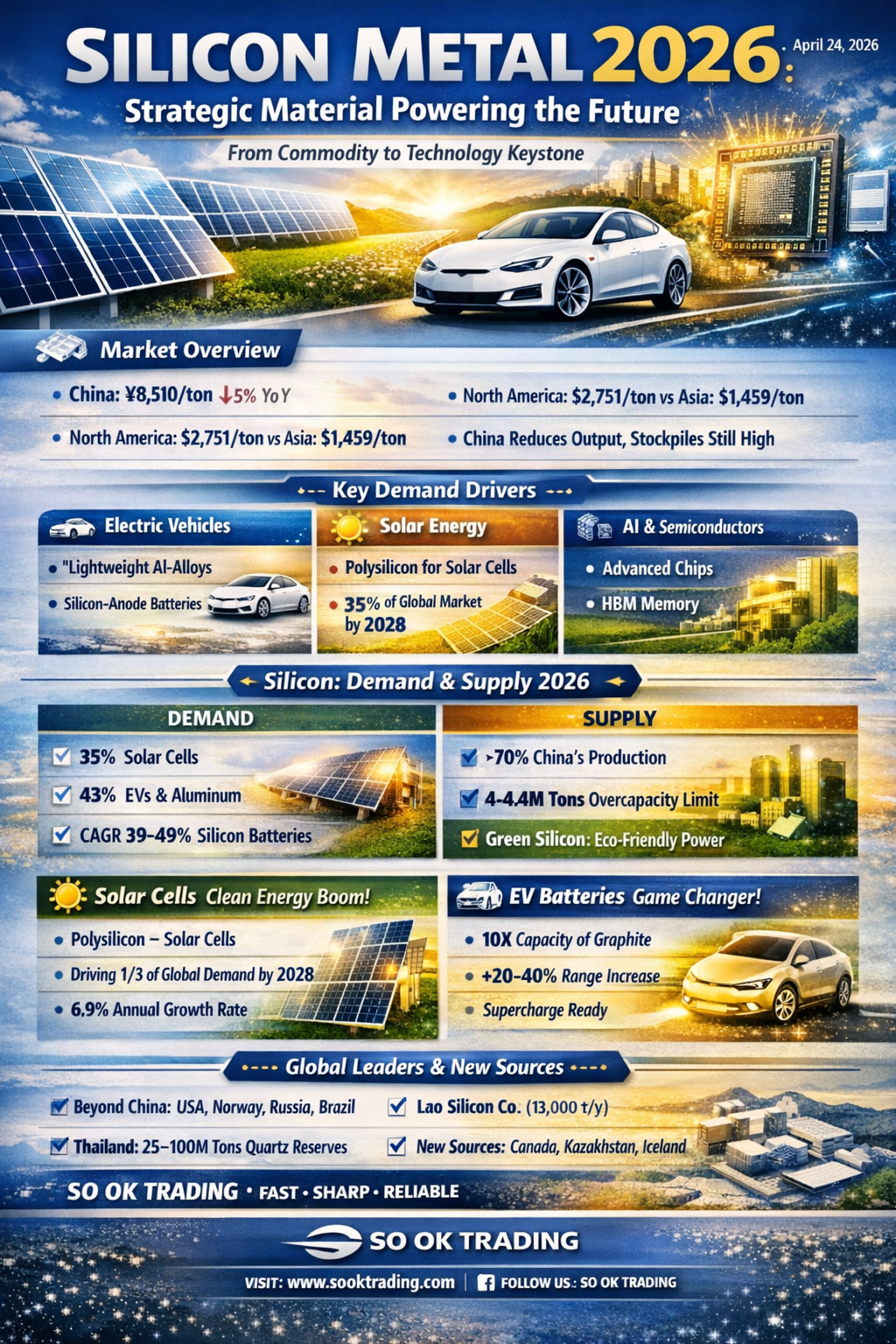
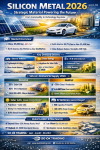
Silicon Metal 2026: Strategic Material Driving the New World Article by SO OK TRADING Date: 24 April 2026
The Silicon Metal and Silicone market is undergoing a major transformation in 2026. After years of oversupply and price declines, this year marks a turning point where silicon evolves from being “just another raw material” into the “heart of global technology.”
Market Overview
China spot price (#553/#441): ¥8,510/ton, down ~5% year-on-year
North America: $2,751/ton vs Asia: $1,459/ton (due to tariffs and protectionist policies)
Despite production cuts in some regions of China, high stockpiles keep prices from rebounding strongly in the short term
⚡ Demand Drivers: New Forces Shaping the Market
Electric Vehicles (EVs): Lightweight aluminum alloys; silicon-anode batteries boosting capacity by over 20%
Solar PV: Polysilicon from Silicon Metal is the core of solar panels; demand surging, expected to reach 35% of the global market by 2028; fastest-growing demand segment (CAGR 6.9%)
AI & Semiconductors: Ultra-pure silicon is essential for advanced chips and HBM memory; booming AI market makes silicon the “brain of the digital world”
SILICON: Demand–Supply Balance 2026
Demand
Solar Cells: ~35% of total market
EVs & Aluminum: ~43% of demand
Silicon Batteries: still small but fastest growth (CAGR 39–49%)
Supply
China: still ~80% of global supply; implementing anti-overcapacity policies limiting new output to 4–4.4 million tons
Producers shifting to regions with cheap, clean energy (Canada, Norway, Brazil)
Rise of “Green Silicon” — produced with renewable energy, eco-friendly, commanding premium prices
☀️ Solar Cells: The Key Accelerator
High-purity Silicon Metal → Polysilicon → Solar Cells
By 2028, solar demand will account for one-third of the global market
Growth rate: CAGR 6.9%
EV Batteries: A Game Changer
Silicon stores energy 10x more than graphite
Extends driving range by 20–40% per charge
Supports supercharging for faster charging times
Challenge: 3–4x expansion during charging → solved with Silicon-Graphite composites and nano-structures
Key players: Sila Nanotechnologies, Group14, Enovix, and automakers Porsche, Mercedes-Benz, BMW
Global Players & New Sources
Beyond China: Russia, Brazil, Norway, USA, France, Germany
Major companies: Elkem ASA, Ferroglobe, Wacker Chemie, Dow, RIMA, Mississippi Silicon
Emerging sources: Kazakhstan, Canada, Iceland
Laos: Lao Silicon Co., Ltd. producing 13,000 tons/year using low-cost hydropower
Thailand: Quartz reserves of 25–100 million tons (Ratchaburi, Rayong, etc.), with smelters supplying solar and high-tech industries
Conclusion
2026 is not just about price changes — it is the year when Silicon Metal transforms from a cheap commodity into a strategic material powering EVs, Solar, and AI.
“Silicon is the key to clean energy, longer-range EVs, and smarter AI.”
SO OK TRADING Your trusted partner in global trade and innovation FAST • SHARP • RELIABLE www.sooktrading.com Facebook: SO OK TRADING