Share

Sawdust to Billion-Dollar Energy: The Rise of Wood Pellets
Last updated: 19 Apr 2026
1025 Views

 From Sawdust to Billion-Dollar Energy
The Story of Wood Pellets
BY SO OK TRADING | April 19, 2026

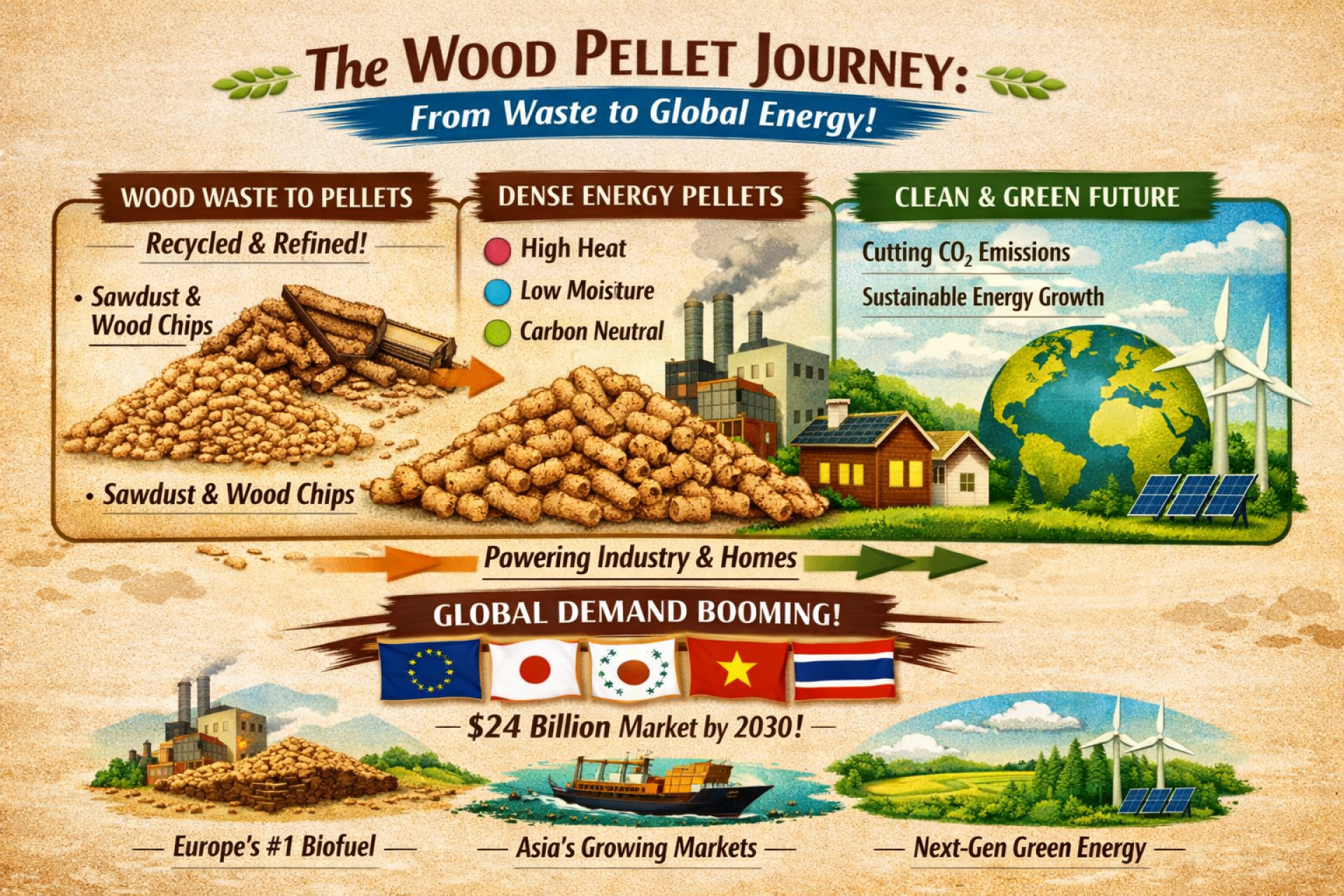
Walk into a wood processing plant and you’ll see piles of sawdust, wood chips, and offcuts—materials once dismissed as “waste.” Today, these leftovers are being transformed into Wood Pellets, small biomass fuel particles that are reshaping the global energy market and becoming a star in the clean energy transition.

Small Pellets, Big Power
Though tiny in size, Wood Pellets pack remarkable energy:

Heating value above 4,000 kcal/kg

Moisture content below 10%, easy ignition

Low ash, minimal maintenance

High density, efficient storage and transport

They are truly “small but mighty fuel.”

Applications: From Power Plants to Homes
The journey of Wood Pellets extends far beyond factories:

Power plants: Replacing coal and heavy fuel oil

Homes in Europe & North America: Providing clean, cozy winter heating

Pet bedding: Absorbing moisture and odors, eco-friendly

Wood Pellets are more than fuel—they are a trusted partner for people, industry, and the environment.

Global Market Journey
Europe: The largest consumer, accounting for 60% of global demand

Japan & South Korea: Massive imports for power generation

North America: Major producers, with the U.S. exceeding 8 million tons annually

Vietnam: Rising exporter, shipping 6 million tons in 2024

Wood Pellets are “travelers,” moving from Southeast Asian forests to stoves and boilers across Europe and Asia.

Future Outlook
Despite temporary oversupply, the outlook remains bright:

EU’s EUDR regulation (2026) will require proof of sustainable wood sourcing → certified producers gain advantage

Market value projected to reach USD 24 billion by 2030

Wood Pellets are not just fuel—they are a “ticket to the clean energy era.”

Asia’s Role
Japan: Targeting 13–18 million tons annually by 2030

South Korea: Demand at 4.6–5 million tons, though policy-driven fluctuations remain

Singapore: Tembusu Power Plant shifting to 100% biomass by 2028

Thailand: Upgrading standards to enter Japan’s market, while EGAT pilots co-firing domestically

✨ Conclusion
Wood Pellets tell a story that begins with humble sawdust but evolves into billion-dollar energy. They symbolize the global shift toward clean, sustainable power—small, powerful, and full of promise.

SO OK TRADING — FAST • SHARP • RELIABLE
Website: www.sooktrading.com
Email: sooktrading@outlook.com
Facebook: SO OK TRADING

Related Content
เกร็ดความรู้ การใช้เชื้อเพลิงชีวภาพในภาคอุตสาหกรรม  By SO OK
เกร็ดความรู้ เชื้อเพลิงชีวภาพ ในภาคอุตสาหกรรม การใช้เชื้อเพลิงชีวภาพในภาคอุตสาหกรรมช่วยลดต้นทุนและมลภาวะ โดยนำวัตถุดิบทางการเกษตร (เช่น ฟางข้าว ซังข้าวโพด) ของเสียจากโรงงาน (เช่น น้ำเสีย) และพืชพลังงาน (เช่น สาหร่าย) มาผลิตเป็นพลังงานชีวมวล (เม็ดเชื้อเพลิง) ก๊าซชีวภาพ (Biogas) ไบโอดีเซล และเอทานอล เพื่อใช้ทดแทนเชื้อเพลิงฟอสซิลในหม้อไอน้ำ โรงไฟฟ้า และยานยนต์ ซึ่งสนับสนุนเศรษฐกิจ BCG ลดการพึ่งพาพลังงานภายนอก และสร้างความมั่นคงด้านพลังงาน. ประโยชน์หลัก: ลดต้นทุนและพึ่งพาเชื้อเพลิงฟอสซิล: แทนที่ถ่านหิน น้ำมันเตา ด้วยพลังงานหมุนเวียน. ลดมลพิษ: ลดฝุ่น PM 2.5 กลิ่น และก๊าซเรือนกระจก. เพิ่มมูลค่าเกษตรกรรม: สร้างรายได้จากผลผลิตทางการเกษตรเหลือใช้ (Zero Burn). สร้างความมั่นคงทางพลังงาน: เพิ่มสัดส่วนการใช้พลังงานหมุนเวียนในประเทศ. รูปแบบการใช้งานในอุตสาหกรรม: เชื้อเพลิงชีวมวล (Biomass Fuel): นำฟางข้าว ซังข้าวโพด กากอ้อย มาอัดเป็นเม็ด (Energy Pellet) ใช้เป็นเชื้อเพลิงในหม้อเผาของโรงงาน (เช่น โรงงานปูนซีเมนต์). ก๊าซชีวภาพ (Biogas): เกิดจากการย่อยสลายสารอินทรีย์ในน้ำเสีย หรือของเสียจากโรงงานและฟาร์มสัตว์ นำมาใช้ผลิตไฟฟ้าหรือทดแทนแก๊ส LPG ได้. ไบโอดีเซล (Biodiesel) และเอทานอล (Ethanol): ผลิตจากพืชน้ำมัน (ปาล์ม) และพืชหัว (มันสำปะหลัง อ้อย) ใช้ผสมในน้ำมันดีเซลและเบนซิน (แก๊สโซฮอล์). พลังงานจากสาหร่าย (Algae Biofuel): สาหร่ายเติบโตเร็ว ดูดซับคาร์บอนได้ดี นำมาผลิตเป็นไบโอดีเซลและเชื้อเพลิงอื่นๆ. ตัวอย่างอุตสาหกรรมที่ใช้: อุตสาหกรรมปูนซีเมนต์/ก่อสร้าง: ใช้ชีวมวล (ฟางข้าว) แทนถ่านหิน. อุตสาหกรรมอาหาร: ใช้ก๊าซชีวภาพจากน้ำเสียเป็นพลังงาน. อุตสาหกรรมเคมีภัณฑ์และวัสดุชีวภาพ (Bio-based Industry): ใช้พืชผลทางการเกษตรเป็นวัตถุดิบหลักในการผลิตสารเคมี, PLA (Polylactic Acid). การพัฒนาอุตสาหกรรมเชื้อเพลิงชีวภาพเป็นส่วนสำคัญของโมเดลเศรษฐกิจ BCG (Bio-Circular-Green Economy) ของไทย เพื่อขับเคลื่อนสู่เป้าหมาย Net Zero และเพิ่มศักยภาพการแข่งขันของประเทศ. การพัฒนาเพื่อการ เชื้อเพลิงชีวภาพ มีหลากหลายประเภท ทั้งไม้สับ ไม้อัดแท่ง ไม้อัดแท่งสีดำ กะลาปาล์ม กะลามะพร้าว และเศษวัสดุทางการเกษตร ช่วยลดมลพิษ สนับสนุนเศรษฐกิจหมุนเวียน.
7 Dec 2025
“Thai Natural Rubber: The Soft Power Driving the World – A Strategic Commodity of the New Century in the EV and BCG Era. Thai Rubber: The Essential Resource Demanded by Global Industries” Article by SO OK TRADING | March 26, 2026
“Thai Natural Rubber: From Plantations to Global Strategic Commodity” Published: March 28, 2026 Thailand is not just a rubber producer—it is the world’s leading exporter, holding over 30% of global natural rubber exports. Thai rubber has become the backbone of industries worldwide, from automotive and medical to construction. This article explores Thailand’s strengths and the future direction of the rubber industry in the EV era and the Bio-Circular-Green (BCG) economy.
28 Mar 2026
“Recycled Aluminum: Transforming the Global Economy Towards the Net Zero Era — From Cans to Clean Energy and Circular Economy Innovation” Article by SO OK TRADING | March 25, 2026
Recycled Aluminum is rapidly becoming a “strategic resource” driving the world toward Net Zero goals and a truly circular economy. From beverage cans to electric vehicle components, from food foil to building structures — recycled aluminum is no longer just part of the circular economy, but the very heart of future industries.
25 Mar 2026
This website uses cookies for best user experience, to find out more you can go to our Privacy Policy and Cookies Policy
Powered By MakeWebEasy Logo MakeWebEasy