Share

Sawdust to Billion-Dollar Energy: The Rise of Wood Pellets
Last updated: 19 Apr 2026
1133 Views

 From Sawdust to Billion-Dollar Energy
The Story of Wood Pellets
BY SO OK TRADING | April 19, 2026

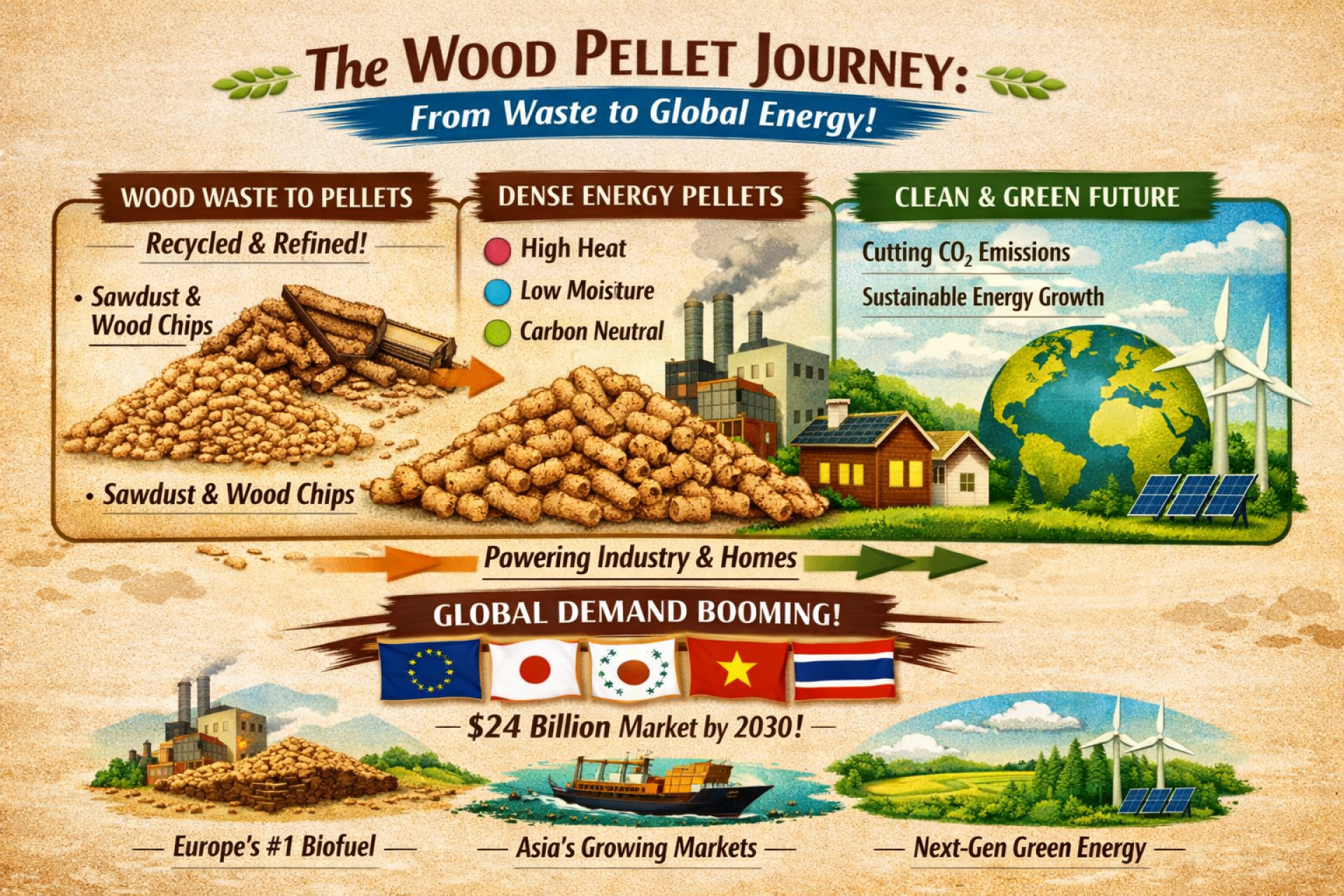
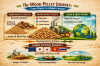
Walk into a wood processing plant and you’ll see piles of sawdust, wood chips, and offcuts—materials once dismissed as “waste.” Today, these leftovers are being transformed into Wood Pellets, small biomass fuel particles that are reshaping the global energy market and becoming a star in the clean energy transition.

Small Pellets, Big Power
Though tiny in size, Wood Pellets pack remarkable energy:

Heating value above 4,000 kcal/kg

Moisture content below 10%, easy ignition

Low ash, minimal maintenance

High density, efficient storage and transport

They are truly “small but mighty fuel.”

Applications: From Power Plants to Homes
The journey of Wood Pellets extends far beyond factories:

Power plants: Replacing coal and heavy fuel oil

Homes in Europe & North America: Providing clean, cozy winter heating

Pet bedding: Absorbing moisture and odors, eco-friendly

Wood Pellets are more than fuel—they are a trusted partner for people, industry, and the environment.

Global Market Journey
Europe: The largest consumer, accounting for 60% of global demand

Japan & South Korea: Massive imports for power generation

North America: Major producers, with the U.S. exceeding 8 million tons annually

Vietnam: Rising exporter, shipping 6 million tons in 2024

Wood Pellets are “travelers,” moving from Southeast Asian forests to stoves and boilers across Europe and Asia.

Future Outlook
Despite temporary oversupply, the outlook remains bright:

EU’s EUDR regulation (2026) will require proof of sustainable wood sourcing → certified producers gain advantage

Market value projected to reach USD 24 billion by 2030

Wood Pellets are not just fuel—they are a “ticket to the clean energy era.”

Asia’s Role
Japan: Targeting 13–18 million tons annually by 2030

South Korea: Demand at 4.6–5 million tons, though policy-driven fluctuations remain

Singapore: Tembusu Power Plant shifting to 100% biomass by 2028

Thailand: Upgrading standards to enter Japan’s market, while EGAT pilots co-firing domestically

✨ Conclusion
Wood Pellets tell a story that begins with humble sawdust but evolves into billion-dollar energy. They symbolize the global shift toward clean, sustainable power—small, powerful, and full of promise.

SO OK TRADING — FAST • SHARP • RELIABLE
Website: www.sooktrading.com
Email: sooktrading@outlook.com
Facebook: SO OK TRADING

Related Content
HNY 2026 with a First Analysis on Thai Baht Value
he Thai baht in Q1 2026 is expected to strengthen against the US dollar, driven primarily by a weaker dollar globally, a seasonal tourism boost, and expectations of US Federal Reserve rate cuts. This strength is occurring despite a weak domestic economic outlook and the Bank of Thailand's (BoT) likely continued easing of its policy rate. Exchange Rate Drivers and Forecast External Factors: The primary driver for the strengthening baht is external, mainly the broad weakness of the US dollar as global markets price in expected Fed rate cuts. The baht is also correlated with global gold prices, which have been climbing. Tourism High Season: The period extending into Q1 2026 is the high season for tourism, which typically brings in foreign currency and supports the baht's value. Policy Divergence: The BoT is expected to continue its easing cycle, potentially cutting the policy rate further to 1.00% by Q1 2026 to stimulate the sluggish domestic economy. This divergence from a potentially less aggressive US Fed in Q1 could support the baht in the short term, though some analysts warn the currency could weaken later in 2026. Forecasts: Projections for 2026 generally place the baht in a range of 30.80–33.00 per US dollar. Some models estimate it could trade around 31.06 by the end of Q1. A persistently strong baht below 31 per US$ is seen as a significant risk to the Thai export and tourism sectors. Key Economic Context Weak Growth: Thailand's economy is expected to slow down to a 5-year low growth rate of around 1.6-1.8% in 2026, pressured by US tariffs, global trade tensions, and high household debt. The central bank chief expects an improvement in Q1 2026 after a weak second half of 2025. Political Uncertainty: A general election expected in February 2026 could also introduce volatility, though some historical trends suggest the baht may strengthen following the formation of a new government. Low Inflation: Headline inflation is projected to remain subdued or even negative, providing the central bank with justification for further rate cuts to stimulate demand. In summary, Q1 2026 is characterized by a strong and volatile baht driven by external factors, contrasting sharply with a weak domestic economy and accommodative monetary policy.
1 Jan 2026
“RDF-3: Transforming Cement Plants Towards Clean Energy — The Net Zero Survival Strategy  Article by SO OK TRADING (March 15, 2026)”
RDF-3: The Waste Fuel Cement Plants Love From waste to clean energy, cement plants worldwide—including Thailand—are shifting from costly coal to RDF, cutting costs and carbon emissions in a serious way. RDF-3 (Fluff RDF) is the star of the industry: small size, fast burning, high calorific value, and zero leftover ash. Global Trends: China, Japan, and South Korea are moving toward premium SRF with advanced smart-sorting technology. Thailand is catching up fast: Major cement plants target 50–100% RDF usage, backed by “Trash-to-Cement” models and the new TIS RDF standard. RDF-3 is not just an “alternative fuel” — it’s the fuel of the future, helping cement plants truly go green.
15 Mar 2026
This website uses cookies for best user experience, to find out more you can go to our Privacy Policy and Cookies Policy
Powered By MakeWebEasy Logo MakeWebEasy