“Lead Outlook 2026–2030: Recycled Lead — The New Core of Clean Energy and AI Infrastructure” Article by SO OK TRADING | April 19, 2026
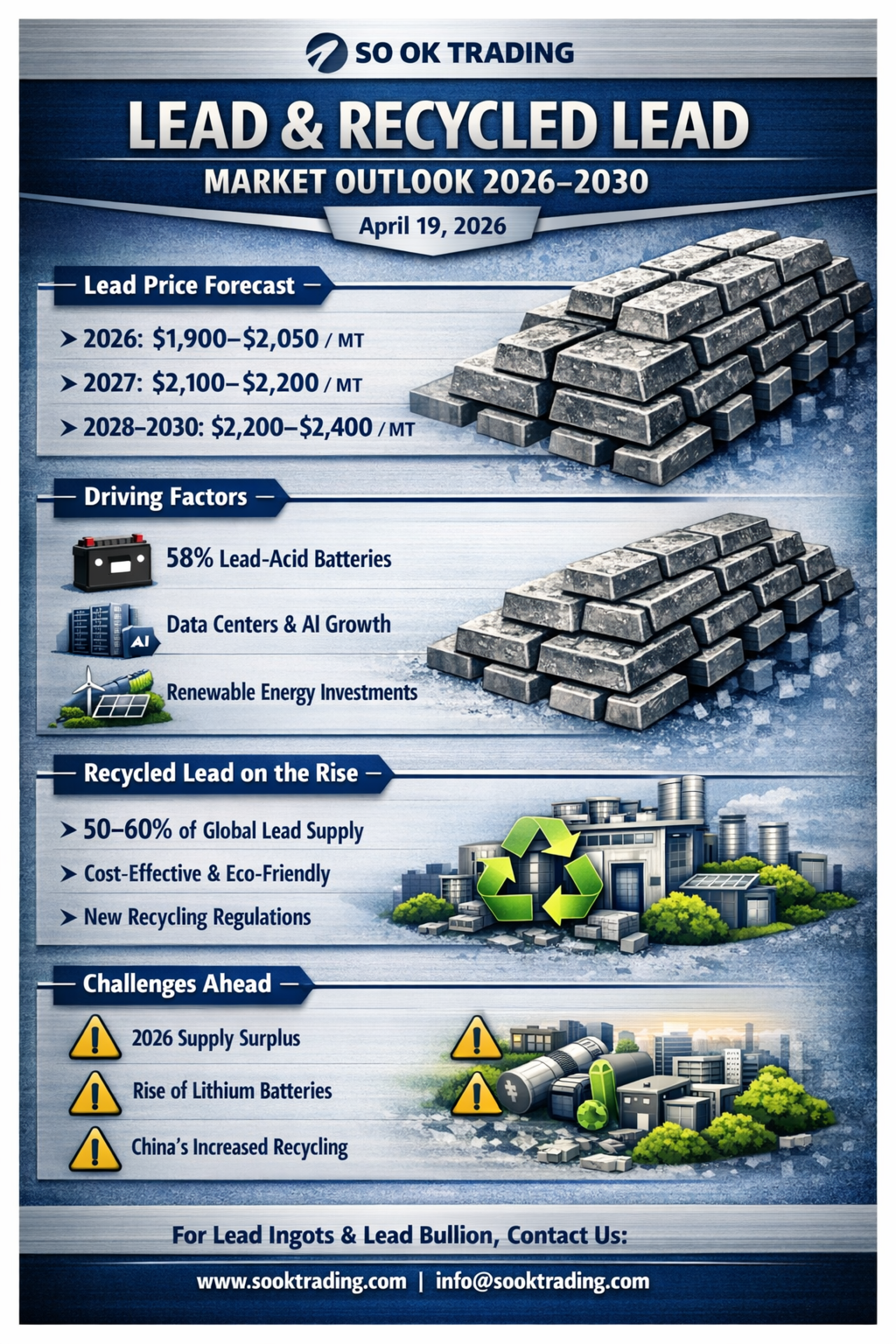
Lead and Recycled Lead Price Trends (2026–2030)
SO OK TRADING | April 19, 2026
1. Global Market Overview
In April 2026, lead prices are in a recovery phase and showing signs of strengthening. Demand from the battery industry and clean energy sectors continues to rise. Although recycled lead supply introduces short-term volatility, the overall outlook remains positive and attractive.
2. Global Lead Price Outlook
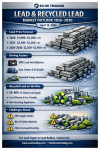
2026: Lead prices are expected to range between USD 1,900–2,050 per ton, pressured by accumulated stock and increased recycling output.
2027: Prices are likely to rise to USD 2,100–2,200 per ton, supported by global economic recovery and stronger demand from manufacturing.
2028–2030: Prices are projected to surpass USD 2,200–2,400 per ton, driven by investments in clean energy infrastructure and AI-powered data centers.
3. Key Price Drivers
Supporting Factors
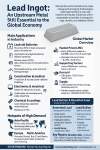
Lead-acid batteries dominate over 58% of the market, especially in automobiles and backup power systems.
Rising demand for UPS systems in global data centers and AI applications.
Use of lead in renewable energy projects such as solar panels and wind turbines.
Pressuring Factors
Lead oversupply in 2026 is estimated at more than 102,000 tons.
Growth of lithium batteries may reduce lead usage in the long term.
Recycling production in China could cause short-term price fluctuations.
4. Recycled Lead: The New Pillar of Industry
Currently, 50–60% of global lead comes from recycling, and this share is expected to increase steadily.
Advantages: Lower cost, reduced energy consumption, and environmentally friendly.
Main Applications: Automotive batteries, energy storage systems, and radiation shielding industries.
Environmental Regulations: Laws in China and Europe mandating the recycling of used batteries are driving stable growth in the recycled lead market.
5. Specifications and Standards for Recycled Batteries
Recycling Ratio: The EU requires new batteries to contain at least 85% recycled lead.
Lead Grades: Soft Lead (99.97%+) for electrode plates; Hard Lead (antimony/calcium alloy) for grid structures.
International Standards: JIS D 5301, IEC 60896, EN 50342 ensure safety and performance.
6. Business Advantages
Recycling plants can claim Carbon Credits, certifying reduced carbon emissions and adding value in global markets.
Recycled lead is shifting from being an “option” to becoming a core raw material demanded worldwide for sustainable industry.
7. Conclusion
Between 2026 and 2030, lead prices are expected to follow a stable upward trend, with recycled lead at the heart of the industry. Clean energy, automotive, and global infrastructure sectors will continue to drive demand, making this market an attractive investment opportunity for businesses.
If you require Lead Ingots (LEAD INGOT) or Lead Bullion (LEAD BULLION), please contact us via www.sooktrading.com → Give Inquiry or email us at sooktrading@outlook.com. We supply high-quality lead with reliable consistency.
SO OK TRADING: Your Business Partner SO OK TRADING: FAST • SHARP • RELIABLE VISIT US AT: WWW.SOOKTRADING.COM FACEBOOK: SO OK TRADING