Share

“Lead Outlook 2026–2030: Recycled Lead — The New Core of Clean Energy and AI Infrastructure” Article by SO OK TRADING | April 19, 2026
Last updated: 19 Apr 2026
107 Views

Lead and Recycled Lead Price Trends (2026–2030)
SO OK TRADING | April 19, 2026

 
1. Global Market Overview
In April 2026, lead prices are in a recovery phase and showing signs of strengthening. Demand from the battery industry and clean energy sectors continues to rise. Although recycled lead supply introduces short-term volatility, the overall outlook remains positive and attractive.

 
2. Global Lead Price Outlook
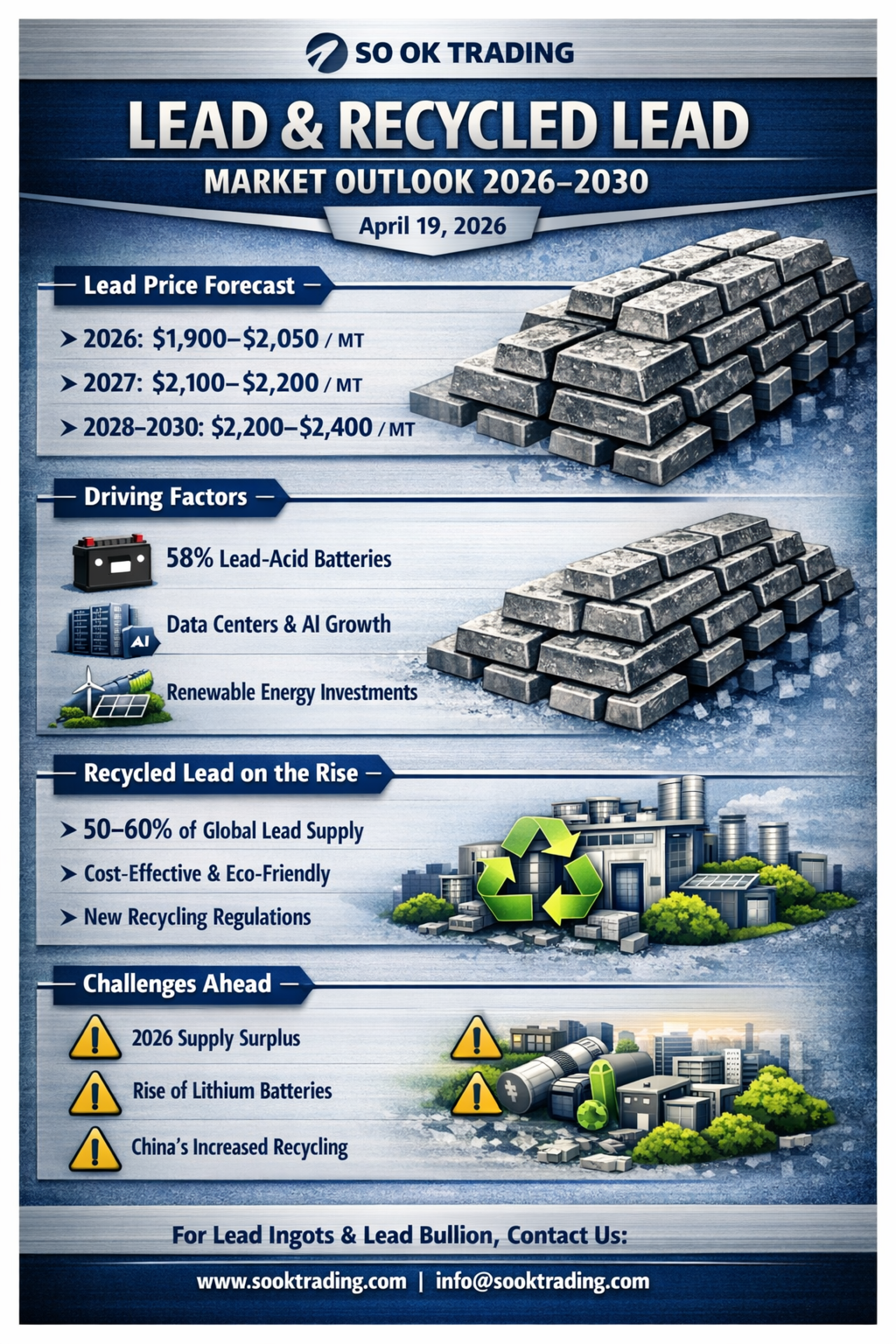
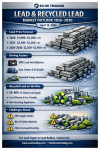
2026: Lead prices are expected to range between USD 1,900–2,050 per ton, pressured by accumulated stock and increased recycling output.
2027: Prices are likely to rise to USD 2,100–2,200 per ton, supported by global economic recovery and stronger demand from manufacturing.
2028–2030: Prices are projected to surpass USD 2,200–2,400 per ton, driven by investments in clean energy infrastructure and AI-powered data centers.
 
3. Key Price Drivers
Supporting Factors

Lead-acid batteries dominate over 58% of the market, especially in automobiles and backup power systems.
Rising demand for UPS systems in global data centers and AI applications.
Use of lead in renewable energy projects such as solar panels and wind turbines.
Pressuring Factors

Lead oversupply in 2026 is estimated at more than 102,000 tons.
Growth of lithium batteries may reduce lead usage in the long term.
Recycling production in China could cause short-term price fluctuations.
 
4. Recycled Lead: The New Pillar of Industry
Currently, 50–60% of global lead comes from recycling, and this share is expected to increase steadily.

Advantages: Lower cost, reduced energy consumption, and environmentally friendly.
Main Applications: Automotive batteries, energy storage systems, and radiation shielding industries.
Environmental Regulations: Laws in China and Europe mandating the recycling of used batteries are driving stable growth in the recycled lead market.
 
5. Specifications and Standards for Recycled Batteries
Recycling Ratio: The EU requires new batteries to contain at least 85% recycled lead.
Lead Grades: Soft Lead (99.97%+) for electrode plates; Hard Lead (antimony/calcium alloy) for grid structures.
International Standards: JIS D 5301, IEC 60896, EN 50342 ensure safety and performance.
 
6. Business Advantages
Recycling plants can claim Carbon Credits, certifying reduced carbon emissions and adding value in global markets.
Recycled lead is shifting from being an “option” to becoming a core raw material demanded worldwide for sustainable industry.
 
7. Conclusion
Between 2026 and 2030, lead prices are expected to follow a stable upward trend, with recycled lead at the heart of the industry. Clean energy, automotive, and global infrastructure sectors will continue to drive demand, making this market an attractive investment opportunity for businesses.

 
If you require Lead Ingots (LEAD INGOT) or Lead Bullion (LEAD BULLION), please contact us via www.sooktrading.com → Give Inquiry or email us at sooktrading@outlook.com. We supply high-quality lead with reliable consistency.

 
SO OK TRADING: Your Business Partner SO OK TRADING: FAST • SHARP • RELIABLE VISIT US AT: WWW.SOOKTRADING.COM FACEBOOK: SO OK TRADING


Related Content
Nickel: The Strategic Metal of the Clean Energy Future — An Article by SO OK TRADING
Nickel: The Strategic Metal Powering the Clean Energy Future ⚡ From stainless steel to EV batteries, nickel is no longer just a heavy industry metal — it's becoming the backbone of global energy transition. As demand shifts toward high-performance cathodes and sustainable supply chains, understanding nickel’s market dynamics is essential. This Article breaks down: - Key properties and applications - Price movements and future outlook - EV battery trends and recycling - Global supply players and strategic risks
26 Feb 2026
The war is not over The Middle East is ablaze The global economy hangs by a thread — The world awaits the outcome of the second round of talks in Islamabad, coming soon  Article by SO OK TRADING 15 April 2026
Middle East Situation Summary — April 15, 2026 USA • Israel • Iran • Strait of Hormuz BY SO OK TRADING “Fragile Ceasefire • Global Economy on a Tightrope” The Middle East remains tense — the United States has blockaded the Strait of Hormuz, Iran refuses to back down, and fighting in Gaza continues. The world is watching closely as the second round of peace talks convenes in Pakistan on April 17. Oil and fertilizer prices remain high • Global inflation shows no relief • International markets are in “wait-and-see negotiation” mode. SO OK TRADING FAST • SHARP • RELIABLE
15 Apr 2026
ทิศทางการใช้ อลูมิเนียมในอนาคต (ปี2026) , ทิศทางราคาอลูมิเนียม และ สถานะการณ์ Carbon Footprint
ทิศทางในอนาคตของอลูมิเนียมไทยมุ่งเน้น ความยั่งยืน (Sustainability) และ เทคโนโลยีขั้นสูง (Advanced Technology) โดยจะเน้น อลูมิเนียมคาร์บอนต่ำ และ อลูมิเนียมรีไซเคิล เพื่อตอบโจทย์อุตสาหกรรมยานยนต์ไฟฟ้า (EV) และการก่อสร้างที่เป็นมิตรต่อสิ่งแวดล้อม พร้อมพัฒนา การเคลือบผิวใหม่ๆ และระบบเศรษฐกิจหมุนเวียน (Circular Economy) เช่น โครงการ Aluminium Loop เพื่อลดต้นทุน เพิ่มมูลค่า และรักษาความสามารถในการแข่งขันในตลาดโลก. แนวโน้มสำคัญ: การเติบโตในอุตสาหกรรมยานยนต์ไฟฟ้า (EV): รถ EV ต้องการใช้อลูมิเนียมเพิ่มขึ้นมากเพื่อลดน้ำหนัก ช่วยประหยัดพลังงานและเพิ่มระยะทางวิ่ง. ความต้องการอลูมิเนียมคาร์บอนต่ำ (Low-Carbon Aluminium): ตอบสนองมาตรการสิ่งแวดล้อมทั่วโลก (เช่น EU CBAM) โดยเฉพาะการใช้อลูมิเนียมรีไซเคิลสูง ซึ่งลดการปล่อยคาร์บอนได้มาก. เศรษฐกิจหมุนเวียน (Circular Economy): โครงการอย่าง "Aluminium Loop" ขับเคลื่อนการรีไซเคิลบรรจุภัณฑ์อลูมิเนียมครบวงจร เพื่อลดขยะและสร้างมูลค่า. นวัตกรรมการเคลือบผิว (Coating Innovations): การเคลือบผิวแบบใหม่ๆ เพื่อเพิ่มฟังก์ชัน เช่น ป้องกันแบคทีเรีย (Anti-microbial) ทำความสะอาดง่าย (Easy-to-clean) สร้างผิวสัมผัสใหม่. การก่อสร้างแบบสำเร็จรูปและโมดูลาร์ (Modular Construction): ใช้อลูมิเนียมมากขึ้นในการผลิตชิ้นส่วนสำเร็จรูปนอกสถานที่ เพื่อความแม่นยำและลดของเสีย. การบูรณาการพลังงานหมุนเวียน (Renewable Energy): ใช้อลูมิเนียมในโครงสร้างรองรับแผงโซลาร์เซลล์ และระบบพลังงานสะอาดอื่นๆ. ความท้าทาย: ต้นทุนพลังงาน & ห่วงโซ่อุปทาน: ความผันผวนของราคาพลังงานและความท้าทายในห่วงโซ่อุปทาน. การแข่งขัน: ประเทศคู่แข่งเร่งพัฒนาเทคโนโลยีรีไซเคิล ทำให้ไทยต้องพัฒนาต่อเนื่องเพื่อรักษาผู้นำ. โอกาส: ไทยมีศักยภาพด้านแรงงานฝีมือ และอุตสาหกรรมต้นน้ำ-กลางน้ำ-ปลายน้ำที่ครบวงจร. การปรับตัวสู่การผลิตคาร์บอนต่ำสร้างโอกาสทางธุรกิจใหม่ๆ โดยเฉพาะการเป็นผู้นำด้านอลูมิเนียมรีไซเคิล. สรุป: อลูมิเนียมไทยจะก้าวสู่ยุคใหม่ที่เน้น "เขียว" (Green) และ "ฉลาด" (Smart) โดยการรีไซเคิลและเทคโนโลยีจะเป็นหัวใจสำคัญในการสร้างการเติบโตและความยั่งยืน.
16 Dec 2025
This website uses cookies for best user experience, to find out more you can go to our Privacy Policy and Cookies Policy
Powered By MakeWebEasy Logo MakeWebEasy