SO OK INSIGHT: Global Economy & Inflation Turning Point 2026 – A New Perspective as the Baht Strengthens and Inflation Returns (April 10, 2026)
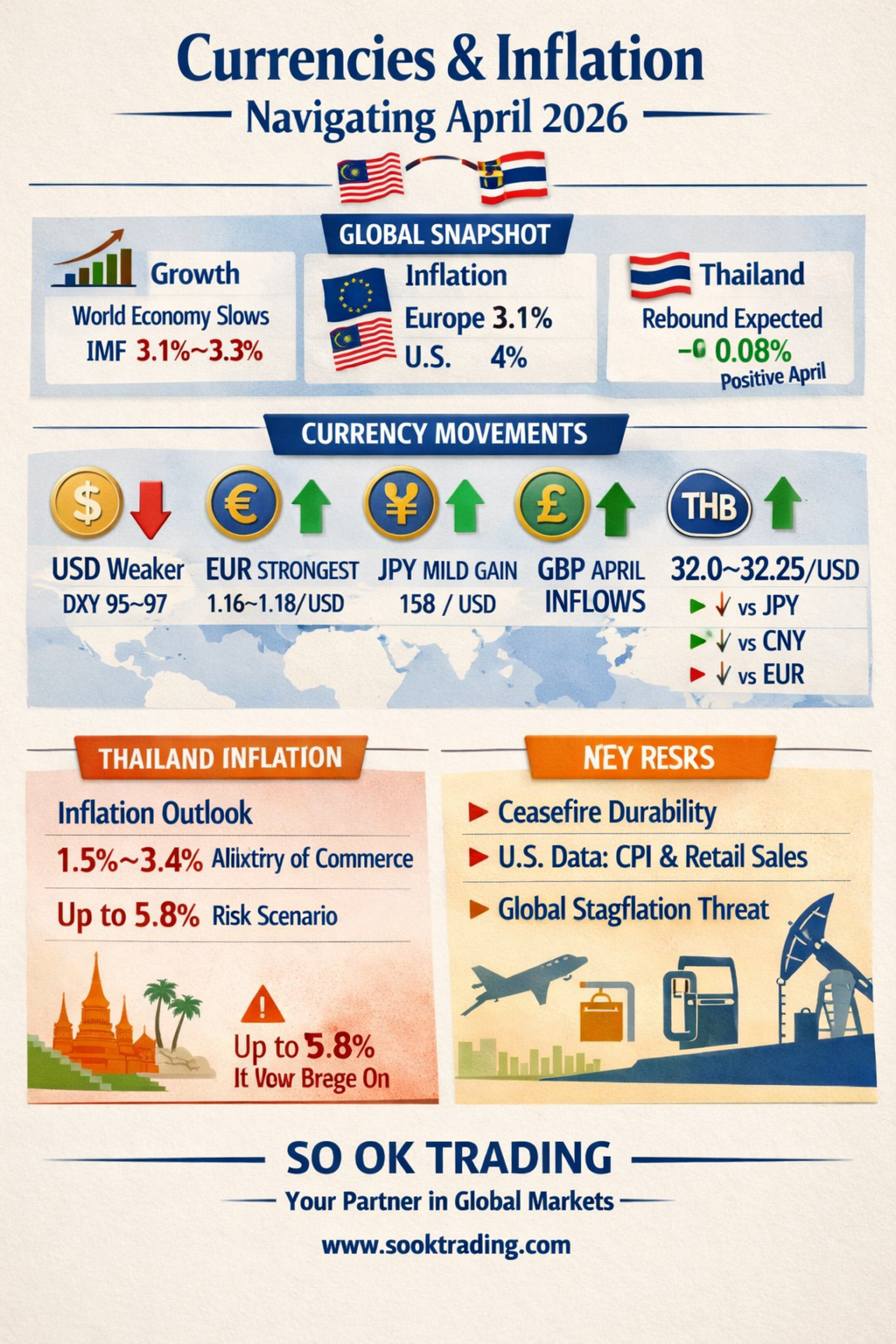
Global Economy & Inflation with Currency Trends – A Critical Turning Point (April 10, 2026)
Following the positive news of a “temporary ceasefire between the U.S. and Iran,” global financial markets have shifted from tension to renewed optimism. Capital is flowing back into risk assets, while currencies and inflation worldwide are entering a decisive phase that investors and businesses must closely monitor.
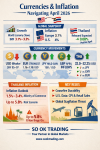
Key Currency Highlights
USD: Weakening, DXY down to 95–97, driven by safe‑haven sell‑offs and expectations of possible Fed rate cuts later this year.
EUR: Strongest rebound at 1.16–1.18/USD, supported by lower energy prices boosting Europe’s recovery.
JPY: Slight appreciation to 158/USD as interest rate differentials narrow.
GBP: Seasonal April strength and capital inflows into London.
THB: Opened at 32.07–32.12/USD, strengthening on risk asset demand and softer oil prices.
Baht vs Major Currencies
THB/USD: Stronger, 31.90–32.20
THB/CNY: Stable to slightly stronger, 4.40–4.55
THB/JPY: Appreciating faster than the yen, 20.00–20.50 (per 100 yen)
THB/EUR: Slightly weaker, 34.80–35.30
Global Economy Outlook
IMF projects global growth at only 3.1–3.3% in 2026, pressured by earlier energy cost spikes.
Stagflation risk: Oil supply disruptions (-13%) raise concerns of “low growth, high inflation.”
Monetary policy: Fed maintains high rates to curb inflation, though markets anticipate possible easing if peace stabilizes.
Inflation Watch
Thailand: March inflation at -0.08%, expected to turn positive in April.
Ministry of Commerce: 1.5–2.5%
Kasikorn Bank: 3.4%
SCB EIC: 3.2%
Risk scenario: up to 5.8% if conflict prolongs
Global:
Europe: 3.1%
U.S.: 4%
Despite ceasefire, supply chains and logistics remain damaged, keeping inflation elevated.
Unresolved Risks
Sustainability of the ceasefire agreement
U.S. economic data (CPI, retail sales)
Foreign fund flows
Global stagflation threat
Global markets are in a phase of “adjustment from fear,” with capital flowing out of the dollar into risk assets and emerging market currencies. The Thai baht, in particular, is supported by lower oil prices and the recovery of Chinese tourism.
SO OK TRADING: Your Business Partner FAST • SHARP • RELIABLE www.sooktrading.com
Would you like m