Share

“Post-Ceasefire World 2026: Gold Surges, Oil Plunges, Stocks Rally — 48 Hours That Shake Global Markets” — Article by SO OK TRADING, April 8, 2026
Last updated: 8 Apr 2026
1841 Views

 Global Update After the US–Iran Ceasefire (April 8, 2026)
Summary of Effects on Gold, Stocks, Currencies, and Oil — Article by SO OK TRADING

 
Key Turning Point
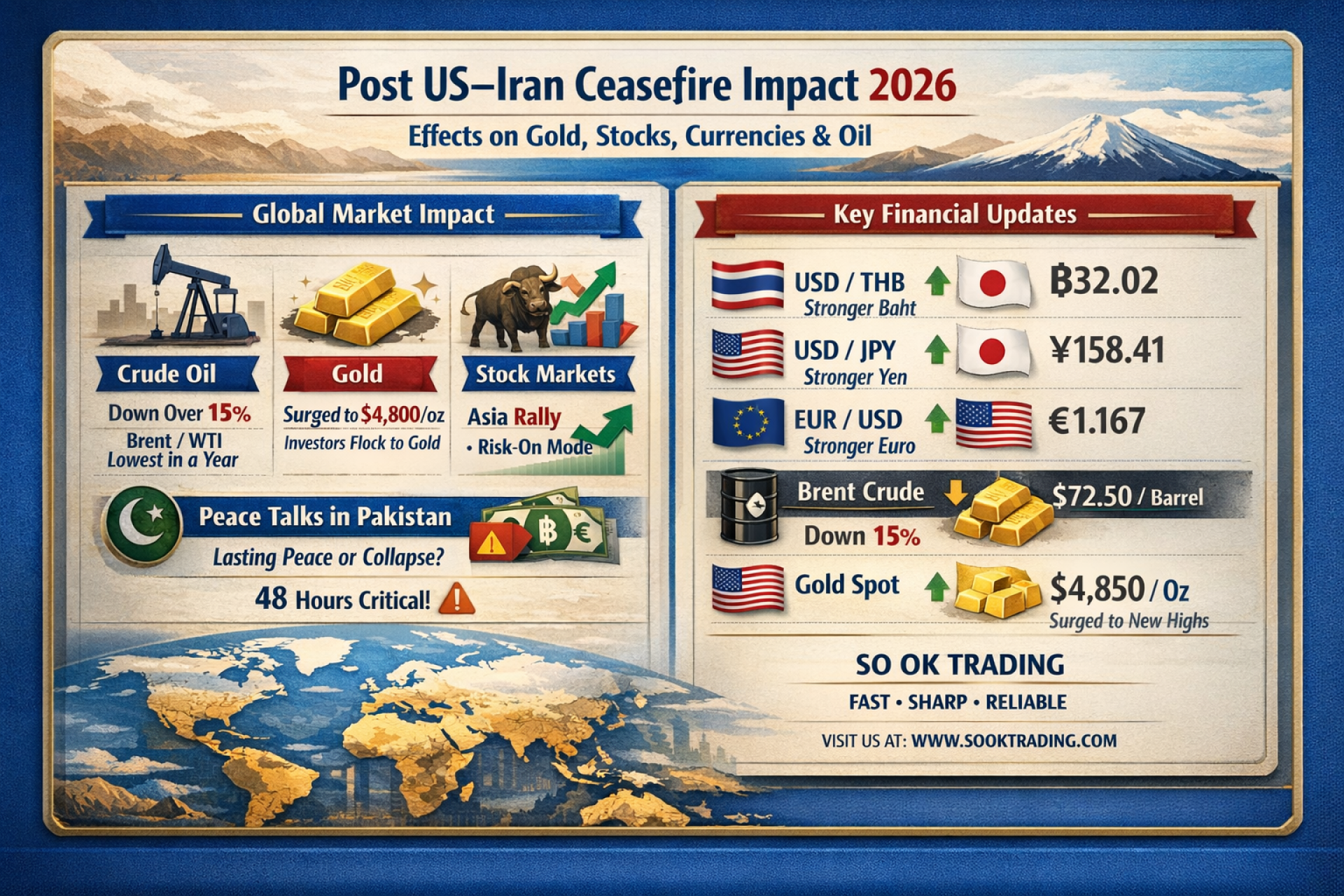
A two-week temporary ceasefire between the United States and Iran has begun, paving the way for peace talks in Pakistan this Friday. Main condition: Iran must immediately secure safe passage through the Strait of Hormuz. Big bet: If negotiations succeed, the world may witness lasting peace and the lifting of certain sanctions that have long shaken the global economy.

 
Global Powers React
China: The biggest winner, as a major importer of Iranian oil → production costs drop instantly.
Russia: Loses out, as plunging oil prices cut into export revenues.
United States: Trump hails the deal as a “major achievement,” but opposition prepares strict scrutiny.
Europe: Relieved over energy concerns → Euro strengthens, investors return to equities.
 
Global Market Shockwaves
Oil: Down over 15% → easing inflationary pressure, but risks a sharp rebound if talks fail.
Gold: Despite the ceasefire, prices soar above $4,800/oz as investors remain cautious.
Currencies: US dollar weakens → Asian currencies (Baht, Yen, Rupee, Singapore dollar) strengthen.
Stocks: Global equities surge, especially in Asia, entering Risk-on mode.
 
️ Crude Oil Prices (Brent / WTI)
Fell more than 15% after ceasefire news.
Short-term trend: Sideway Down, awaiting Pakistan talks.
Risk: If talks collapse, prices may rebound sharply due to low global inventories.


Related Content
“Middle East Crisis Update – April 16, 2026: Oil • Fertilizer • Naphtha — War & Market Moves, When Energy and Raw Materials Become Economic Weapons, A War That Touches Every Breath of the World”
Middle East Crisis Update: War • Energy • Finance (April 16, 2026) The Middle East remains tense and complex, with ongoing battles, fragile diplomacy, and economic ripples spreading worldwide. The closure of the Strait of Hormuz and continued attacks across multiple fronts have driven oil and naphtha prices sharply higher, while global stock markets swing in response to peace talk headlines. This crisis is not confined to the region — it reverberates across every nation. Rising energy costs, soaring fertilizer prices, and escalating shipping fees are directly impacting the daily lives of people everywhere. Stay informed with our latest English Infographic, which captures the dimensions of war, energy, and finance in a concise, easy-to-understand format — ready to be leveraged for business insights and strategy. SO OK TRADING
16 Apr 2026
“Land of Tropical Fruits: Thai Fruits Rising as Global Brands — From Orchards to Luxury Markets, Winning Hearts Worldwide with Durian, Mangosteen, and Mango, the Global Stars of 2026” Article by SO OK TRADING · March 11, 2026
Thai Fruit Trends 2025–2026 are entering an exciting new era, full of global business opportunities! SO OK TRADING presents an overview of Thailand’s rapidly growing fruit export market, both in volume and quality. Durian, mangosteen, and Nam Dok Mai mango have become the “superstars” across international markets.
11 Mar 2026
“Steel Price War 2026: Asia Falls, the West Rises — Thai Buyers Gain the Edge While Producers Battle with New Strategies, Exploring Global Trends and Green Steel Opportunities”
“Steel Price War 2026: Asia Falls, the West Rises — Thai Buyers Gain the Edge While Producers Struggle to Survive, Analyzing Global Trends and Green Steel Opportunities” The global steel market has entered one of the fiercest “two‑world battles” of the year: Asia: Oversupply and China’s slowdown have pushed iron ore prices down to around $101–102 per ton, dragging rebar, hot‑rolled coil, and wire rod prices lower across the region. The West: The US and EU imposed import tariffs of up to 50%, while energy and coking coal costs surged by 16%, driving steel prices upward despite weak demand. Thailand’s situation: Buyers benefit: Cheaper imports from China and Vietnam have pulled retail prices down by more than 8%. Producers under pressure: Electricity and shipping costs have soared by over 50%, squeezing margins and forcing reliance on state measures such as Anti‑Dumping and CBAM. Tin Plate packaging: Sales dropped by -1.2% to -4.5%, but raw material costs fell 9–10%. With a recycling rate of 92%, Tin Plate remains aligned with ESG and Green Steel trends.
5 Jun 2026
This website uses cookies for best user experience, to find out more you can go to our Privacy Policy and Cookies Policy
Powered By MakeWebEasy Logo MakeWebEasy